
Artoss, Inc. has received clearance from the FDA to add a posterolateral fusion indication and an alternate applicator to its previously cleared NanoBone bone graft substitute.
Artoss Adds Posterolateral Fusion Indication for NanoBone SBX
2 min read Premium comments
#backpain#spinesurgerySecondary#fusion#bonegraft
On April 23, 2019, after a three-month review, the agency granted clearance to the company’s NanoBone SBX Putty for standalone use in posterolateral spinal fusion.
Indications
According to FDA documents, the SBX Putty is an implant intended to “fill bony voids or gaps of the skeletal system (i.e., extremities, posterolateral spine and pelvis). These osseous defects are surgically created or the result of traumatic injury to the bone and are not intrinsic to the stability of the bony structure. NanoBone SBX Putty resorbs and is replaced with bone during the healing process.”
NanoBone Putty
The putty consists of NanoBone granulate embedded in an aqueous gel. NanoBone granulate, state the FDA documents, “consists of phase-pure non-sintered nanocrystalline osteoconductive hydroxyapatite (HA) embedded in a highly porous silica gel matrix. The high porosity of the product includes nano pores, micro pores, and macro pores. The interconnected and open porous structure of the macro pores of the NanoBone is similar to human cancellous bone. NanoBone® SBX Putty does not set in-situ following implantation.”
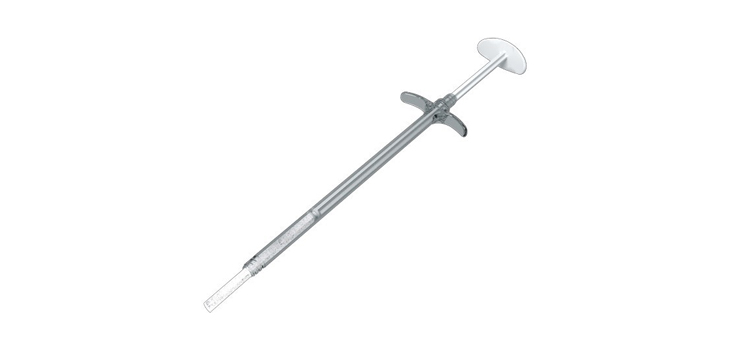
The material is supplied in two different style applicators. The SBX Putty is supplied in a sterile applicator with an attached plunger. NanoBone QD is an alternate packaging of the NanoBone SBX Putty and is supplied in a sterile cartridge with a separate sterile plunger.
Jim Cassidy, Ph.D., Artoss’ managing director, told OTW that in order to secure the indication for use as a standalone graft in posterolateral spinal fusion, “NanoBone SBX Putty was tested against iliac crest autograft in the ASTM standard animal model that is designed to replicate clinical relevant fusion rates and found to be equivalent. A majority of bone void fillers must be mixed with autograft in order to achieve equivalent fusion rates to autograft. By eliminating the need to mix with autograft or bone marrow aspirate, NanoBone can offer significant cost savings to hospitals and streamline procedures in the operating room.”
J. Eric Gee, M.D., said using the putty as a standalone in posterolateral spinal fusion, “represents a significant advancement in patient care. Eliminating the need to mix synthetic graft with autograft or to harvest and concentrate bone marrow aspirate will save time and money as well as streamline operating room procedures.”
The company says its products have been used in Europe and the U.S. for more than ten years in more than 100,000 clinical cases across all indications. They have been available in the U.S. through Artoss, Inc. since 2015.
Author
React:
Discussion
This is a fascinating development. In my practice we've seen similar outcomes with the revised protocol. The key differentiator seems to be patient selection criteria. Has anyone else noticed the correlation with BMI thresholds?
Great point. I'd push back slightly on the conclusion, the sample size in the cited study is too small to draw population-level inferences. That said, the directional signal is compelling and worth a larger RCT.
We implemented a similar approach last year. Early results are promising but we're still gathering 12-month follow-up data. Happy to share our protocol if anyone is interested.
Join the conversation
Orthopedic professionals are discussing this. Sign in and upgrade to read every comment and add your voice.