
Lacking information on the long-term outcomes of selective fusion in adolescent idiopathic scoliosis (AIS), a team of researchers used a multicenter database to identify 51 patients who had undergone this procedure.
10-Year Outcome Data on “Selective Fusion” in Scoliosis
2 min read Premium comments
Secondary#scoliosis#selectivefusion#truncalbalance
Their work, “Ten-Year Outcomes of Selective Fusions for Adolescent Idiopathic Scoliosis,” was published in the May 1, 2019 edition of The Journal of Bone and Joint Surgery.
Co-author Peter Newton, M.D. with the Rady Children’s Hospital in San Diego, California, described the genesis of this study to OTW, “For decades pioneers in scoliosis treatment have touted the concept of a ‘selective fusion’ and this multicenter report from the Harms Study Group gives strong evidence to support that concept.”
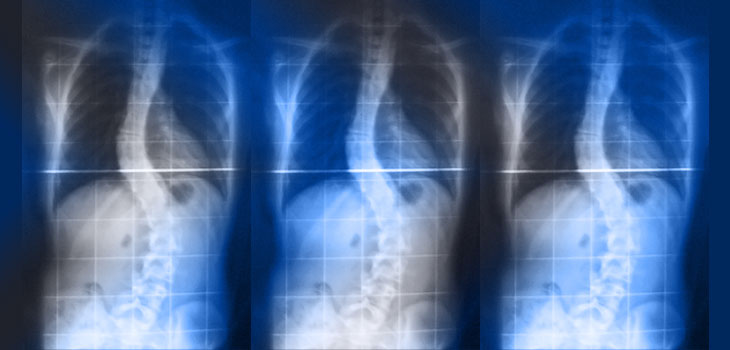
“Many patients with scoliosis have an ’S’ shaped scoliosis meaning there are two curves present, one to the right and another to the left. When the curves have particular features of relative size and flexibility, it is possible to perform surgical correction on only the largest curve sparing the motion of the remaining smaller curve.”
“Thus, we selectively instrument and fuse the major curve as opposed to fusing both curves. Exactly in which patients/curves this concept can be applied remains controversial.”
“The selective fusion approach depends on ‘spontaneous’ correction of the minor curve in response the instrumented correction of the major curve.”
“This 10-year follow-up study demonstrated the durability of the spontaneous correction. Because spinal fusion procedures sacrifice some degree of spinal motion, ideally the fusion should remain as short as possible. The selective fusion approach does not apply to all cases of scoliosis, but when it can be utilized, the goals of correction and stabilization of the curvature can be achieved with few segments of the spine fused.”
“I think the take home messages are really two: First, we have presented prospective quality of life measures demonstrating excellent patient reported outcomes of scoliosis surgery at 10 years and second, selective fusion of double curves is a durable procedure with little risk for progression of the un-instrumented secondary curves.”
Burt Yaszay, M.D., the principal investigator for this study and also with the Rady Children’s Hospital in San Diego also commented on this important study to OTW, “The goals in surgically treating AIS is to halt scoliosis progression, maintain truncal balance, maximally correcting the 3D deformity and minimizing fusion levels.”
“In performing a selective fusion, the surgeon attempts to fuse the main or structural curve while leaving the smaller compensatory curve unfused and mobile. By treating the main curve, the hope is that there is ‘spontaneous correction’ of the compensatory curve.”
“‘Selective fusion’ is still one of the most debated and published topics in AIS since many ideas exist about when and how a ‘selective fusion’ should be performed. This study reports on prospectively collected outcomes of patients that were fused ‘selectively’ with a minimum of 10 years follow-up. Ultimately the data demonstrates that the outcomes as measured radiographically and by patient reported outcomes (PRO) are doing well and that the unfused segments do not appear to be progressing.”
Author
React:
Discussion
This is a fascinating development. In my practice we've seen similar outcomes with the revised protocol. The key differentiator seems to be patient selection criteria. Has anyone else noticed the correlation with BMI thresholds?
Great point. I'd push back slightly on the conclusion, the sample size in the cited study is too small to draw population-level inferences. That said, the directional signal is compelling and worth a larger RCT.
We implemented a similar approach last year. Early results are promising but we're still gathering 12-month follow-up data. Happy to share our protocol if anyone is interested.
Join the conversation
Orthopedic professionals are discussing this. Sign in and upgrade to read every comment and add your voice.