
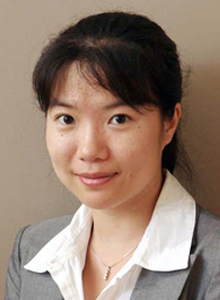
X. Sherry Liu, Ph.D., associate professor in the Department of Orthopaedic Surgery and Bioengineering at the University of Pennsylvania, was presented with the Kappa Delta Young Investigator Award at the 2019 Annual Meeting of the American Academy of Orthopaedic Surgeons (AAOS).
X. Sherry Liu, Ph.D. Wins Kappa Delta Young Investigator Award
2 min read Premium comments
#osteoporosis#femaleskeleton#postmenopausalbonehealth#xsherryliu
Dr. Liu was recognized for her research on how a woman’s reproductive history is a key factor for osteoporosis and fracture risk due to estrogen deficiency. The Kappa Delta Awards recognize scientists whose research in musculoskeletal disease or injury have led to advancement in patient treatment and care.
Dr. Liu and her team studied rats to observe their hormone changes and how their bone structure responds to estrogen deficiency during reproduction and post menopause.
“The human body is very smart,” said Dr. Liu. “When there is a huge demand of calcium, the fastest and most efficient way to get it is by resorption, and we found that the bones of reproductive rats prepare for this by shifting its structure to overcome weakness.”
Dr. Liu is also the director of the microCT Imaging Core of Penn Center for Musculoskeletal Disorders. Dr. Liu received a bachelor’s in Electrical Engineering from Tsinghua University, Beijing, China. In 2007, she received her Ph.D. in Biomedical Engineering from Columbia University and then continued her post doctorate training in the Endocrinology Division at Columbia University Medical Center.
Dr. Liu commented to OTW, “The effect of menopause on the female skeleton has been widely studied. There are also many studies on how parity/breastfeeding affect female skeleton. However, there was lack of information on the influence of reproduction and lactation history on post-menopausal bone health. Our study aimed to fill this critical knowledge gap on the changes in bone quality between childbearing and post-menopause by using a rat model.”
“What is remarkable about lactation-induced bone loss is that there is a rapid bone recovery phase after weaning. Post-lactation is one of the few instances where the human skeleton naturally undergoes this remarkable bone recovery without medical intervention (the other example is bone recovery after returning to earth from a space flight). I was fascinated by these interesting phenomena associated with lactation. Once I started my own lab, I immediately start to work on developing a rat model to study lactation-bone relationship.”
“We would like to expand our future investigations into other types of musculoskeletal tissues, such as intervertebral disc, tendon, and ligament, and how such tissues are influenced by female reproduction and lactation.”
Author
React:
Discussion
This is a fascinating development. In my practice we've seen similar outcomes with the revised protocol. The key differentiator seems to be patient selection criteria. Has anyone else noticed the correlation with BMI thresholds?
Great point. I'd push back slightly on the conclusion, the sample size in the cited study is too small to draw population-level inferences. That said, the directional signal is compelling and worth a larger RCT.
We implemented a similar approach last year. Early results are promising but we're still gathering 12-month follow-up data. Happy to share our protocol if anyone is interested.
Join the conversation
Orthopedic professionals are discussing this. Sign in and upgrade to read every comment and add your voice.