
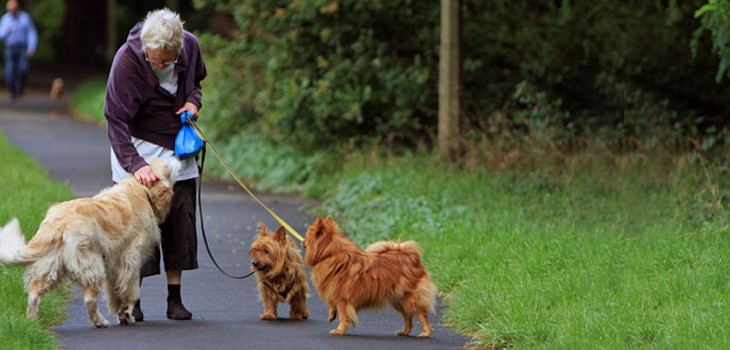
A new Penn Medicine study published in JAMA Surgery, “Fractures in Elderly Americans Associated With Walking Leashed Dogs,” recently highlighted the increase risk for bone fractures seniors face when walking their dogs. Between 2004 and 2017, fractures related to these walks more than doubled in patients 65 and older, and 78% percent of the injured were women.
Seniors at Increased Fracture Risk When Walking Dogs
2 min read Premium comments
Secondary#pennmedicine#bonefractures#dogwalking#seniors
The researchers pointed to two trends—more seniors owning pets and an increased emphasis on continuing to exercise even when we are older—as the causes of the increase in fractures.
“Dog walking, which has repeatedly demonstrated social, emotional and physical health benefits, is a popular and frequently recommended activity for many older Americans seeking new ways to stay active,” said the study’s lead author Kevin Pirruccio, a second-year medical student in the Perelman School of Medicine at the University of Pennsylvania.
“This study highlights that while there are undoubtedly pros to dog walking, patients’ risks for falls must be factored into lifestyle recommendations in an effort to minimize such injuries.”
Pirruccio and colleagues, including senior author Jaimo Ahn, M.D., Ph.D., an associate professor of Orthopaedic Surgery and Yeo Myoung Yoon, a research assistant at Penn, reviewed all the fractures in the 65-and-older population related to “pet products” in the National Electronic Injury Surveillance System database of the United States Consumer Product Safety Commission and found that fracture injuries linked to walking leashed dogs increased from 1,671 cases in 2004 to 4,396 in 2017.
According to the data, about half of those injuries occurred to the upper extremities, with fractures of the wrist, upper arm, finger and shoulder being the most common. In addition, 17% of the injuries were hip fractures, which according the researchers is of concern because mortality rates related to hip fractures in patients over 65 is almost 30%.
Pirruccio and colleagues also noted that while these numbers are already startling that there might be more dog-walking injuries that they were not able to track. In their study, they were only able to include those patients who went to an emergency room for treatment.
Despite their findings, the researchers said they are not advocating for seniors to stop owning or walking their dogs. Instead they hope that their study offers a foundation for more research on the risks we all face as we get older.
“Everyday actions mean everyday consequences,” Ahn said. “While it is important for medicine to sometimes focus on the rarer but devastating conditions such as cancer and heart attacks, we also have to remember that understanding and improving the little things in life can have a dramatic, positive effect.”
Author
React:
Discussion
This is a fascinating development. In my practice we've seen similar outcomes with the revised protocol. The key differentiator seems to be patient selection criteria. Has anyone else noticed the correlation with BMI thresholds?
Great point. I'd push back slightly on the conclusion, the sample size in the cited study is too small to draw population-level inferences. That said, the directional signal is compelling and worth a larger RCT.
We implemented a similar approach last year. Early results are promising but we're still gathering 12-month follow-up data. Happy to share our protocol if anyone is interested.
Join the conversation
Orthopedic professionals are discussing this. Sign in and upgrade to read every comment and add your voice.