
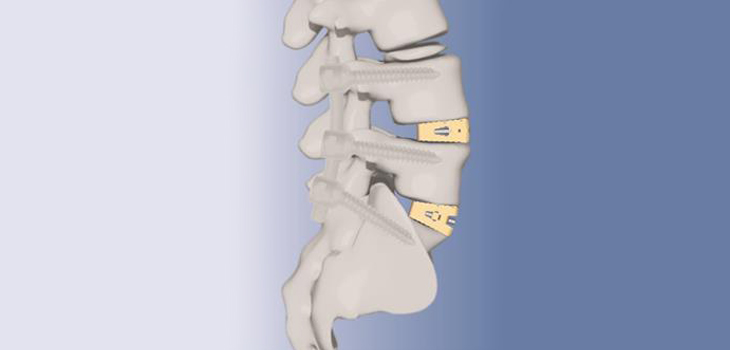
Solvay S.A., an advanced materials and specialty chemicals company headquartered in Brussels, Belgium, has announced that its Zeniva PEEK (polyetheretherketone) has been selected by Osaka, Japan-based KiSCO Co. for the first non-metal lumbar cage for vertical interbody fusion made in Japan. This cage is commercially available only in Japan.
Osaka-Based KiSCO Picks Solvay’s PEEK Implants for Japan
2 min read Premium comments
Secondary
According to both companies, “KiSCO machined the spinal cage from Zeniva ZA-500 PEEK, which Solvay manufactures in compliance with ISO 13485. The performance properties of Zeniva PEEK, including excellent fatigue resistance and a modulus similar to bone, were key factors in material selection. KiSCO also wanted an implantable medical material that could facilitate post-operative diagnosis. As an alternative to titanium, a common spinal cage material, PEEK is attractive because its radio transparency allows for easy visualization in medical X-ray and MRI imaging.”
“During clinical trials, Solvay’s Zeniva PEEK enabled KiSCO’s advanced spinal cage to maintain structural stability even when screws were used to expand the spacers. Solvay’s responsiveness and ability to provide quality data for biological evaluation facilitated the regulatory process so that KiSCO could secure approval from PMDA in a short period of time.”
Dane Waund, global marketing manager for orthopedics at Solvay, told OTW, “KiSCO’s selection of Solvay and our Zeniva PEEK for their new spinal cage product represents an important milestone for us in Japan. We see a clear trend toward innovation and growth from Japanese medical device manufacturers, and we are committed to supporting their efforts. KiSCO is a leader in this regard and is the first domestic med-device manufacturer in Japan to utilize our Zeniva PEEK for a spinal application in the local Japanese market.”
“KiSCO’s selection of Solvay and our Zeniva PEEK for their new spinal cage product validates our strategic decision to enter and strongly support the Japanese orthopedic market. Currently, less than 25% of the approximately USD $425 million spine hardware market in Japan is supplied by local OEMs [original equipment manufacturer]. We believe this is shifting and are committed to collaboration with Japanese device manufacturers innovating in spinal applications. KiSCO is the first commercial confirmation of this trend.”
“Surgeons are typically impressed with the rigor surrounding the production and quality assurance of Solvay’s Zeniva PEEK when they visit our facilities. While industrial specification standards exist for implantable plastics, just as they do for metals, the carefully designed measures, production environment, and detailed testing we routinely perform all come as a pleasant surprise to surgeons who may be unaware of the level of quality/safety procedures we employ for the materials used in their devices. These systems ensure that Zeniva PEEK is safe and performs consistently around the globe, regardless of the device manufacturer’s production location. In a nutshell, orthopedic surgeons can trust Zeniva PEEK used in Japan just as they trust it in America and Europe.”
Author
React:
Discussion
This is a fascinating development. In my practice we've seen similar outcomes with the revised protocol. The key differentiator seems to be patient selection criteria. Has anyone else noticed the correlation with BMI thresholds?
Great point. I'd push back slightly on the conclusion, the sample size in the cited study is too small to draw population-level inferences. That said, the directional signal is compelling and worth a larger RCT.
We implemented a similar approach last year. Early results are promising but we're still gathering 12-month follow-up data. Happy to share our protocol if anyone is interested.
Join the conversation
Orthopedic professionals are discussing this. Sign in and upgrade to read every comment and add your voice.