
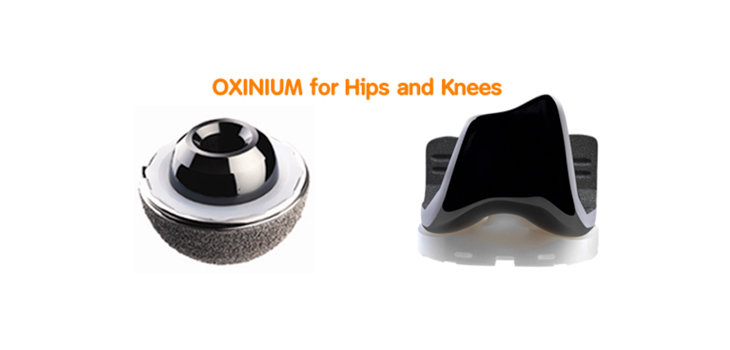
New total hip arthroplasty (THA) research from the Hospital for Special Surgery (HSS) in New York has tackled fretting and corrosion in retrieved OXINIUM (OxZr, oxidized zirconium, Smith & Nephew, Memphis, Tennessee) femoral heads and compared the results with those from a matched cohort of cobalt-chromium (CoCr) femoral heads.
HSS Compares Oxinium Corrosion Rates to Cobalt Chrom
1 min read Premium comments
Secondary
The research, “Do oxidized zirconium heads decrease tribocorrosion in total hip arthroplasty? a study of retrieved components,” was published in the March 31, 2019 edition of The Bone and Joint Journal.
The authors wrote, “A total of 28 OxZr femoral heads were retrieved during revision total hip arthroplasty (THA) and matched to 28 retrieved CoCr heads according to patient demographics. The mean age at index was 56 years (46 to 83) in the OxZr group and 70 years (46 to 92) in the CoCr group. Fretting and corrosion scores of the female taper of the heads were measured according to the modified Goldberg scoring method.”
Co-author Mathias Bostrom, M.D., attending orthopedic surgeon at HSS, told OTW, “We have seen no problems with the OxZr heads on titanium femoral components, but we have seen tremendous problems with CoCr heads on titanium implants. There was just no information regarding OxZr heads. We were seeking to determine if these “ceramic/metal” heads perform like metal heads and demonstrate corrosion or whether they behave like ceramic heads and demonstrate little (if no) corrosion.
“We observed very little corrosion on the OxZr heads, at least in the short term, and developed a methodology to assess corrosion in the female taper of the heads which was technically challenging. With CoCr heads increased corrosion was associated with increasing head size. OxZr heads behave more like ceramic heads and pose little chance of developing trunion corrosion.”
Author
React:
Discussion
This is a fascinating development. In my practice we've seen similar outcomes with the revised protocol. The key differentiator seems to be patient selection criteria. Has anyone else noticed the correlation with BMI thresholds?
Great point. I'd push back slightly on the conclusion, the sample size in the cited study is too small to draw population-level inferences. That said, the directional signal is compelling and worth a larger RCT.
We implemented a similar approach last year. Early results are promising but we're still gathering 12-month follow-up data. Happy to share our protocol if anyone is interested.
Join the conversation
Orthopedic professionals are discussing this. Sign in and upgrade to read every comment and add your voice.