
The FDA has granted the first clearance for a pedicle screw system using a new superalloy metal.
First FDA Clearance for New Superalloy Pedicle Screw System
2 min read Premium comments
#spinesurgerySecondary#pediclescrews#fda510k
On March 27, 2019, MiRus, LLC, announced that it had received a 510(k) clearance for its Europa Pedicle Screw System. The system uses a proprietary molybdenum rhenium superalloy instead of titanium, cobalt or iron-based alloys currently in use.
Medical Implant Technology
The company’s founder and CEO Jay S. Yadav, M.D. said the clearance, “Is the culmination of over ten years of research and development. Our scientists and engineers working with world class metallurgists have created the greatest advance in medical implant material technology in at least four decades. The MoRe superalloy will revolutionize many aspects of the medical device industry.”
He added that the company’s scientific team developed a “comprehensive body of evidence” which served as the basis for the clearance.
When the company won one of the 2018 OTW Spine Technology Awards, we reported that the system is the smallest thoracolumbosacral pedicle screw system on the market, yet it is two to three times stronger and four times more fatigue resistant than standard titanium and cobalt chromium pedicle screw systems.
Superalloy
The “polyaxial pedicle screws are made from titanium and the rod components are made from MiRus’ novel proprietary metal alloy, molybdenum-47.5rhenium (MoRe®, ASTM F3273-17).”
“MoRe® is pure (99.99%) molybdenum and rhenium. Its hydrophilic and a superiorly bio-friendly alloy. It contains no nickel. Biomechanical and biological testing has shown that MoRe is stronger, more fatigue resistant, less likely to generate wear debris, more osteoconductive, and biofilm resistant than titanium and cobalt chromium.”
Munish Gupta M.D., Mildred B. Simon Distinguished Professor of Orthopaedic Surgery, Director of Adult/Pediatric Spinal Deformity service and Professor of Neurological Surgery at Washington University, said, “Spine deformity surgery in adults remains plagued by the poor performance of current implants with rod failure occurring in 18%-20% of patients. The MoRe alloy shows great promise in improving the durability of adult spine deformity constructs. This advance will help prevent early revision surgery and improve outcomes in adult deformity surgery in particular.”
James Nunley, M.D., Goldner Jones Professor of Orthopaedic Surgery at Duke, remarked “This new material with its greater strength, fatigue resistance and superior biological properties will allow us to make lower profile foot and ankle implants leading to smaller surgical exposures and reduced revision rates.”
Indications
According to FDA documents, the system is “intended to provide immobilization and stabilization of spinal segments in skeletally mature patients as an adjunct to fusion in the treatment of acute and chronic instabilities or deformities of the thoracic, lumbar, and sacral spine.”
It is “intended for posterior, noncervical pedicle fixation for the following indications: degenerative disc disease (defined as back pain of discogenic origin with degeneration of the disc confirmed by history and radiographic studies); spondylolisthesis; trauma (i.e., fracture or dislocation); spinal stenosis; curvatures (i.e., scoliosis, kyphosis, and/or lordosis); tumor; pseudoarthrosis; and failed previous fusion.”
Europa System
The system consists “…of both open and minimally invasive surgery polyaxial pedicle screw and rod components that are available in different sizes to accommodate various patient anatomical and physiological requirements.”
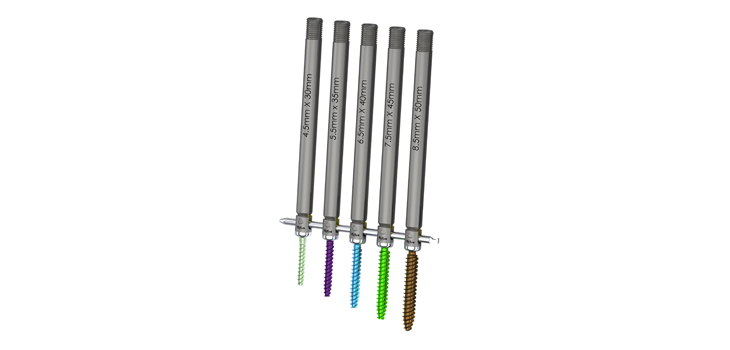
“The pedicle screws are available in 5 different diameters from Ø4.5mm to Ø8.5mm, are solid or cannulated with lengths ranging from 25mm to 80mm.… The rods are Ø4.5mm in diameter with lengths ranging from 30mm to 300mm, are available in both straight or curved configurations.… The pedicle screws and rods are intended to be implanted via a posterior approach. Implants are single use and the system is provided non-sterile.”
Author
React:
Discussion
This is a fascinating development. In my practice we've seen similar outcomes with the revised protocol. The key differentiator seems to be patient selection criteria. Has anyone else noticed the correlation with BMI thresholds?
Great point. I'd push back slightly on the conclusion, the sample size in the cited study is too small to draw population-level inferences. That said, the directional signal is compelling and worth a larger RCT.
We implemented a similar approach last year. Early results are promising but we're still gathering 12-month follow-up data. Happy to share our protocol if anyone is interested.
Join the conversation
Orthopedic professionals are discussing this. Sign in and upgrade to read every comment and add your voice.