
Akron, Ohio-based Intellirod Spine says it has received a “first-ever” FDA De Novo Approval for its disposable spinal rod strain sensor, the LOADPRO.
“First-Ever” De Novo Approval for LOADPRO Spinal Rod Strain Sensor
2 min read Premium comments
Secondary#denovoapproval#loadpro#spinalrodstrainsensor
According to the FDA, the De Novo process provides a pathway to Class I or Class II classification for medical devices for which general controls or general and special controls “provide a reasonable assurance of safety and effectiveness,” but for which there is no legally marketed predicate device.
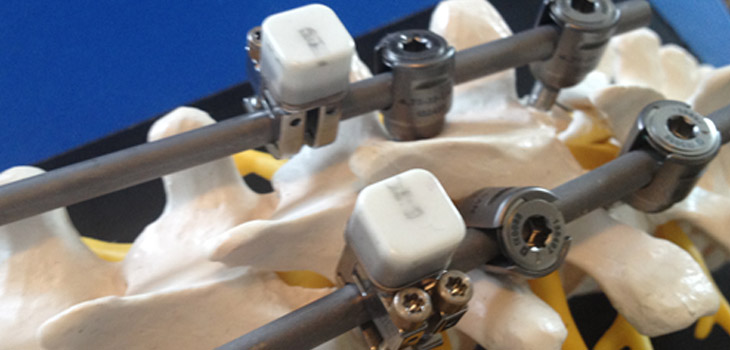
An April 1, 2019 company announcement states “…the device clamps onto a standard 5.5mm rod for use in monitoring rod strain during a kyphotic correction surgery. This initial approval is for use of LOADPRO with the FORTEX pedicle screw system from Xtant Medical.”
Intellirod’s CEO, Ric Navarro, said this is “the first device in this new FDA product category for spine to give the surgeon unprecedented new information about how much strain is on their rods as they correct a deformity. Now the surgeon can quantify their tactile feel and be knowledgeable of the strain level as it relates to the yield limits of the rod material.”
Getting through the FDA without a predicate is an extra challenge. Justin Eggleton, vice president of Spine Regulatory Affairs for MCRA LLC, the clinical research organization and advisory firm that assisted Intellirod, said, “Intellirod Spine’s collaboration with FDA demonstrates the value of including the Agency early in the process to ensure all evaluations are focused on yielding data that speaks to the benefit-risk profile.”
Rolando Puno, M.D., company co-founder and spine surgeon at the Leatherman Spine Center in Louisville, Kentucky, said, “Post-market studies will add greater understanding of strains induced on the rods, the effect of different surgeon techniques on rod strain, and how reproducible procedures are relative to rod strain. Ultimately, we want to understand how our loading of the implants during surgery can affect the outcomes. Implant-related complications in long construct kyphotic deformities can be as high as 20%. LOADPRO gives us the tool to do these investigations and to learn the implications of our techniques.”
The company stated it plans to do site releases of the product in Cleveland, Ohio, and Louisville, Kentucky and expand its commercial launch sites. The company also plans to seek future FDA approvals with additional pedicle screw systems.
The company, formerly known as OrthoData, Inc., is developing multiple wearable, disposable and implantable wireless sensors.
Author
React:
Discussion
This is a fascinating development. In my practice we've seen similar outcomes with the revised protocol. The key differentiator seems to be patient selection criteria. Has anyone else noticed the correlation with BMI thresholds?
Great point. I'd push back slightly on the conclusion, the sample size in the cited study is too small to draw population-level inferences. That said, the directional signal is compelling and worth a larger RCT.
We implemented a similar approach last year. Early results are promising but we're still gathering 12-month follow-up data. Happy to share our protocol if anyone is interested.
Join the conversation
Orthopedic professionals are discussing this. Sign in and upgrade to read every comment and add your voice.