
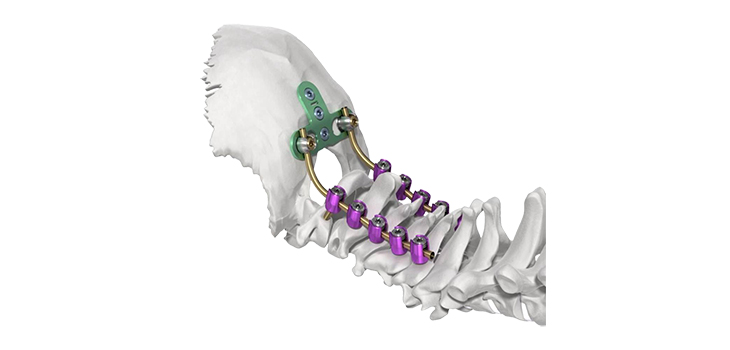
After more than two years of deliberations, the Food and Drug Administration (FDA) issued a rule on April 1 designating posterior cervical screw systems as Class II medical devices with a set of special controls.
FDA Designates Posterior Cervical Screws Class II Devices
2 min read Premium comments
#fdaSecondary#depuysynthes#posteriorcervicalscrews
The rule is to go into effect May 1.
The prior status of these systems from 2001 until this final rule was as unclassified “pre-amendment devices” for which predicates were on the market before the May 28, 1976 Medical Device Amendments law. Under that treatment, posterior cervical screws were subject to the 510(k) regulations, but without the special controls cited below.
The history and rationale for this FDA action were covered in Walter Eisner’s story, “FDA Proposes to Classify Posterior Screw Systems,” in Orthopedics This Week on April 5, 2016.
Do you have or use products already on the market? “It is not expected that manufacturers of devices already on the market would need to submit new 510(k) notifications, 510(k) amendments, or add-to-files to demonstrate conformance with the special controls,” the FDA rule says.
The Final Version of the Special Controls
Here’s the precise wording of the special controls; they differ only in small ways from the original controls proposed in 2016.
(1) The design characteristics of the device, including engineering schematics, must ensure that the geometry and material composition are consistent with the intended use.
(2) Nonclinical performance testing must demonstrate the mechanical function and durability of the implant.
(3) Device components must be demonstrated to be biocompatible.
(4) Validation testing must demonstrate the cleanliness and sterility of, or the ability to clean and sterilize, the device components and device-specific instruments.
(5) Labeling must include the following:
(I) A clear description of the technological features of the device including identification of device materials and the principles of device operation;
(ii) Intended use and indications for use including levels of fixation;
(iii) Device specific warnings, precautions, and contraindications that include the following statements:
(A) “Precaution: Preoperative planning prior to implantation of posterior cervical screw systems should include review of cross-sectional imaging studies (e.g., CT and/or MRI) to evaluate the patient’s cervical anatomy including the transverse foramen, neurologic structures, and the course of the vertebral arteries. If any findings would compromise the placement of these screws, other surgical methods should be considered. In addition, use of intraoperative imaging should be considered to guide and/or verify device placement, as necessary.”
(B) “Precaution: Use of posterior cervical pedicle screw fixation at the C3 through C6 spinal levels requires careful consideration and planning beyond that required for lateral mass screws placed at these spinal levels, given the proximity of the vertebral arteries and neurologic structures in relation to the cervical pedicles at these levels.”
(iv) Identification of magnetic resonance (MR) compatibility status;
(v) Cleaning and sterilization instructions for devices and instruments that are provided non-sterile to the end user, and;
(vi) Detailed instructions of each surgical step, including device removal.”
The final rule, with the FDA rationale, is available at this web page.
Author
React:
Discussion
This is a fascinating development. In my practice we've seen similar outcomes with the revised protocol. The key differentiator seems to be patient selection criteria. Has anyone else noticed the correlation with BMI thresholds?
Great point. I'd push back slightly on the conclusion, the sample size in the cited study is too small to draw population-level inferences. That said, the directional signal is compelling and worth a larger RCT.
We implemented a similar approach last year. Early results are promising but we're still gathering 12-month follow-up data. Happy to share our protocol if anyone is interested.
Join the conversation
Orthopedic professionals are discussing this. Sign in and upgrade to read every comment and add your voice.