
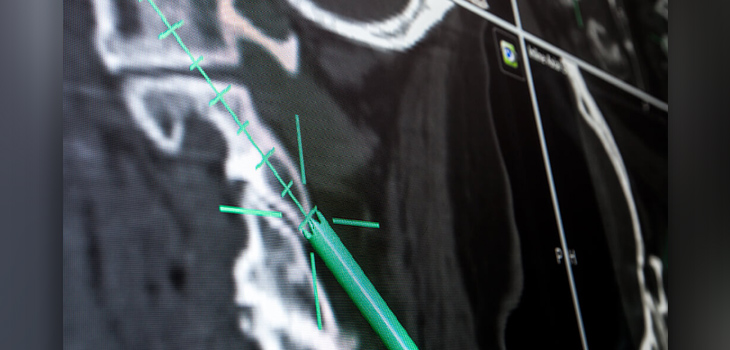
The Brainlab Spine & Trauma 3D Navigation software, which controls the Brainlab Spine & Trauma Navigation System, has faults which could cause a surgeon to see the operating space incorrectly and cause serious injury or death to patients, the Food and Drug Administration (FDA) announced April 15.
Brainlab Issues Class 1 Recall of Its Spinal Navigation Software
2 min read Premium comments
#3dnavigationSecondary#brainlab#stereotaxicnavigationsystems
The software is being recalled “due to the potential for incorrect information to display during surgery that may prevent the surgeon from accurately navigating surgical tools inside the patient,” which could result in “damage to the patient’s body, a second, otherwise unnecessary, surgical procedure, or serious life-threatening patient injuries or death,” the recall notice said.
According to the company, the affected Spinal Navigation Software Version 1.0 was manufactured from May 2018 to February 2019 and the recall affects 60 devices in the U.S.
Brainlab AG is a German manufacturer of navigation software to guide knee, hip, and orthopedic trauma as well as neurosurgery.
It was not immediately clear how Brainlab numbers its versions. The recall said the version was 1.0, and that it was distributed from May 2018 to February 2019. However, a search of FDA’s Manufacturer and User Facility Device Experience (MAUDE) database yields 22 reports of adverse events in 2018 and 2019 involving the Brainlab spinal navigation system. Those reports cite versions 2.6 and 3.1. Most were cases in which surgeons complained that the software registered incorrect locations for pedicle screws.
A search for “recall” at the Brainlab website didn’t yield any results; we have asked the company for clarification. Health care professionals and distributors in the U.S. with questions can call 1-800-597-5911 or email us.support@brainlab.com .
What to do, Brainlab says…
The recall says “Brainlab notified consignees of the problem on March 1, 2019, and directed consignees to:
- “Avoid workflow changes with already registered datasets, if possible. For intraoperative screw planning, avoid switching between the workflow application selections ‘3D Navigation Intraoperative Imaging’ and ‘3D Navigation’ during one patient treatment.”
- “After restarting the application with a previously registered dataset (crash restore or workflow change), always activate and deactivate the sub-menu ‘Orientation’ once to ensure that the correct, expected view representations are displayed for the current session.”
- “Continue to follow instructions and warnings in the user guide, particularly regarding maintaining navigation accuracy and avoiding reference displacement.”
Brainlab said it will cease distribution of this version of the software when an updated version is released.
FDA issued a statement in 2017 saying that all stereotaxic navigation systems can give bad results, resulting in injury or death to patients. At the time, FDA said no system is more likely or less likely to lead the surgeon into an error than any other. That statement gave a lengthy series of recommendations on how to use them.
Author
React:
Discussion
This is a fascinating development. In my practice we've seen similar outcomes with the revised protocol. The key differentiator seems to be patient selection criteria. Has anyone else noticed the correlation with BMI thresholds?
Great point. I'd push back slightly on the conclusion, the sample size in the cited study is too small to draw population-level inferences. That said, the directional signal is compelling and worth a larger RCT.
We implemented a similar approach last year. Early results are promising but we're still gathering 12-month follow-up data. Happy to share our protocol if anyone is interested.
Join the conversation
Orthopedic professionals are discussing this. Sign in and upgrade to read every comment and add your voice.