
Who is Liveyon, LLC and what are they really selling?
Who Is Liveyon and What Are They Really Selling?
10 min read Premium comments
#allograft#genetech#humantissues#liveyon
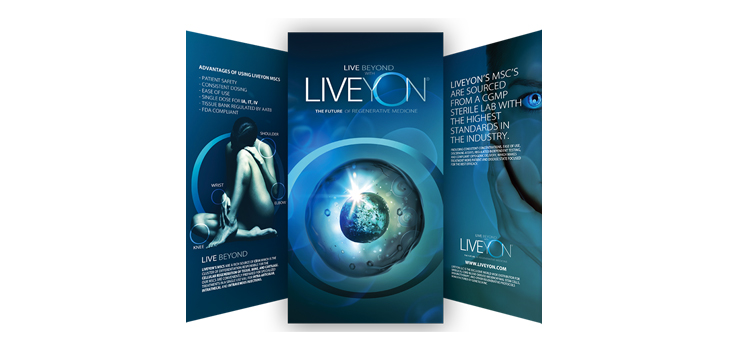
This company’s website says that it is a company which markets and is seeking distribution for PREMIERMAXCB® and PREMIERMAXCB® PLUS umbilical-blood-based allograft products nationwide and internationally.
The company has placed ads in recent weeks on ZipRecruiter.com seeking individuals to work as salespeople on a contract basis in at least 38 U.S. cities, plus Vancouver and Toronto, Canada, saying they’ll make $6,000 to $10,000 per month. It has also incorporated LLCs titled Liveyon Mexico LLC, Liveyon Indonesia LLC, and Liveyon Vietnam LLC.
But there is so much more.
Peeling Back the Layers at Liveyon
Liveyon used to be the sole distributor of umbilical-cord-derived products called Regen5®, Regen10®, and ReGen30®, which it sold to care providers to treat several orthopedic conditions. The products were recalled in September.
The manufacturer of the products for Liveyon, a company named Genetech (not the much larger and better-known Genentech), was hit with a November 28, 2018 FDA Warning Letter (cc to Liveyon) for having neither an investigational new drug application (IND) nor an approved biologics license application (BLA).
In December, the Centers for Disease Control (CDC) reported that a dozen people had been hospitalized with serious infections after injections (“CDC: Patients Contaminated by Allograft Umbilical Cord Products,” Orthopedics This Week, January 24, 2019).
How Liveyon Describes Itself
According to Liveyon’s website, the Liveyon “process” is a “regenerative medicine product is derived from Umbilical Cord Blood donations … The umbilical cord tissue and blood is extracted and taken to our lab … From here our regenerative medicine product is made. [It is] a homogenous mixture of stem cells and growth factors from umbilical cord blood.”
(https://liveyon.com/process/)
Liveyon’s web page continues, “By combining stem cells and growth factors, our product may give a longer lasting effect and improve quality of life for those suffering from debilitating diseases/disorders, such as arthritis and orthopedic indications.” Another web page at the site mentions (but doesn’t specifically say it treats) cartilage and joint function improvement, fractures, heart disease, autoimmune disorders, Parkinson’s Disease.
The FDA’s Take on Cord Blood Products
According to the FDA: “Cord blood stored for potential future use by a patient unrelated to the donor meets the definition of “drug” under the Food, Drug & Cosmetic Act and “biological product” under Section 351 of the Public Health Service Act. Cord blood in this category must … be licensed under a biologics license application (BLA), or subject to an investigational new drug application (IND) before use.” The FDA definition of blood includes blood-derived products.
Also, here’s a brief summary of apparently relevant clauses in FDA regulations defining which HCT/Ps do not need a BLA or IND:
- The HCT/P is intended for use in the donor, or a near relative, or for homologous* use; and
- It is “not dependent upon the metabolic activity of living cells for its primary function,” and
- It is only “minimally manipulated.”
*“Homologous” means “an HCT/P that performs the same basic function or functions in the recipient as in the donor.”
An FDA guidance document expands on that “same basic function” phrase, adding, “If an HCT/P is intended for use as an unproven treatment for a myriad of diseases or conditions, the HCT/P is likely not intended for homologous use only.” See: Regulatory Considerations for Human Cells, Tissues, and Cellular and Tissue-Based Products: Minimal Manipulation and Homologous Use.
The third criterion of being only “minimally manipulated” is complex, but the guidance document cited above says that if growth factors are added to the cells, then the product does not meet the “minimally manipulated” criterion.
We’re not in the business of making judgments for regulators, but to the layman’s eye, the Liveyon product line seems to raise these issues:
- Is it “homologous?” It is part of umbilical cord blood used to treat other parts of other people’s bodies having nothing to do with umbilical cords. A layman’s guess would be that this isn’t what FDA means by “homologous.” Since it is also apparently not for use in the same patient or a near relative, this criterion alone would require a BLA in order to sell it or an IND license to test it.
- To a layman, the phrase “stem cells” means “live stem cells.” Under the rules, live cells (stem or otherwise) require a BLA or IND. If the contents are dead stem cells, then that would seem to be false and deceptive advertising to a layman whose understanding of stem cells is that only the live ones have any effect.
- As for mixing “stem cells” and “growth factors” in a “homogenized” liquid, a layman reading the regulations five or six times might conclude that such a cocktail is more than what FDA means by “minimally manipulated.”
In response to a first round of questions, Liveyon acknowledged through an outside spokesperson on January 28 that had not made an IND application nor filed for a BLA for its products, and that it was hiring the necessary staff. A product can’t be sold nationally under an IND, which is a one-investigator license. A BLA requires clinical studies and trials beforehand, and then is an eight-month process for a “priority” BLA and 12 months for a standard one.
Those regulatory issues and timetables raise the question of why Liveyon is hiring a 40-city international sales force now.
Only eight organizations have received FDA biologics licenses for cord blood. All eight licenses are solely for treating “patients with disorders affecting the hematopoietic system.” None is for orthopedics or any of the other uses mentioned at the Liveyon website. The Liveyon website doesn’t mention treatment of the hematopoietic system as a possible use for its product line.
Three Dallas, Texas-area patients who alleged that they were infected by umbilical cord blood products sued Liveyon, Genetech, and a local clinic last November. Their lawsuit claims, in addition to the infections, that the products were falsely represented as containing live stem cells.
“Relatively Safe” vs. Regulatory Safe
The Liveyon home page says that the PREMIERMAXCB® product is “relatively safe and easy to use.”
An FDA regulatory attorney who looked at that language, Mark I. Schwartz of Hyman Phelps & McNamara, who was the Deputy Director in the Office of Compliance and Biologics Quality at FDA’s Center for Biologics Evaluation and Research from 2012 to 2015, said that statement “made me scratch my head.”
“It is unclear what that means, and whether it is a response to the adverse events related to Genetech’s products,” he said. “Of course, for approved biological products, the standard is safe, pure and potent, not ‘relatively safe, pure and potent.’ But even the standard for 361 HCT/Ps is more rigorous than ‘relatively safe,’ as the statutory requirement is the ‘prevention of the introduction, transmission or spread of communicable disease,” he added.
Questions About Liveyon Management
The CEO of Liveyon LLC, which is headquartered in Yorba Linda in Southern California, is a man named John W. Kosolcharoen. Liveyon LLC was incorporated on June 13, 2016.
A John W. Kosolcharoen, who at the time lived in Santa Ana, 12.3 miles from Yorba Linda, was arrested June 20, 2016 after a lengthy FBI investigation. He pleaded guilty on August 23, 2016 to one federal felony after it was alleged that he had headed a TRICARE kickback and fake prescriptions scheme from late 2014 through his arrest date. Released immediately on bail, he was due to be sentenced on February 13, 2017, but has had several continuations, the most recent from January 28 of this year to September 30.
Also, a man named John W. Kosolcharoen, who at the time lived in Rancho Margarita, 22.3 miles down the I-5 interstate from Yorba Linda, agreed to be banned from selling securities in October 2014 after the Securities and Exchange Commission accused him of being the lead salesman for a massive securities Ponzi scheme in Southern California.
A woman named Lynne Pirie of Phoenix, Arizona, has identified herself online, in LinkedIn and in postings defending the company on blogs, as the Territory Manager Southwest USA for Liveyon since August 2018, and says she has a Doctor of Osteopathy degree from the University of Michigan.
A woman named Lynne B. Pirie, a former D.O. in Phoenix, pleaded guilty in 2008 to one felony count of unlawfully prescribing human growth hormone (HGH). Her license to practice as a doctor of osteopathy was revoked. Her appeal was denied on December 24, 2010. The medical board alleged at the time that she had engaged in many instances of prescribing HGH for improper purposes.
In a second round of questions, we asked Liveyon through an outside spokesman whether the two individuals in company management and the two named in these legal actions were the same people. We didn’t receive a response.
The Wild West of Stem Cell Treatments and Marketing: 570+ Stem Cell Treatment Clinics, 300+ in Orthopedics
Other than in its efforts to ramp up to sell nationwide, Liveyon is not an unusual player in the wild, wild west of HCT/Ps, an unruly and dangerous land of both worthy scientific inquiry and world-class chicanery.
In 2016, HCT/P researchers Paul Knoepfler and Leigh Turner published a research paper in the Cell online journal Cell Stem Cell, saying at that time, 351 organizations with 570 clinics were advertising “stem cell” and similar treatments directly to consumers. Of the 351 entities, about 310 were offering orthopedic treatments.
The two researchers don’t imply that all the organizations in their list are selling questionable treatments. Some are university medical centers researching autologous treatments such as platelet-rich plasma for conditions such as osteoarthritis.
However, many of the listed companies and clinics offer same-day injections of a patient’s harvested autologous adipose tissue, claiming that the injections are “stem cells.” FDA has been cracking down, a case at a time, since 2016 on claims of regenerative benefits from adipose tissue injections.
According to a healthcare provider’s website’s home page, Liveyon’s “Stem Cell” products are:
- State-of-the-Art Stem Cells That Regenerate And Repair Injured Tissue
- Highly Effective For Chronic Injuries And Arthritis
- Especially Designed For Intra Articular Placement In Knee and Shoulder Joints
- Try Liveyon Stem Cells Before Joint Replacement Or Orthopedic Surgery
- One Dose Is A Fraction Of The Cost Of Other Stem Cell Procedures
- No Fetus Was Murdered For The Isolation Of Liveyon Stem Cells”
While it’s certainly a comfort that no unborn children were sacrificed for the treatment of your sore hip or knee, the physician’s website doesn’t say whether these claims are for the old, discontinued product lines or Liveyon’s new PREMIERMAXCB® product line. Nor do they offer the slightest of qualifying words, cautions, or counter indications.
In his blog, Dr. Knoepfler said two states, California and Washington, had passed laws requiring physicians’ offices which offer tissue-based treatments to post prominent notices for patients that their treatments weren’t FDA-approved and were unproven.
We emailed him to ask whether he had any updated information on the numbers of entities advertising “stem cell” or similar treatments to the public and whether any other states had enacted similar laws, but we didn’t receive a response before this story was turned in. We were unable to find any other states requiring notices to patients for this report.
However, the Federation of State Medical Boards did issue 11 recommendations guidelines—some to boards some directly to physicians—in an online document, “Regenerative and Stem Cell Therapy Practices.” Their action was in response to a request by U.S. Sen. Lamar Alexander, who wrote to them in 2017 that some patients had been harmed by so-called “stem cell” treatments and others charged for treatments which were ineffective.
FDA and FTC: Two-Pronged Enforcement Squeeze
To date, FDA enforcement actions against illicit “stem cell” clinics has been harsh but sporadic. The Genetech/Liveyon case in which infections hospitalized 13 people seemed to push it over the edge.
As we reported, the FDA sent letters to the entire industry expressing dismay that extremely few HCT/P manufacturers and distributors have taken advantage of a 36-month period of “enforcement discretion” which began in November 2017 to seek guidance on what sort of licensing they might need.
The FDA also now has competition in the HCT/P regulator space. Last October 31, the Federal Trade Commission announced that it had won a $3.31 million judgment against two California clinics, Regenerative Medical Group, Inc. and Telehealth Medical Group, Inc., and their chief executive, Bryn Jarald Henderson, D.O., for making false and deceptive claims about the efficacy of the two clinics’ “stem cell” treatments.
“Dr. Henderson acted as the main spokesman and marketer of both companies, touting—without evidence—that stem cell therapy could treat a wide range of serious diseases including Parkinson’s disease, multiple sclerosis, cerebral palsy, macular degeneration, osteoarthritis, strokes, and chronic kidney disease,” the FTC said. Dr. Henderson even claimed that stem cell therapy had cured a 101-year-old woman of blindness and reversed autism symptoms, the FTC said.
In an off-the-record discussion, a source familiar with the FTC expressed the view that it probably won’t stop at just that one case.
The stakes for surgeons and device makers in all this are obviously huge. Some of the legitimate experimental treatments out there will prove safe and effective and change the way orthopedic medicine is practiced, possibly reducing or even largely ending the need for such procedures as total knee and hip arthroplasties if osteoarthritis can be reversed and cartilage re-grown with real tissue-based treatments. Recovery times might be sped up with other tissue-based treatments.
Meanwhile, however, the status of today’s marketplace is vividly illustrated by that one phrase at the physician’s website touting Liveyon’s former or current products: “Try Liveyon Stem Cells Before Joint Replacement Or Orthopedic Surgery”
It’s a growing cottage industry funneling patients and income away from orthopedic surgery to $5,000 to $30,000 human-tissue-based injections, often called “stem cell” treatments, many of which have more in common with faith healing and Clark Stanley’s Snake Oil Liniment and other 18th Century medicine-show products.
How much income? Suppose there are 600 clinics offering “stem cell” treatments for orthopedics today, but only half are selling questionable medicine. Suppose these operations average two patients a week at an average price of $10,000 per treatment (uninsured). That’s $300 million dollars a year out of those patients’ pockets, which they could have had their insurers spend on real medicine.
React:
Discussion
This is a fascinating development. In my practice we've seen similar outcomes with the revised protocol. The key differentiator seems to be patient selection criteria. Has anyone else noticed the correlation with BMI thresholds?
Great point. I'd push back slightly on the conclusion, the sample size in the cited study is too small to draw population-level inferences. That said, the directional signal is compelling and worth a larger RCT.
We implemented a similar approach last year. Early results are promising but we're still gathering 12-month follow-up data. Happy to share our protocol if anyone is interested.
Join the conversation
Orthopedic professionals are discussing this. Sign in and upgrade to read every comment and add your voice.