
SIG Medical Inc.’s AdvantageRib System was granted 510(k) clearance by the FDA on February 14, 2019.
SIG Medical’s Rib Fracture Repair System Cleared by FDA
1 min read Premium comments
#510clearanceSecondary#brokenribs#sigmedical
The system is intended to be used by physicians for the fixation, stabilization, and fusion of rib fractures and osteotomies of normal and osteoporotic bone.
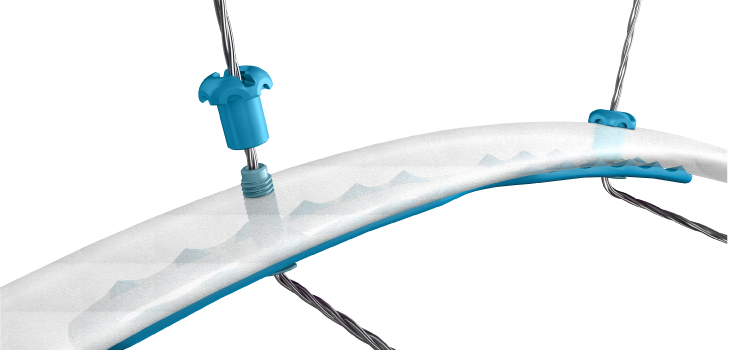
According to the FDA summary document, the system consists of bridges (with locking posts) and locking caps for the thoracoscopic fixation and stabilization of ribs. The implants are manufactured from commercially pure titanium and titanium alloys (Ti-6Al-7N per ASTM F1295and Ti-6Al-4V per ASTM F136 or ASTM F1472).
“When fully assembled,” state the FDA documents, “the bridge is placed on the underside of the rib, the threadedlocking posts extends through pre-drilled holes in the rib, and the locking caps are fixed to the locking post on the anterior side of the rib. The combined threaded locking post/locking cap provides for fixation of the bridge.”
This, according to the company, is the third 510(k) it has received for rib fracture devices.
In a limited market release, the company says the system has been utilized in over 50 rib fractures with the first patient treated nearly two years ago. The company plans to make the AdvantageRib available nationwide in March during the 2019 Chest Wall Injury Society (CWIS) Annual Meeting.
The technology was developed at the Penn State College of Medicine, Milton S. Hershey Medical Center, as an intrathoracic, minimally-invasive procedure designed to effectively treat very painful rib fractures without the use of large, open incisions or continuous doses of opioid pain medications.
Christopher Towe, M.D., Clinical Assistant Professor of Surgery at Case Western Reserve University School of Medicine in Cleveland, recently presented his experience utilizing AdvantageRib at Harvard’s Innovations in Chest Wall Surgery Course. “AdvantageRib is a clever system and I have had success with it. It’s no longer necessary for a patient presenting with a rib fracture to be off work for two months or to depend solely on opioid painkillers to manage their discomfort.”
The FDA received the company’s 510(k) notification at the end of October and granted clearance in about 10 weeks.
Author
React:
Discussion
This is a fascinating development. In my practice we've seen similar outcomes with the revised protocol. The key differentiator seems to be patient selection criteria. Has anyone else noticed the correlation with BMI thresholds?
Great point. I'd push back slightly on the conclusion, the sample size in the cited study is too small to draw population-level inferences. That said, the directional signal is compelling and worth a larger RCT.
We implemented a similar approach last year. Early results are promising but we're still gathering 12-month follow-up data. Happy to share our protocol if anyone is interested.
Join the conversation
Orthopedic professionals are discussing this. Sign in and upgrade to read every comment and add your voice.