
Santa Clara, California-based SI-BONE, Inc. has announced two-year results from iMIA (iFuse Implant System Minimally Invasive Arthrodesis), a multicenter randomized controlled trial conducted at nine hospitals in four European countries.
SI-BONE Study: SI Fusion Better Than Conservative Management
1 min read Premium comments
#siboneSecondary#lowbackpain#sacrolilacjointfusion
The study, “Randomized Trial of Sacroiliac Joint Arthrodesis Compared with Conservative Management for Chronic Low Back Pain Attributed to the Sacroiliac Joint,” appears in the March 6, 2019 edition of the Journal of Bone and Joint Surgery (JBJS).
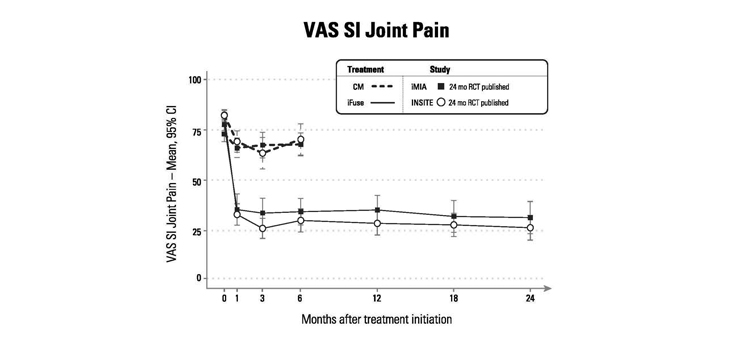
The study’s investigators enrolled a total of 103 subjects who were randomly assigned to either conservative management (n=51) or sacroiliac joint fusion (n=52) between June 6, 2013 and May 15, 2015.
According to the study sponsor, SI-BONE, the study “…showed that minimally invasive SIJF [sacroiliac joint fusion] with iFuse Implants was safe and more effective than CM [conservative management] in relieving pain, reducing disability, and improving patient function and quality of life at two years.”
Daniel Cher, M.D., vice president of clinical affairs at SI-BONE, explained the significance of the study to OTW, “The current literature suggests that 15-30% (Schwarzer, 1995 & Sembrano, 2009) of low back pain is from the SI joint. Despite the extensive body of published data, sacroiliac joint pain and disability often go undiagnosed.”
“As the leader in surgical treatment options for sacroiliac joint dysfunction, we feel it is our responsibility to continue to be at the forefront of evidence-based medicine until all payers cover appropriately diagnosed surgical candidates with sacroiliac joint dysfunction.”
“Physical exam and confirmation via diagnostic injection of anesthetic are critical steps for differential diagnosis of the SI joint vs other sources of low back pain. High-level randomized trial evidence and independent long-term follow up is now available that supports and safety and effectiveness of SI joint fusion with triangular titanium implants. This level of evidence distinguishes SI-BONE from all other device manufacturers, none of which have undertaken large-scale randomized clinical trials of their implants.”
Author
React:
Discussion
This is a fascinating development. In my practice we've seen similar outcomes with the revised protocol. The key differentiator seems to be patient selection criteria. Has anyone else noticed the correlation with BMI thresholds?
Great point. I'd push back slightly on the conclusion, the sample size in the cited study is too small to draw population-level inferences. That said, the directional signal is compelling and worth a larger RCT.
We implemented a similar approach last year. Early results are promising but we're still gathering 12-month follow-up data. Happy to share our protocol if anyone is interested.
Join the conversation
Orthopedic professionals are discussing this. Sign in and upgrade to read every comment and add your voice.