
Jeremy Richman, Ph.D., a neuroscientist and chief executive officer of the Avielle Foundation, named for his daughter who was one of the 20 child victims of the tragedy at Sandy Hook Elementary School in Newtown, Connecticut, in 2012, died Monday, March 25, 2019 from an apparent suicide at the age of 49.
Neuroscience Community Mourns the Loss of Dr. Jeremy Richman
2 min read Premium comments
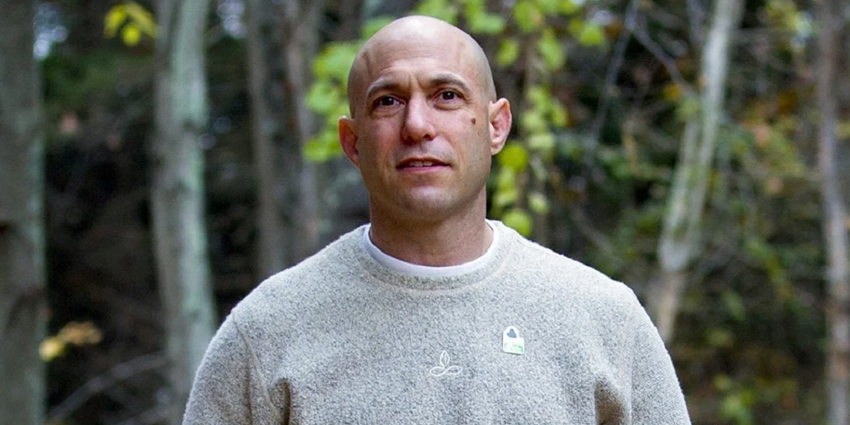
Remembrances#jeremyrichman
The mission of The Avielle Foundation is to prevent violence through brain health research and fostering community. Richman advocated for a better understanding of abnormal brain chemistry or structures that lead to violence. He saw violence as a disease that can be treated and dedicated himself to finding ways to support neuroscience research and community education in order to prevent violence.
Richman was a member of the Society for Brain Mapping and Therapeutics (SBMT) Advisory board, and the 2018 Recipient of Beacon of Courage and Dedication Award.
Babak Kateb, M.D., chairman of the SBMT said of Richman: “He was a rock star neuroscientist who championed for protecting children and gun control…”
Richman and Deepak Chopra talked about Violence and Brain Health at SBMT in 2018, and he was the 2018 Keynote at the World Congress for Brain Mapping and a speaker at SBMT’s 8th Annual Brain Mapping Day at the US Congress.
He also advocated for the creation of the Brain Technology and Innovation Park to introduce new therapeutics for mental illness and neurological disorders in general.
“Many patients with spinal disorders also suffer from depression and Post Traumatic Stress Disorder (PTSD) or other chemical imbalances, so the work the SBMT and Dr. Richman have done help both the brain and spine communities. This is a great loss to the field.” said Jeffrey Wang, M.D., president of the North American Spine Society (NASS).
The Society for Brain Mapping & Therapeutics said in a statement, “Despite Dr. Richman’s vast knowledge of neuroscience and his understanding of how brain chemistry and structures work, this is a tragic reminder that even the best of us are, after all, only human. They deserve our compassion and support. We grieve for him and his family. We are thankful to have had Dr. Richman as a friend and colleague. We will continue his pioneering work.”
Eric Muehlbauer, executive director of NASS, told OTW, “I was on a panel with Dr. Richman on February 28 in DC. We were there advocating for funding for brain and spine research. He told the story of how the stigma of mental illness led to the mass shooting and the killing of his daughter in Newtown, Connecticut. I was amazed at his compassion for the mentally ill and impressed by his determination in trying to understand the science behind the abnormal behavior and his quest to prevent the type of violence that occurred December 14, 2012 at Sandy Hook. This is a great loss for his family and the field of neuroscience.”
Author
React:
Discussion
This is a fascinating development. In my practice we've seen similar outcomes with the revised protocol. The key differentiator seems to be patient selection criteria. Has anyone else noticed the correlation with BMI thresholds?
Great point. I'd push back slightly on the conclusion, the sample size in the cited study is too small to draw population-level inferences. That said, the directional signal is compelling and worth a larger RCT.
We implemented a similar approach last year. Early results are promising but we're still gathering 12-month follow-up data. Happy to share our protocol if anyone is interested.
Join the conversation
Orthopedic professionals are discussing this. Sign in and upgrade to read every comment and add your voice.