
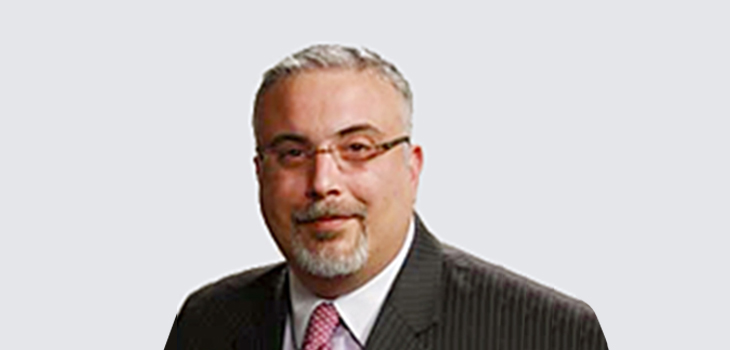
Often, as a company rises to the top, the allure of “bright lights, big city” can draw it away from its original mission. In the case of Centinel Spine, however, there has been a “Guard-in-Chief” who has successfully walked the tightrope of keeping everyone moving in the right direction while at the same time knowing when to let them innovate. That sentinel is John Viscogliosi.
John Viscogliosi: The Sentinel at Centinel Spine®
6 min read Premium comments
#centinelspine#johnviscogliosi#titaniuminterbody
Viscogliosi, Centinel Spine Chairman & CEO, has much to celebrate with his team these days, reaching a massive milestone of more than 185,000 devices implanted for its various technology platforms and hailing the 10th anniversary of its founding.
Life was first breathed into Centinel Spine, LLC in August 2008 via the merger-acquisition of Raymedica and Surgicraft. “Four months later,” says Viscogliosi, “we acquired the STALIF® (stand-alone lumbar interbody fusion) portfolio and have since grown it to be what others view as the company for stand-alone devices worldwide. Although in the last 10 years we have enhanced the products, we have not strayed from the fundamentals and the design rationale of what makes our products work so well.”
The developments, says Viscogliosi, have focused on ease-of-use improvements regarding implantation and improved fit and fill within the interbody spaces. “We are now investigating novel materials enhancements, as well as concentrating on the ability to offer a tried-and-true rationale for all we do.”
The Family Business? Integrity.
For Viscogliosi, who grew up in a close-knit Italian-American family, business is fundamentally personal. “We try to do things in ways that reflect our integrity. Centinel is here to help surgeons create devices that have long-term clinical success to assist them in addressing their patients’ clinical needs. Why? Because the patient on that operating table is someone’s mother, father, sister, brother, or child.”
“We could have taken shortcuts or avoided the time- and resource-consuming commitment of clinical studies,” states Viscogliosi, “but that was out of the question! We spared no expense of time or effort in choosing materials or material enhancements. For example, when we were developing our titanium coated PEEK [polyetheretherketone] product line, we collaborated with an academic institution to optimize the surface topography which directly affects the potential for cells to adhere and proliferate and leads to greater surgical efficacy. This was one of the first coatings in our field to be based in science and not just marketing.”
Such meticulousness has paid off. “Our surface topography and titanium ensure that cells proliferate 20x greater compared to other titanium surfaces. In the past year, we moved into 3D titanium printing so that we could achieve geometries and surface characteristics not possible with traditional methods. Again, we went for the scientific approach. We didn’t just print holes on the device—we spent a lot of time evaluating structural characteristics that were most conducive to bone formation and then mimicked that structure to enhance bone growth. The 3D designs are found in the proven fundamentals of mechanical load-sharing of the STALIF products but now have exceptional osteopromotive potential. We chose to lead the way versus copy or modify someone else’s design.”
And when it came to verifying which design was superior—a three- or four-screw construct—Centinel again did a deep-dive. “We embarked on a substantial amount of biomechanical testing and invested quite a bit of funds in order to understand the differences between a two, three and four-screw design. It became evident that a three-screw design is just as strong as four…but a two-screw design didn’t have the equivalent biomechanical principles and equivalence to what we set out to do. A two-screw design would have been too much of a compromise.”
Their choice to use a three-screw design has been validated, says Viscogliosi. “More than 45 companies have copied our cervical and lumbar designs.”
Centinel’s latest success involves the initial cases of its STALIF FLX™ Lateral Lumbar Integrated Interbody System, part of the FLX Platform of 3D-Printed All-Titanium Interbody devices. The zero-profile device features integrated compressive lag screws and is indicated for use at one or two contiguous levels with both autograft and/or allogenic bone graft.
“The FLX technology involves eight products, including cervical and lumbar devices and one 510(k) submission. We spent a significant amount of time looking at internal bone structure and interfaces and designing the FLX products. The company took one year to do additional research before we started designing the products. Our FLX products are structurally different from those of our competitors…ours very closely resemble bone.”
This comes on the heels of a lot of “firsts” says Viscogliosi. “Centinel had the first stand-alone devices, was the first company to get approved for stand-alone devices in multiple levels in spine, was the first to receive indications for allograft and autograft and was the first company with a posterior cervical system that was awarded FDA approval for posterior lateral mass screws.”
“You’ve lost your mind.”
Asked about the definition of successful leadership, it’s immediately clear that this is something Viscogliosi lives and breathes. “The most important thing is to balance clear direction and the empowerment of the group/team to think differently and think proactively. When you start stifling creativity and making things too structured or rigid then that takes away people’s creativity or their ability to be creative. They must be able to innovate without fear.”
Sometimes, says Viscogliosi, the “magic touch” of management doesn’t involve touch at all…it means being “hands off.”
“For example, when we acquired prodisc® from J&J we had 30 employees; we brought in an additional 70 within the year. But the important point is that no more than two people from any one organization were hired because that would help ensure diverse thinking. People put themselves in boxes…my job is to stimulate them to think outside of the box.”
At one point, Viscogliosi was pondering the following over his morning coffee: How do we get eight product families, including cervical and lumbar, in one 510(k)? “People were afraid to execute on this. My Product Team actually told me, ‘You’ve lost your mind.’” I said, “We’re still going to do it so let’s look at the risks and benefits. And if it doesn’t work, we can always do it in separate pieces later.’ There is always a solution.”
Bust and Boom
“When we acquired prodisc it had been in a roughly 20% annual decline for seven years; last year we grew it 20% worldwide and are on target for even more growth. The prodisc technology is the most studied and clinically proven total disc replacement system in the world, with more than 400 peer-reviewed studies and almost 30 years of clinical usage to back it up.”
With more than 125,000 prodisc implantations around the globe, the company indicates that the reported reoperation rate is less than 1%.
For Centinel and Patients…No Slowing Down
Professional race car driver Robert Masson is a surgeon specializing in complex spinal disorders who suffered a serious neck injury after a wakeboarding accident. He turned to Centinel to get him back on the track. “Dr. Masson has a prodisc in his neck and is an avid fan of our work,” says Viscogliosi. “After a grueling 24 hours at Daytona, Dr. Masson took second place, clearly showing that he has the ability to maintain a high-performance lifestyle after surgery.”
“Since our goal is to return people to their highest level of performance, we decided to partner with Performance Tech Motorsports as the Title Sponsor for the team in the 2019 season of the International Motor Sports Association WeatherTech SportsCar Championship.”
PGA Tour Winners Brian Gay and Rory Sabbatini are both satisfied recipients of the prodisc implant. They were both in severe pain and unable to compete at different points in their careers and turned to Dr. Masson to care for their spine. “We are now in endorsement agreements with Brian and Rory,” states Viscogliosi, “with the goal of educating high-performing individuals that spinal injury and disease does not mean the end of their active lifestyle.”
With more than 100 employees worldwide and 16 differentiated product families, Centinel itself is in no danger of slowing down.
In the words of John Viscogliosi: “The blueprint for success is incomplete without passion, excitement, and the knowledge that you are making a difference in the world. Success is a byproduct of doing the right thing.”
Author
React:
Discussion
This is a fascinating development. In my practice we've seen similar outcomes with the revised protocol. The key differentiator seems to be patient selection criteria. Has anyone else noticed the correlation with BMI thresholds?
Great point. I'd push back slightly on the conclusion, the sample size in the cited study is too small to draw population-level inferences. That said, the directional signal is compelling and worth a larger RCT.
We implemented a similar approach last year. Early results are promising but we're still gathering 12-month follow-up data. Happy to share our protocol if anyone is interested.
Join the conversation
Orthopedic professionals are discussing this. Sign in and upgrade to read every comment and add your voice.