
Woburn, Massachusetts-based OSSIO Inc. will have a lot of resources to work with as it has just secured $22 million in equity financing. The round was led by OCV Partners, a Los Angeles-based venture capital firm, with continuing participation from investors Ortho Vision LLC and Secocha Ventures.
Bone Fixation Innovator OSSIO Raises $22 Million
2 min read Premium comments
Secondary#ossio#ossiofiber
The company plans to use these funds to accelerate strategic growth initiatives, including talent acquisition, commercialization, new product development and operational expansion.
Brian Verrier, CEO, OSSIO, said, “We are honored that OCV, Ortho Vision and Secocha Ventures, together with the rest of our strong group of investors, stand behind our breakthrough fixation technology and our overall vision to transform the orthopedic experience for patients, physicians and payors.”
“OSSIO has created a novel bio-integrative fixation platform that we believe has the potential to disrupt the global orthopedic fixation market,” said Mark Yung, co-founder and managing principal, OCV Partners.
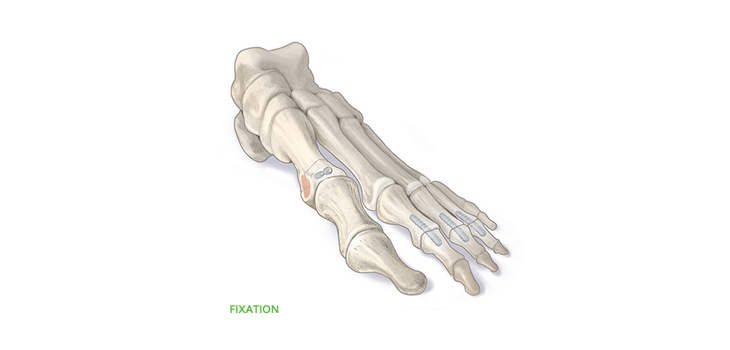
“With its unparalleled bio-integrative platform and unique ability to address multiple surgical applications and segments, OSSIOfiber Intelligent Bone Regeneration Technology offers a highly differentiated fixation approach that is stronger than bone and fully incorporates into the native anatomy, minimizing implant-related complications and the need for additional surgeries.”
Zohar Loshitzer, principal at OCV, will be joining the OSSIO Board of Directors.
Regarding the anticipated demand, Brian Verrier commented to OTW, “The demand for a non-permanent implant is/has been very high for several years. There have been many attempts to displace metal; however, they have been unsuccessful because of the lack of required mechanical properties for fixation and/or weren’t acceptable to the market in terms of short- and long-term biocompatibility.”
“With OSSIOfiber we have been able to deliver both incredible strength and bio-friendliness in a non-permanent implant. OSSIOfiber is a true biointegrative, which safely and completely incorporates into the native anatomy. This is what surgeons—and frankly patients—have been hoping and waiting for, so we do anticipate the demand to be quite high.”
Asked for details on accelerating its strategic growth initiatives, Verrier told OTW, “With this large capital raise we will be able to immediately accelerate our greatest drivers of value creation, including:
- Critical talent acquisition both in Israel and the United States
- Executing an extremely robust new product pipeline
- Scaling and implementing significant efficiencies in our manufacturing processes
- Initiating several clinical studies that will help drive OSSIOfiber to become the standard of care in orthopedic fixation
- Pursing regulatory clearances from key markets outside the United States
- The imminent commercialization of the OSSIOfiber Bone Pin Family in the United States.”
Author
React:
Discussion
This is a fascinating development. In my practice we've seen similar outcomes with the revised protocol. The key differentiator seems to be patient selection criteria. Has anyone else noticed the correlation with BMI thresholds?
Great point. I'd push back slightly on the conclusion, the sample size in the cited study is too small to draw population-level inferences. That said, the directional signal is compelling and worth a larger RCT.
We implemented a similar approach last year. Early results are promising but we're still gathering 12-month follow-up data. Happy to share our protocol if anyone is interested.
Join the conversation
Orthopedic professionals are discussing this. Sign in and upgrade to read every comment and add your voice.