
Femoral nerve block or local infiltration (injection) anesthesia for total knee arthroplasty (TKA) patients—which works better?
TKA: Local Injection Anesthesia vs Femoral Nerve Block
1 min read Premium comments
#totalkneearthroplastySecondary#femoralnerveblock#analgesic#localinfiltrationanesthesia
A team from the University of L’Aquila in Italy designed a study to answer that question and the full study, titled “Pain management after total knee arthroplasty: A prospective randomized study” appears online in the December 14, 2018 issue of Journal of Clinical Orthopaedics and Trauma.
Dr. Alessandro Paglia, faculty member with the Department of Life, Health and Environmental Sciences, University of L’Aquila, as well as the Department of Mini-invasive and Computer-assisting Orthopaedic Surgery at San Salvatore Hospital and study co-author explained to OTW the purpose behind the study: “TKA is a surgical procedure that leads to a lot of pain in the postoperative days. We are looking for a standardized protocol for pain management to apply to all patients.”
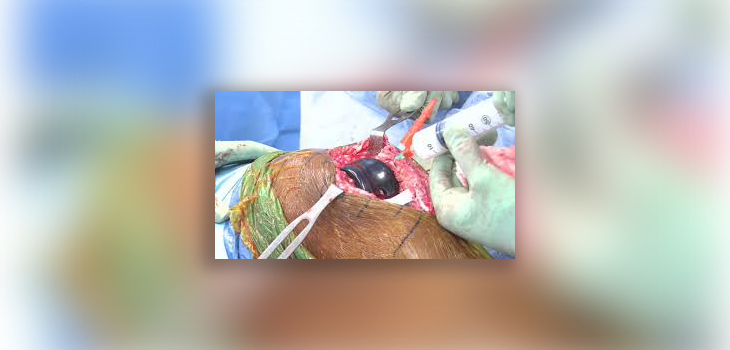
For their study, the investigators enrolled 51 patients into a three-arm, randomized prospective study. Group 1 (the control group) received no analgesic protocol. Group 2 received an intraoperative local infiltration anesthesia (LIA). Group 3 received a femoral nerve block (FNB).
Dr. Paglia and his colleagues reported that the, “local infiltration anesthesia and femoral nerve block groups both showed a significant reduction at VAS [Visual Analog Score] score, better range of motion and less morphine consumption than the control group. The local infiltration group reported a constant pain control in the postoperative days; the femoral nerve block group reported good pain control in the hours after surgery, but decreased efficacy in the following days.”
Dr. Paglia told OTW, “Our results show how the local infiltration is a good strategy. There are a lot of ways of treating pain after TKA but it is still not possible to understand what could be the best. At the moment we are studying the block of adductors compared to other strategies; it seems to have an excellent analgesic effect on the first day with the appearance of important pain after 48 hours.”
“Perhaps it would be better to always have a minimum of constant pain with which the patient has to live rather than have two days of complete well-being.”
Author
React:
Discussion
This is a fascinating development. In my practice we've seen similar outcomes with the revised protocol. The key differentiator seems to be patient selection criteria. Has anyone else noticed the correlation with BMI thresholds?
Great point. I'd push back slightly on the conclusion, the sample size in the cited study is too small to draw population-level inferences. That said, the directional signal is compelling and worth a larger RCT.
We implemented a similar approach last year. Early results are promising but we're still gathering 12-month follow-up data. Happy to share our protocol if anyone is interested.
Join the conversation
Orthopedic professionals are discussing this. Sign in and upgrade to read every comment and add your voice.