
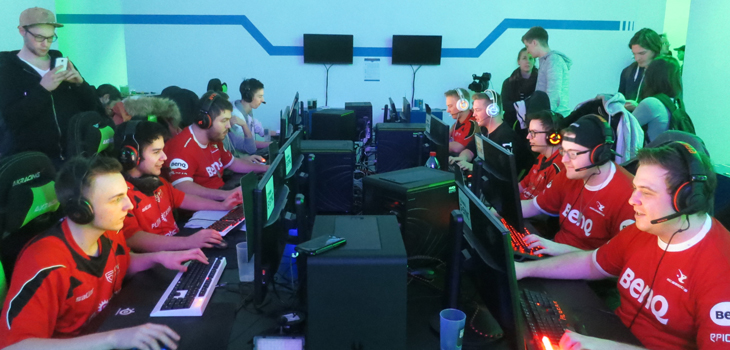
For anyone under 30, the eSports phenomenon may be a surprise. By definition, eSports are competitive online gaming on both PCs and consoles where athletes compete through leagues and tournaments for cash prizes.
The Phenomenon of eSports Medicine
2 min read Premium comments
Secondary#athletes#esports
According to a recent market report, 389 million people participate in eSports competitions worldwide. And that number is expected to pass the half a billion mark in a couple of years.
Tournaments which pit teams of eSport athletes against each other may someday attract more fans and viewers than, yes, the National Football League.
What role will sports medicine physicians play in keeping these eSport athletes “in the game”?
A new study (“Managing the health of the eSport athlete: an integrated health management model”) which appears in the January 2019 issue of the British Medical Journal, states that collegiate eSport players are athletes and should be afforded the appropriate level of medical care to protect their health.
During the study, osteopathic sports medicine physicians at New York Institute of Technology College of Osteopathic Medicine surveyed 65 collegiate varsity eSport plays from nine American universities on their training schedules and rate of injury.
The data revealed that the players’ training schedules averaged 5 to 10 hours per day with many players reporting physical injury. Common physical complaints included eye fatigue (56%), neck and back pain (42%), wrist pain (36%) and hand pain (32%). Only about 2% of them sought medical attention though.
“When we think of an eSport player, we don’t typically think he or she needs a physician’s clearance to participate in a sedentary activity with little chance of injury,” said Hallie Zwibel, D.O., director of sports medicine at New York Institute of Technology College of Osteopathic Medicine, who also oversees the institute’s Center for eSports Medicine.
“Quite contrary to that belief, these athletes suffer health concerns and chronic overuse injuries—some of which are career ending. It’s time we begin to proactively manage these issues.”
The causes of injury, according to Zwibel and colleagues, is the long periods of time spent in front of the computer. Not only does the excessive exposure to LED light cause damage to the retinas and disrupt melatonin levels and natural circadian rhythm which can lead to eye strain and trouble sleeping, being sedentary for hours also cause neck and back pain, and weak muscles that can increase injury risk.
The number of hours these athletes play can also lead to overuse injuries. The average novice player makes about 50 action moves per minute, while a higher level player might make 500 to 600 action moves per minute.
The researchers also found certain mental health issues linked to eSports including addictive behavior, personal hygiene issues and social anxiety.
In the United States, there are more than 50 colleges with varsity eSport teams under the National Association of Collegiate eSports and 22 colleges currently offer scholarships for gaming. The National Collegiate Athletic Association is in the process of deciding whether it should recognize eSport.
Zwibel and colleagues wrote that schools need to provide the same level of preventive training and care and injury treatment expected for traditional athletes. They do recognize though that the types of injuries and concerns seen in eSport athletes are not the typical ones seen in the traditional student athletes.
“Many physicians and athletic trainers may not identify these injuries because eSports are relatively new and the health consequences are emerging as these teams become more common,” Zwibel said.
Author
React:
Discussion
This is a fascinating development. In my practice we've seen similar outcomes with the revised protocol. The key differentiator seems to be patient selection criteria. Has anyone else noticed the correlation with BMI thresholds?
Great point. I'd push back slightly on the conclusion, the sample size in the cited study is too small to draw population-level inferences. That said, the directional signal is compelling and worth a larger RCT.
We implemented a similar approach last year. Early results are promising but we're still gathering 12-month follow-up data. Happy to share our protocol if anyone is interested.
Join the conversation
Orthopedic professionals are discussing this. Sign in and upgrade to read every comment and add your voice.