
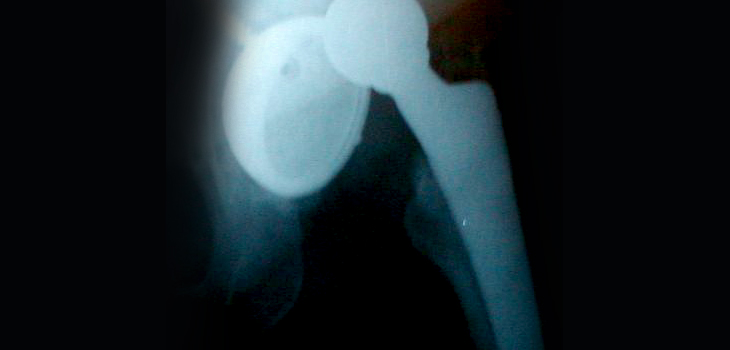
Delving into the intersection of hip and spine, researchers have investigated how differences in pelvic orientation of patients who have undergone spine fusions can increase the risk of dislocation risk after total hip arthroplasty (THA).
Dislocation Risk Among Spine Patients High
1 min read Premium comments
#totalhiparthroplastySecondary#dislocation#pelvicorientation
The research, “Lumbar fusion involving the sacrum increases dislocation risk in primary total hip arthroplasty,” was published in the January 31, 2019 edition of The Bone & Joint Journal.
Co-author Matthew Abdel, professor of Orthopedic Surgery at the Mayo Clinic College of Medicine and director of the Orthopedic Genetic Host Variation Laboratory, described the goals and outcomes of his study to OTW, “Dislocation after primary THA is a dramatic and disconcerting problem for the patient and surgeon alike. Multiple series have indicated a contemporary prevalence of 2 – 4%, but some recent, but more limited, data indicate that the contemporary prevalence of dislocation is up to 5 to 10-fold greater in those patients with spinal pathologies that lead to stiffness and/or significant pelvic tilt.”
“As such, we were interested in analyzing the Mayo Clinic Total Joint Registry to determine how differences in pelvic orientation of patients with spine fusions can increase the risk of dislocation risk after THA. In particular, it was our hypothesis that those patients with a fusion to the sacrum had the highest rate of dislocation.”
The authors wrote, “We identified 84 patients (97 THAs) between 1998 and 2015 who had undergone spinal fusion prior to primary THA. Patients were stratified into three groups depending on the length of lumbar fusion and whether or not the sacrum was involved.”
Dr. Abdel commented to OTW, “We indeed found that lumbosacral spinal fusions prior to THA increased the risk of dislocation within the first six months. Fusions involving the sacrum with multiple levels of lumbar involvement notably increased the risk of postoperative dislocation compared with a control group and other lumbar fusions. As such, surgeons may consider dual-mobility constructs in this high-risk group of patients.”
Dr. Abdel notes that he has an individual product development agreement with Stryker.
Author
React:
Discussion
This is a fascinating development. In my practice we've seen similar outcomes with the revised protocol. The key differentiator seems to be patient selection criteria. Has anyone else noticed the correlation with BMI thresholds?
Great point. I'd push back slightly on the conclusion, the sample size in the cited study is too small to draw population-level inferences. That said, the directional signal is compelling and worth a larger RCT.
We implemented a similar approach last year. Early results are promising but we're still gathering 12-month follow-up data. Happy to share our protocol if anyone is interested.
Join the conversation
Orthopedic professionals are discussing this. Sign in and upgrade to read every comment and add your voice.