
A study of 476 total knee arthroplasty (TKA) patients at three separate institutions found that costs could be reduced by as much as $1,215, length of stay could be cut by as much as 25%, home discharges could increase by 80% and, finally that 91% fewer TKA patients were discharged to a skilled nursing facility.
Artificial Intelligence Tool Cuts Arthroplasty Costs Significantly
2 min read Premium comments
#totalkneearthroplasty#artificialintelligenceSecondary#peerwell
The secret? An artificial intelligence (AI) and machine learning (ML) tool for pre-habilitation (PreHab).
As study which measured the effects of such AI based PreHab, titled “The Role of pre-habilitation with a telerehabilitation system prior to total knee arthroplasty,” appears in the November 27, 2018 edition of the Annals of Translational Medicine.
According to the study authors, 114 patients were selected to participate in a pre-habilitation program of exercises, nutritional advice, education regarding home safety and reducing medical risks, and pain management skills prior to surgery. A group of 362 patients were selected to participate be the control cohort and did not participate in the pre-hab program.
The study was conducted at Northwell Health in San Francisco. According to Northwell’s Vice President of Strategic Initiatives, Dr. Michael Mont, “We’ve known PreHab is an effective way to improve outcomes for total joint patients for years. The question, until now, has always been how to provide it to patients within the constraints of insurance. Now, thanks to autonomous tele-PreHab systems like PeerWell, we can solve this problem.”
PeerWell, Inc. is a supplier of AI programs to help administer PreHab programs.
The PeerWell program creates personalized daily plans from the patient’s own data to get them ready for surgery. The program includes “video physical therapy, nutrition counseling, comprehensive anxiety management and pain resilience training, home preparation guidance and medical risk management.”
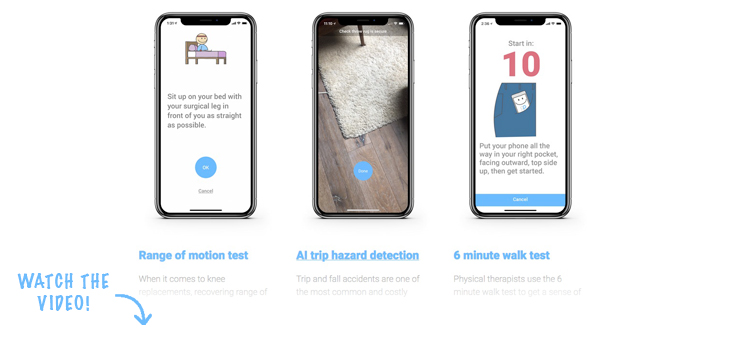
By using such advanced algorithms as machine learning, the system can “glean clinically relevant data from ordinary smartphones. For example, using the accelerometer and gyroscope, PeerWell can track range of motion or by using the smartphone camera, PeerWell can identify trip and fall hazards in the home.”
PeerWell CEO Manish Shah stated, “Our ability to do this without increasing administrative burden to the provider has made PeerWell the preferred solution to manage musculoskeletal health. We’ve created tele-prehab and tele-rehab programs for all major orthopaedic procedures and see consistent improvements in patient outcomes across the board.”
Study co-author Dr. Mont explained the program further to OTW. “When the decision to have surgery is made patients are enrolled in PeerWell. They are able to access the program through a smartphone app, email or SMS text if they do not have a smartphone. The system works by collecting data from the patient on activity, range of motion, pain, depression/anxiety/stress, and joint function. The PeerWell AI uses that data to customize patients’ daily plans to optimize their health before surgery and support them during functional recovery.”
“There was no physical therapist, nor was there any clinician operating each individual patient’s program. The system was operated fully autonomously by the PeerWell AI.”
“Patient populations using PeerWell’s PreHab technology experienced 25% lower hospital length of stay, 80% increased discharge to home without home health support and a 91% reduction in discharge to skilled nursing facilities.”
Author
React:
Discussion
This is a fascinating development. In my practice we've seen similar outcomes with the revised protocol. The key differentiator seems to be patient selection criteria. Has anyone else noticed the correlation with BMI thresholds?
Great point. I'd push back slightly on the conclusion, the sample size in the cited study is too small to draw population-level inferences. That said, the directional signal is compelling and worth a larger RCT.
We implemented a similar approach last year. Early results are promising but we're still gathering 12-month follow-up data. Happy to share our protocol if anyone is interested.
Join the conversation
Orthopedic professionals are discussing this. Sign in and upgrade to read every comment and add your voice.