
New visual training technology offered by Senaptec LLC is being used to enhance athletic performance by improving the movement, balance and reaction times of athletes.
New Technology Improves Athletes’ Eye-Brain Connectivity
2 min read Premium comments
Secondary#concussion#traumaticbraininjury#brainhealth#senaptec
The Senaptec technology focuses on strengthening visual and brain connections. It’s being used for athletic performance training by over 100 professional and collegiate sports teams including the Seattle Seahawks, New York Mets and the University of Alabama.
It also working for members of the military—who are also athletes. Senaptec’s CEO, Joe Bingold, was an eight-year U.S. Navy veteran who served as an officer for the Navy Nuclear Propulsion Program.
But wait, there’s still more. Many ophthalmologists are installing the assessment and training stations in their offices to offer visual performance training sessions for youth and amateur athletes.
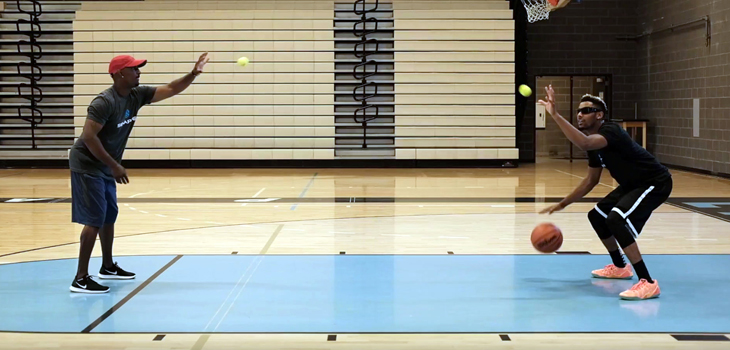
For maximum benefit, the specially designed training eyewear is paired with on-screen training drills that are performed at sensory assessment stations.
The Senaptec team told OTWthat when athletes use their training products, they are forcing their brain to perceive in greater detail and provide better movement, balance and reaction time. Many athletes see improvements from their baseline measurement in movement as well as better injury recovery times.
“Your brain discards 80% of the visual information you intake, so we help individuals process more of the incoming information, and in a faster manner, to improve performance and brain health,” said Joe Bingold.
“Senaptec products are like weightlifting for your visual system. In weightlifting, you strain and break down a muscle to rebuild it and make it stronger. Our technology relies on a similar principle, resisting vision through stroboscopic techniques, vision blocking and precision coordination drills, to help build strong new neural connections from the eye to the brain.”
The technology originated in Nike’s research and development department under Senaptec co-founder Herb Yoo’s while he was director of innovation there.
At its core the technology is a sports medicine therapy.
Strengthening neural connections has an intuitive promise for treating traumatic brain injuries/concussions strokes, multiple sclerosis and other conditions. According to Bingold, the technology is also being used as a part of attention deficit disorder and autism therapy.
Longer term, the technology can also play a role in improving general eyesight health and mitigating vision deterioration as people age.
“One of the leading causes of death in the elderly population is complications from broken hips, “Bingold said.
“What causes most broken hips? Tripping and falling. With technology, we can help prevent trips and falls by helping individuals maintain visual strength, balance and coordination between the eyes, brain and body. Wearing strobe glasses at home for 15 minutes a day to help keep your eyesight and neural connections strong. It is a simple but powerful approach to consider.”
Senaptec is a startup based in Beaverton, Oregon, which specializes in sensory performance training products to improve movement, balance and reaction times. For more information about Senaptec click here.
Author
React:
Discussion
This is a fascinating development. In my practice we've seen similar outcomes with the revised protocol. The key differentiator seems to be patient selection criteria. Has anyone else noticed the correlation with BMI thresholds?
Great point. I'd push back slightly on the conclusion, the sample size in the cited study is too small to draw population-level inferences. That said, the directional signal is compelling and worth a larger RCT.
We implemented a similar approach last year. Early results are promising but we're still gathering 12-month follow-up data. Happy to share our protocol if anyone is interested.
Join the conversation
Orthopedic professionals are discussing this. Sign in and upgrade to read every comment and add your voice.