
The FDA has granted 510(k) clearance to Israeli-based Ossio’s Ltd.’s bio-integrative material indicated “for maintenance of alignment and fixation of bone fractures, osteotomies, arthrodesis, and bone grafts in the presence of appropriate additional immobilization (e.g. rigid fixation implants, cast, brace).”
FDA Clears Ossio’s Bio-Integrative Bone Fixation Implant
2 min read Premium comments
Secondary#fda510k#bonefixation
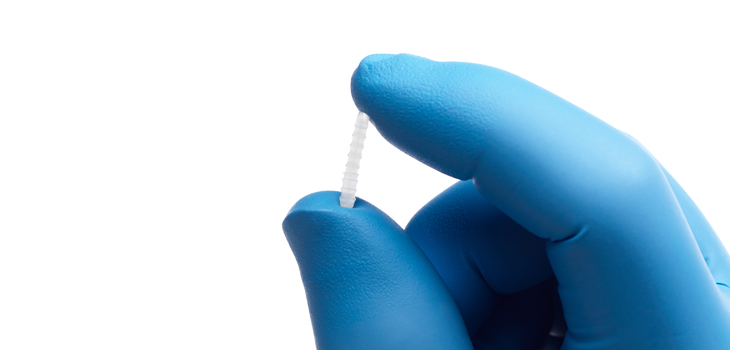
The cleared OSSIO Pin Product Family, according to FDA documents, “is a fixation device made of degradable poly (L-lactide-co-D, Llactide) (PLDLA) reinforced with continuous mineral fibers. The polymer content degrades by hydrolysis into alpha-hydroxy acids that are metabolized by the body. The mineral fibers are made from materials that are incorporated into bone.”
The implants are supplied sterile and are available in several sizes: 10-70mm long and 2-4mm nominal dimension, and with a circular, hexagonal or octagonal crosssectional design.
Nothing Left Behind
The company points out that use of its technology means that no permanent hardware is left behind. The company aims to offer the first credible replacement to permanent fixation implants.
Bob Baravarian, D.P.M., assistant clinical professor, UCLA School of Medicine, and director, University Foot and Ankle Institute, Santa Monica, California, said “Ossio has a revolutionary new platform that will change the way we think about orthopedic fixation for both bone and soft tissue.”
While the platform will have broad application across all of orthopedics, the company stated in a January 14, 2019 press release, that the first commercial use will be in the foot and ankle segment for the treatment of forefoot conditions where hardware removal surgeries are prevalent.
The company said the mechanical strength of the novel implant is initially “significantly higher than cortical bone, and its performance supports bone regeneration throughout the healing process. It then gradually transfers load to the native bone following the critical rehabilitation phase.
“Unlike metal, the stiffness of [its OSSIOfiber] is a better mechanical match to bone and this improved bone compliance can prevent stress risers and weakening of the bone around the implant. As confirmed in pre-clinical studies, full integration into the surrounding anatomy takes place within approximately 18-24 months, leaving only native bone behind with no residual hardware.”
Stuart Miller, M.D., orthopedic surgeon at MedStar Union Memorial Hospital and assistant professor at Johns Hopkins University School of Medicine, Baltimore, Maryland, said the technology has the potential to “shift the paradigm in orthopedic fixation with promise for wide-ranging applications across the continuum of orthopedic surgery. An implant that maintains its strength through the known healing timeline and is then completely integrated into the surrounding anatomy with no adverse inflammation, is a real breakthrough for surgeons and the patients we treat.”
It took the FDA a little over eight months to determine the device was substantially equivalent to a previously cleared device.
The company was founded in 2014. Its development headquarters is located in Caesarea, Israel, with commercial headquarters in Woburn, Massachusetts. The product’s commercial launch is expect in the U.S. in the second quarter of 2019.
Author
React:
Discussion
This is a fascinating development. In my practice we've seen similar outcomes with the revised protocol. The key differentiator seems to be patient selection criteria. Has anyone else noticed the correlation with BMI thresholds?
Great point. I'd push back slightly on the conclusion, the sample size in the cited study is too small to draw population-level inferences. That said, the directional signal is compelling and worth a larger RCT.
We implemented a similar approach last year. Early results are promising but we're still gathering 12-month follow-up data. Happy to share our protocol if anyone is interested.
Join the conversation
Orthopedic professionals are discussing this. Sign in and upgrade to read every comment and add your voice.