
The FDA has approved an Investigational Device Exemption (IDE) application for Swedish-based Episurf Medical’s Episealer personalized knee implant. The approval will allow the company to begin a clinical study and is the first step towards a Premarket Approval (PMA) application for eventual market approval.
Episealer Knee Implant IDE Approved by FDA
1 min read Premium comments
Secondary#personalizedkneeimplent#kneepain#episurfmedical
According to the company, the 180 patient study will be a prospective, randomized, controlled, multi-center (Europe and U.S.) study to evaluate the safety and effectiveness of the implant two years after implant. The study’s control is microfracture for the treatment of focal femoral knee chondral or osteochondral lesions.
Dennis Stripe, company chairman, said study site recruiting is going well and a number of sites are ready to start. “We are convinced there are a significant number of patients in the U.S. that can benefit from our technology. There is a lack of efficient treatments for early knee lesions, and we are looking forward to helping the U.S. population.”
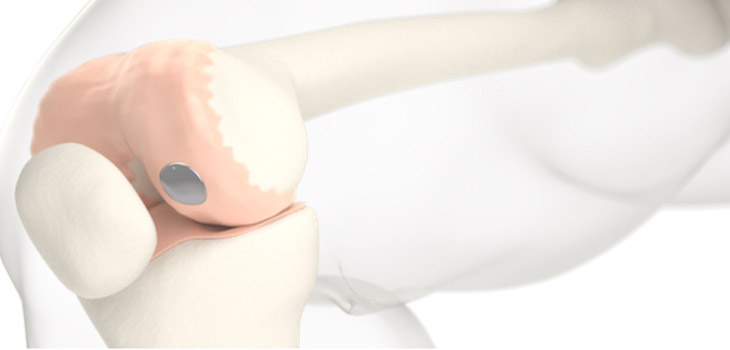
The implants and surgical drill guides, according to the company, “are developed for treating localized cartilage injury in joints.” The company adds that its system “enables implants to be cost-efficiently tailored to each individual’s unique injury for the optimal fit and minimal intervention.”
The company’s website for non-U.S. healthcare professionals states that design of the implants and instruments are based on MR imaging. “By data processing, a virtual 3D model of the damaged femoral knee joint is recreated and the lesion is defined and displayed. Subsequently, the Episealer and instruments are designed to remove the damaged tissue as well as to restore the area with a perfectly fitting implant. Using the individualized drill guide during surgery increases the precision of the surgical procedure for optimal positioning of the implant.”
The part of the Episealer that is countersunk in the bone and cartilage is covered with a titanium undercoating and a hydroxyapatite outer coating, “ensuring a quick and lasting fixation to the bone.”
Episealer is available outside the U.S. for the knee femoral condyles (both medial and lateral) and/or the knee trochlea area.
Author
React:
Discussion
This is a fascinating development. In my practice we've seen similar outcomes with the revised protocol. The key differentiator seems to be patient selection criteria. Has anyone else noticed the correlation with BMI thresholds?
Great point. I'd push back slightly on the conclusion, the sample size in the cited study is too small to draw population-level inferences. That said, the directional signal is compelling and worth a larger RCT.
We implemented a similar approach last year. Early results are promising but we're still gathering 12-month follow-up data. Happy to share our protocol if anyone is interested.
Join the conversation
Orthopedic professionals are discussing this. Sign in and upgrade to read every comment and add your voice.