
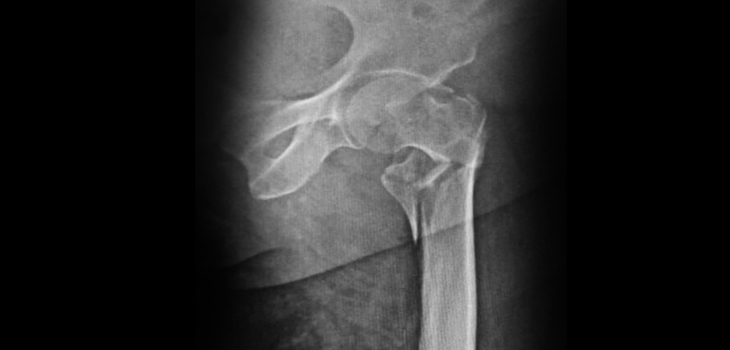
Using the American College of Surgeons National Quality Improvement Program (NSQIP) database, George Washington University researchers studied 14,415 trauma patients to determine whether there were any outcome differences between sliding hip screws and cephalomedullary nails in intertrochanteric hip fractures.
14,415 Patient Fracture Study: Screws or Nails?
1 min read Premium comments
Secondary#slidinghipscrew#cephalomedullarynail#intertrochanterichipfractures
The study, “Comparison of Short-term Complication Rates Between Cephalomedullary Hip Screw Devices and Sliding Hip Screws: An Analysis of the National Surgical Quality Improvement Program Database,” was published in the Journal of the American Academy of Orthopaedic Surgeons.
Rajeev Pandarinath, M.D., an orthopedic surgeon and studyco-author explained the rationale for the study to OTW: “Treatment of intertrochanteric fractures of the hip is one of the most commonly performed procedures in orthopedic surgery. Historically, there is a long track record for the sliding hip screw, and more recently many surgeons have switched to the cephalomedullary nail for treatment of the fracture, and it is now the most common treatment for intertrochanteric hip fractures.”
“We wanted to study whether there were any differences in short term complication rates between the two devices using the NSQIP database, which is a national database that comprises a variety of hospital types.”
“Even after controlling for preoperative factors, there were several complications that were more prevalent in the cephalomedullary nailing group, including mortality, bleeding, pulmonary complications and clotting events. There was a higher rate of urinary tract infection and hospital length of stay in the sliding hip screw group.”
“Although further studies are needed, there may be a higher rate of complications related to the cephalomedullary nail. We would suggest that surgeons weigh the pros and cons of both implants for the individual patient when planning their hip fracture surgery. For example, a patient with poor baseline pulmonary function or bleeding risk may be a better candidate for the sliding hip screw if both implants are appropriate for the fracture type.”
“It is difficult to know whether the differences found in our study are directly related to the implants used. Further studies are needed that are prospective and randomized with matched comorbidities in each group.”
Author
React:
Discussion
This is a fascinating development. In my practice we've seen similar outcomes with the revised protocol. The key differentiator seems to be patient selection criteria. Has anyone else noticed the correlation with BMI thresholds?
Great point. I'd push back slightly on the conclusion, the sample size in the cited study is too small to draw population-level inferences. That said, the directional signal is compelling and worth a larger RCT.
We implemented a similar approach last year. Early results are promising but we're still gathering 12-month follow-up data. Happy to share our protocol if anyone is interested.
Join the conversation
Orthopedic professionals are discussing this. Sign in and upgrade to read every comment and add your voice.