
Two Illinois U.S. senators and two Illinois congressmen have asked the Environmental Protection Agency (EPA) and the Food and Drug Administration (FDA) to take drastic action on the widely used sterilizing chemical ethylene oxide (EtO), calling on EPA to tighten standards and for the FDA to convene a panel to develop alternatives.
Pressure Mounting to Phase Out Ethylene Oxide Sterilization
4 min read Premium comments
#ethyleneoxide#medicalinstruments#sterilization
The senators, Tammy Duckworth and Dick Durbin, wrote a letter to the Occupational Safety and Health Administration (OSHA) to develop alternatives to EtO in workplaces, including hospitals, ambulatory surgery centers, and any other health care facilities using EtO to sterilize medical supplies and equipment.
Why is this happening, and why now?
Their actions arise in part from a dogfight in Illinois between the state’s Democratic attorney general on one side, and on the other, the state’s Republican governor and a leading medical sterilization company, Sterigenics International.
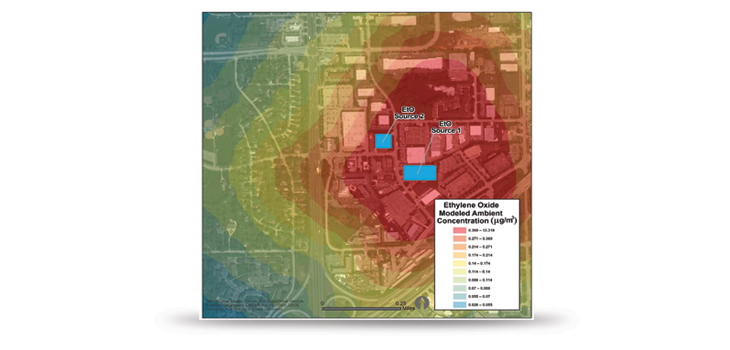
The ongoing Illinois dispute is over allegedly high risks of several kinds of cancer in the communities around the Sterigenics plant in Willowbrook, Illinois, due to its discharges of EtO from sterilization processes. Sterigenics has an old EPA permit to discharge about 32,000 pounds of EtO into the air, and in recent years has discharged about 5,000 pounds into the air per year, according to a federal government inter-agency letter, “Evaluation of Potential Health Impacts from Ethylene Oxide Emissions.”
Also, regulations, issued in 2008 and earlier, pre-date two significant recent actions:
- a 2014 EPA National Air Toxics Assessment (NATA) estimated “that ethylene oxide significantly contributes to potential elevated cancer risks in some census tracts across the U.S.” One of these is the residential neighborhood around the Sterigenics plant. EPA began that monitoring because of the amounts Sterigenics has been allowed to discharge for decades.
- EPA officially declared in 2016 that the risk of cancer from EtO is higher than the risk level previously used to set federal regulations. Neither EPA nor OSHA rules have yet been tightened in the wake of that declaration.
EtO exposures in hospitals are possible
OSHA says that when there is exposure to EtO in a hospital or ambulatory surgery setting, it “usually results from improper aeration of the ethylene oxide chamber after the sterilizing process or during off-gassing of sterilized items or poor gas-line connections. It can also occur in outpatient surgery clinics, cardiac catheterization laboratories, operating rooms, dental labs, autopsy labs and other areas.”
In a 2015 survey for the National Institute for Occupational Safety and Health, about 38% of respondents in hospitals were using EtO in 2011 to sterilize some equipment which cannot be sterilized with steam or radiation. The number may have declined since then because an alternative, hydrogen peroxide plasma, is safer and many hours faster. See “Ethylene Oxide and Hydrogen Peroxide Gas Plasma Sterilization: Precautionary Practices in U.S. Hospitals.”
It’s never the problem, it’s the coverup…
In September, Republican Governor Bruce Rauner withheld documents from Democratic State Attorney General Lisa Madigan in order to thwart her from taking legal action. She was considering going to court to seek the immediate shutdown of the Willowbrook Sterigenics plant.
Rauner, whom the Chicago Tribunesays had and may still have a financial interest in Sterigenics, sought to let the company get away with declaring that its own emissions tests were proprietary secrets. Both he and the federal EPA delayed action other than meeting with Sterigenics until the company could install pollution controls to trap the emissions from its more than two dozen EtO sterilizers.
“In sum, IPA (the Illinois EPA) has left the decision on whether to provide emissions reports to the attorney general’s office about a company that has been and continues to release toxic chemicals into a populated community in DuPage County,” Ann Spillane, Madigan’s chief of staff, wrote in a letter to three local Republican officials in September.
Rauner relented and began cooperating with Madigan after those fellow Republican politicians began barking at him in the news media over the EPA air samples. Willowbrook is in Republican-dominated DuPage County.
On November 28, the two senators and the two Democratic congressmen, Bill Foster and Brad Schneider, joined by Democratic Representative Dan Lipinski, introduced S. 3671 and HR 7179, bills which would require EPA to tighten ethylene oxide (EtO) emissions standards for medical sterilization and chemical facilities nationwide.
In addition to the congressional action, several lawsuits have been filed from by some of the nearly 20,000 residents living within wind-drift range of Sterigenics’ emissions.
On November 30, Lipinski released a Congressional Research Service (CRS) report saying that back in the 1990s, the U.S. Chemical Safety and Hazard Investigation Board recommended safety equipment to prevent explosions. Instead, however, companies using EtO persuaded the George W. Bush Administration to allow them to vent the carcinogenic chemical to the atmosphere to prevent explosions. Some states then required EtO users to install pollution controls.
Not Illinois.
Illinois left in place the old Sterigenics EPA permit to discharge into the atmosphere. The plant is right across the street from a local police station and within a quarter-mile of two schools.
That CRS report: https://www.documentcloud.org/documents/5317190-2018-10-12-Congressional-Research-Service-Memo.html
The facts became muddied in October when the federal EPA admitted that its emissions tests through August were flawed, saying the monitors had also counted emissions of another toxic pollutant, trans-2 butene.
Sterigenics seized on this announcement, saying November 29, “The system has failed the citizens of Willowbrook by allowing flawed data measured against an illogical standard to be accepted as fact. The real travesty has been the needless fear and worry about safety that good people of Willowbrook have had to wrongly endure.”
EPA then sharply disputed Sterigenics on December 7, saying new tests in mid-November, using correct protocols and equipment, showed that some 24-hour measurements of EtO emissions around the Sterigenics plant were at levels three times higher than the supposed levels in the prior, faulty measurements which caused all the alarm in the first place.
Sterigenics says at its website that it’s the world leader in ethylene oxide and radiation sterilization with 46 plants worldwide (11 in the U.S.), and is one of the leading providers of off-site sterilization for orthopedic trays, instruments and implants.
Author
React:
Discussion
This is a fascinating development. In my practice we've seen similar outcomes with the revised protocol. The key differentiator seems to be patient selection criteria. Has anyone else noticed the correlation with BMI thresholds?
Great point. I'd push back slightly on the conclusion, the sample size in the cited study is too small to draw population-level inferences. That said, the directional signal is compelling and worth a larger RCT.
We implemented a similar approach last year. Early results are promising but we're still gathering 12-month follow-up data. Happy to share our protocol if anyone is interested.
Join the conversation
Orthopedic professionals are discussing this. Sign in and upgrade to read every comment and add your voice.