
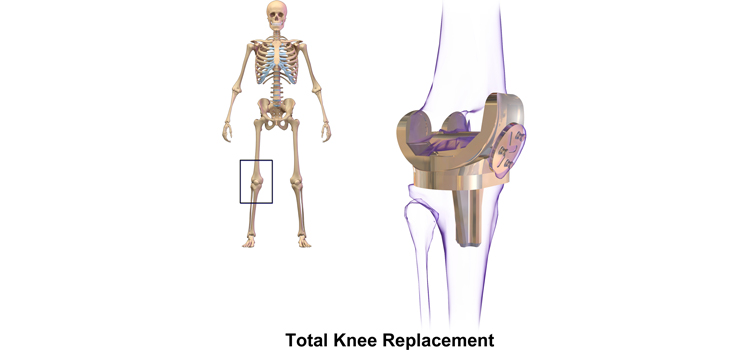
A group of researchers in Japan set out to determine if different total knee arthroplasty (TKA) insert design influenced patient outcomes.
New Study: Medial Pivot Inserts Equivalent to Conventional
1 min read Premium comments
#kneearthroplastySecondary#kohelnishitani#pivotmotion
Their work, “No differences in patient-reported outcomes between medial pivot insert and symmetrical insert in total knee arthroplasty: A randomized analysis,” was published in the December 2018 edition of The Knee.
Co-author Kohei Nishitani M.D., Ph.D., assistant professor in the Department of Orthopaedic Surgery at Kyoto University in Japan, told OTW, “The natural knee has medial pivot motion, and it has been said that the satisfaction after TKA may improveif TKA acquires the medial pivot motion like a natural knee. The positive effect of a medial pivot TKA implant was expected, so we compared the medial pivot insert with conventional insert.”
The researchers randomly allocated 70 TKAs for osteoarthritis to a symmetrical dish (SD) insert or medial pivot (MP) insert; 32 of the SD group and 33 of the MP group completed the two-year follow-up. Pre- and postop knee range of motion (ROM) and 2011 Knee Society score (KSS) were analyzed.
The authors wrote, “There was no difference in the preoperative ROM or 2100 KSS…At two years although both groups showed improvement, there was no difference in ROM or 2011 KSS…”
Dr. Nishitani commented to OTW, “There was no difference in objective and subjective outcomes. This medial pivot implant alone did not show medial pivot motion and medial pivot implant may not affect outcome after TKA. Procedures to maintain or acquire medial pivot motion might be important. There should be more study on this issue in the future.”
Author
React:
Discussion
This is a fascinating development. In my practice we've seen similar outcomes with the revised protocol. The key differentiator seems to be patient selection criteria. Has anyone else noticed the correlation with BMI thresholds?
Great point. I'd push back slightly on the conclusion, the sample size in the cited study is too small to draw population-level inferences. That said, the directional signal is compelling and worth a larger RCT.
We implemented a similar approach last year. Early results are promising but we're still gathering 12-month follow-up data. Happy to share our protocol if anyone is interested.
Join the conversation
Orthopedic professionals are discussing this. Sign in and upgrade to read every comment and add your voice.