
After a nine-month review, the FDA 510(k) cleared United Orthopedic Corporation’s vitamin E highly cross-linked polyethylene (E-XPE) hip liner. The company made the announcement on November 27, 2018.
FDA Clears United Orthopedic’s Vitamin E Hip Liner
2 min read Premium comments
Secondary#fdaclearance#hippain#unitedorthopedic
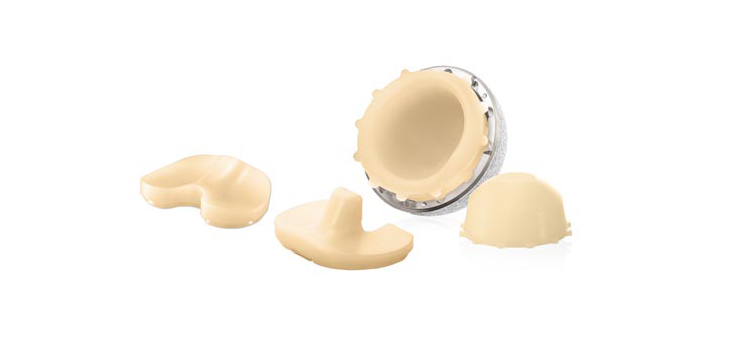
Components of the device include the U-Motion II E-XPE Cup Liner and E-XPE Cemented Cup.
According to FDA documents, the device is intended for reduction or relief of pain and/or improved hip function in skeletally mature patients with the following conditions:
- Painful, disabling joint disease of the hip resulting from: degenerative arthritis, rheumatoid arthritis, post-traumatic arthritis or late stage avascular necrosis.
- Revision of previous unsuccessful femoral head replacement, cup arthroplasty or other procedure.
- Clinical management problems where arthrodesis or alternative reconstructive techniques are less likely to achieve satisfactory results.
- Correction of functional deformity.
- Treatment of nonunion femoral neck and trochanteric fracture of the proximal femur with head involvement that is unmanageable using other techniques.
The device is a single use implant and intended for cementless use only.
The cup liner includes 0° and 20° hood designs, which are available in 28 mm, 32 mm, 36 mm and 40 mm inner diameter (ID). The 28 mm liners fit the acetabular cups with outer diameter (OD) ranging from 44-46 mm, the 32 mm liners fit the acetabular cups ranging from 46-50 mm, the 36 mm liners fit the acetabular cups ranging from 50-70 mm, and the 40 mm liners fit the acetabular cups ranging from 56-70 mm.
The cemented cup is designed for cemented use and assembled with a PMMA (polymethyl methacrylate) Spacer and an X-ray marking wire.
The cement mantle is built within the outer surface of acetabular cup. The PMMA Spacer is designed for cement fixation with a uniform cement thickness and the X-ray marking wire is designed for X-ray image identification purpose.
The cups are available in a range of sizes to fit varying anatomical requirements.
Enhanced Wear Resistance
The company says the device is a “new generation of highly cross-linked polyethylene blended with vitamin E to enhance wear resistance without compromising oxidative stability and mechanical properties.”
Calvin Lin, president of the company’s U.S. subsidiary, said oxidation continues to be a concern for surgeons. “Over time, wear of conventional polyethylene can generate debris in the joint, triggering local inflammation that results in bone loss which is one of the biggest causes of late-term failure in hip and knee replacements.” He added the FDA clearance provides surgeons with an alternative implant for their patient.
The company, established in 1993, is headquartered in Hsinchu, Taiwan. The U.S. subsidiary is based in Irvine, California.
Author
React:
Discussion
This is a fascinating development. In my practice we've seen similar outcomes with the revised protocol. The key differentiator seems to be patient selection criteria. Has anyone else noticed the correlation with BMI thresholds?
Great point. I'd push back slightly on the conclusion, the sample size in the cited study is too small to draw population-level inferences. That said, the directional signal is compelling and worth a larger RCT.
We implemented a similar approach last year. Early results are promising but we're still gathering 12-month follow-up data. Happy to share our protocol if anyone is interested.
Join the conversation
Orthopedic professionals are discussing this. Sign in and upgrade to read every comment and add your voice.