
NuVasive, Inc.’s Monolith corpectomy system, which was originally cleared for commercial sale by the FDA in 2015 for thoracolumbar procedures, can now be used for cervical procedures.
FDA Clears NuVasive Corpectomy System
1 min read Premium comments
#nuvasiveSecondary#neckpain#fusion
On November 30, 2018, the FDA granted NuVasive 510(k) clearance for expanded use of the Monolith corpectomy system after almost nine months of review.
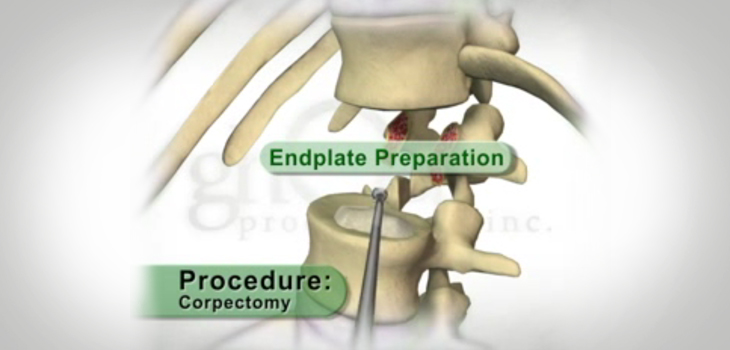
A corpectomy procedure removes the vertebral body and adjoining discs.
The expanded clearance addresses tumor, trauma and degenerative disorders of the cervical spine.
According to FDA documents, the Monolith is a vertebral body replacement system manufactured from polyetheretherketone (PEEK) Optima LT-1 and is made up of two primary components: a core and a set of endcaps.
“The core is offered in a variety of shapes and sizes to fit individual pathology and anatomical conditions of the patient. The modular standard and railed endcaps are offered in multiple footprints and lordosis options.”
“The device contains pins made of either titanium alloy or tantalum…to serve as radiopaque markers. The system is provided non-sterile and is designed to be sterilized by the user before each use.”
Indications for Use
The FDA document states the system is indicated for “use in the cervical spine (C3-C7 vertebral bodies) in skeletally mature patients to replace a diseased or damaged vertebral body caused by tumor, fracture, or osteomyelitis, or for reconstruction following corpectomy performed to achieve decompression of the spinal cord and neural tissues in cervical degenerative disorders.”
Following removal of the vertebral body and disc, the device is used with supplemental fixation cleared by the FDA for use in the cervical spine. “These implants are intended for use with autograft or allogenic bone graft comprised of cancellous and/or corticocancellous bone graft, as an adjunct to fusion.”
Additionally, the system is also intended to restore the “integrity of the spinal column even in the absence of fusion for a limited time period in patients with advanced stage tumors involving the cervical spine in whom life expectancy is of insufficient duration to permit achievement of fusion, with bone graft used at the surgeon’s discretion.”
Author
React:
Discussion
This is a fascinating development. In my practice we've seen similar outcomes with the revised protocol. The key differentiator seems to be patient selection criteria. Has anyone else noticed the correlation with BMI thresholds?
Great point. I'd push back slightly on the conclusion, the sample size in the cited study is too small to draw population-level inferences. That said, the directional signal is compelling and worth a larger RCT.
We implemented a similar approach last year. Early results are promising but we're still gathering 12-month follow-up data. Happy to share our protocol if anyone is interested.
Join the conversation
Orthopedic professionals are discussing this. Sign in and upgrade to read every comment and add your voice.