
New work from Rush University Medical Center in Chicago, Illinois, is shining a light on the trends in articular cartilage treatments. The study, “Management of Chondral Lesions of the Knee: Analysis of Trends and Short-Term Complications Using the National Surgical Quality Improvement Program Database,” was published in the November 22, 2018 edition of Arthroscopy.
Cartilage Procedures: Indications, Trends, and Complication Rates
2 min read Premium comments
Secondary#knee#cartilage
Adam Yanke, M.D., Ph.D., assistant director of the Cartilage Restoration Center at Rush and co-author on the study, explained the rationale toOTW, “As we learn more regarding the treatment of articular cartilage defects, we are beginning to understand that not every treatment works for every lesion. This can mean that both lesion characteristics such as size and location, as well as patient characteristics such as age, BMI [body mass index], and activity level may have a significant effect on patient outcomes. Understanding the best indications for cartilage restoration should help improve our outcomes and overall success rates of these procedures.”
“Currently most cartilage procedures have subjective outcomes of 85% success with regards to pain relief; however, tighter indications may help improve these outcomes. Therefore, the purpose of this study was to evaluate whether or not new evidence has been shaping indications for these procedures.”
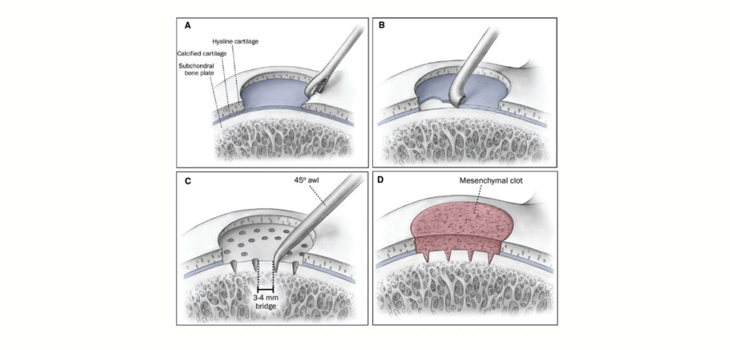
“A secondary aim of the study was to understand the reported complication rates for these procedures to help shape the discussion with the patient in the office. In order to evaluate this, we looked at the ACS NSQIP [American College of Surgeons National Surgical Quality Improvement Program] database to determine the overall rate of change of chondroplasty, microfracture, autologous chondrocyte implantation, and osteochondral transplantation incidence and associated complications from 2010 to 2016.”
“The most important finding was that there is a clear trend towards increased usage of reconstructive options such as autologous chondrocyte implantation and osteochondral graft transplantation. While evidence has supported these changes, it does not appear that we have seen the same reduction in marrow stimulation technologies such as microfracture as one might expect.”
“Similarly, many cartilage restoration procedures are being indicated for patients that are likely beyond the age where it will still be beneficial for them. Specifically, the largest percentage of patients undergoing chondroplasty is 45-54 years of age at 26.1% and the largest percentage in microfracture is the same at 27.8%.”
“While chondroplasty procedures can provide some palliative benefits, microfracture should be applied in a setting where there is likely benefit through tissue growth and maturation, which is less likely in this age group. The largest percentage in almost all restorative procedures (osteochondral grafting and autologous chondrocyte implantation) was 25-34 years of age. This range for these procedures is completely in line with what we would expect based on the best evidence we have. Complications rates for all procedures was 2.1% or less and many of these were not significant adverse events.”
“Based on these findings, I think we should reinforce strict indications for microfracture procedures and treat marrow stimulation with the same “level of respect” as other restorative procedures to both help improve outcomes as well as to not burn bridges for future cell-based treatment if necessary.”
Author
React:
Discussion
This is a fascinating development. In my practice we've seen similar outcomes with the revised protocol. The key differentiator seems to be patient selection criteria. Has anyone else noticed the correlation with BMI thresholds?
Great point. I'd push back slightly on the conclusion, the sample size in the cited study is too small to draw population-level inferences. That said, the directional signal is compelling and worth a larger RCT.
We implemented a similar approach last year. Early results are promising but we're still gathering 12-month follow-up data. Happy to share our protocol if anyone is interested.
Join the conversation
Orthopedic professionals are discussing this. Sign in and upgrade to read every comment and add your voice.