
Mayo Clinic researchers tapped into their total joint registry to look at 22,243 consecutive primary total knee arthroplasties (TKA) in 16,106 patients to see what new outcome insights they might glean.
Body Surface Area Increases TKA Revision Risk
1 min read Premium comments
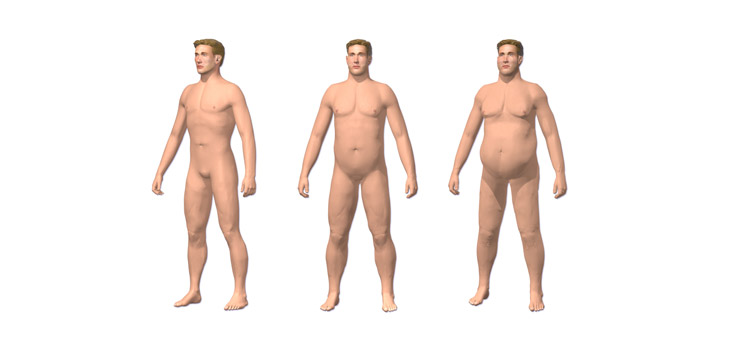
Secondary#knee#BMI#tka
What they found is very interesting and the subject of a new paper published in the November 7, 2018 edition of The Journal of Bone and Joint Surgerytitled “Effect of Physical Parameters on Outcomes of Total Knee Arthroplasty.”
Daniel Berry, M.D., chair of Orthopedic Surgery at Mayo Clinic in Rochester, Minnesota, and co-author on the study, told OTW, “A number of previous studies have demonstrated that body mass index [BMI] is associated with the risk of some complications after TKA, including infection and aseptic loosening. However, body mass index is just one physical parameter that could influence the outcomes of TKA.”
“In this study we sought to understand how other physical parameters including body mass, height, and body surface area (which is calculated differently than BMI but also is based on height and weight) influence outcomes of TKA.”
“We found that body mass, height and body surface area, in addition to body mass index all have strong effects on the outcome of TKA. Furthermore, we found that the effect of each parameter varied with the endpoint studied. For example, body surface area, which increases both with height and weight, was most strongly associated with the risk of implant revision or removal.”
“The data provide orthopedic surgeons and orthopedic patients objective information about the relative risk specific complications of TKA, that can be personalized to an individual’s physical parameters. Of course, other factors such as co-morbidities also play a role in an individual’s risk and were not studied in this paper.”
“It is useful for orthopedic surgeons to realize that body mass index is not the only physical parameter that effects outcome of TKA. Body mass index, which is one way to measure obesity, has a strong effect on outcome of TKA; but body surface area, which is a more complete measure of how large a person is, also has a powerful effect on outcomes of TKA.”
Author
React:
Discussion
This is a fascinating development. In my practice we've seen similar outcomes with the revised protocol. The key differentiator seems to be patient selection criteria. Has anyone else noticed the correlation with BMI thresholds?
Great point. I'd push back slightly on the conclusion, the sample size in the cited study is too small to draw population-level inferences. That said, the directional signal is compelling and worth a larger RCT.
We implemented a similar approach last year. Early results are promising but we're still gathering 12-month follow-up data. Happy to share our protocol if anyone is interested.
Join the conversation
Orthopedic professionals are discussing this. Sign in and upgrade to read every comment and add your voice.