
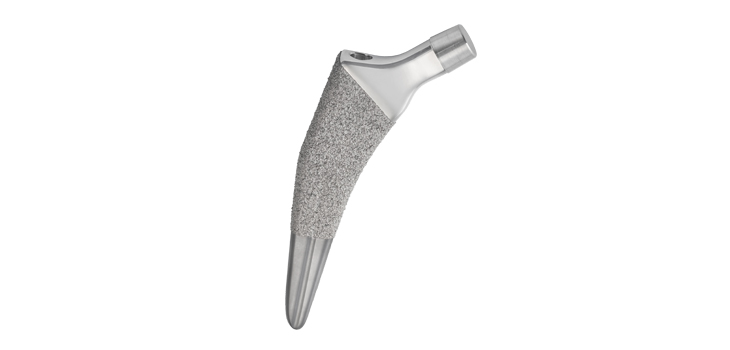
Irvine, California-based United Orthopedic Corporation, Inc. has announced that the U.S. launch of the UTS (United Tri-tapered Short Stem) hip stem and an extension of the U-Motion II Acetabular System.
United Orthopedic Hip Stem, Acetabular Extension Available in U.S.
2 min read Premium comments
Secondary#unitedorthopedic#umotionIIacetabularsystem#utshipstem
“The UTS hip stem and U-Motion II extension reflect our commitment to addressing some of the challenges in today’s hip replacement market—reducing dislocations and providing solutions that support rapid recovery from surgery,” said Calvin Lin, company president. “Since the launch of these products at this year’s American Academy of Orthopaedic Surgeons Annual Meeting, we have received positive feedback from orthopedic surgeons, citing easier insertion of the hip stem, greater range of motion and improved stability.”
According to the company, “The UTS hip stem is a tapered wedge short stem suitable for less invasive primary hip replacement. It is designed for easier insertion through small incisions and requires simpler femoral preparation, enabling rapid recovery. Shorter stems preserve bone, which allows for more favorable conditions in future revisions.The UTS hip stem is available in 14 refined proximal sizes. Its features include standard and high offset options for restoring joint biomechanics, and a reduced lateral shoulder designed to conserve bone in the greater trochanter.”
“The extension of the U-Motion II Acetabular System for total hip replacement surgery includes a 50mm acetabular cup and cup liner, which is compatible with the 36mm BIOLOXdelta ceramic and CoCrMo metal femoral heads. The 36mm femoral head with the new U-Motion II 50mm Acetabular cup is designed to provide patients a greater range of motion2, increase jumping distance, improve stability and lower the risk of dislocation.”
“The UTS hip stem offers some unique advantages over other hip stems on the market. The proximal porous ingrowth surface and tapered design allows for early weight bearing while preventing subsidence. Multiple offset options are available, allowing fine tuning of the soft tissue balance and stability during surgery.” Said Ronald Hillock, M.D., an orthopedic surgeon at the Nevada Orthopedic & Spine Center, in Las Vegas, Nevada. “The instruments are well thought out and streamlined. I have been pleased with my initial UTS experience.”
Calvin Lin told OTW, “We often engage with our surgeons during the development process, which provides us with valuable insights into how to most effectively engineer our products to meet clinical needs. What we learned when we were developing our UTS stem was there is a growing trend towards shorter hip stems because it preserves more bone, requiring less resection of the upper femur, and results in a less invasive hip arthroplasty. This was a key factor in deciding how we approached the implant design.”
Author
React:
Discussion
This is a fascinating development. In my practice we've seen similar outcomes with the revised protocol. The key differentiator seems to be patient selection criteria. Has anyone else noticed the correlation with BMI thresholds?
Great point. I'd push back slightly on the conclusion, the sample size in the cited study is too small to draw population-level inferences. That said, the directional signal is compelling and worth a larger RCT.
We implemented a similar approach last year. Early results are promising but we're still gathering 12-month follow-up data. Happy to share our protocol if anyone is interested.
Join the conversation
Orthopedic professionals are discussing this. Sign in and upgrade to read every comment and add your voice.