
New work from Hospital for Special Surgery (HSS) in New York focused on patient outcomes from “modular dual mobility” implants for revision hip surgeries.
Study: Dual Mobility Hip Implant Reduces Risk of Dislocation
2 min read Premium comments
#hospitalforspecialsurgery#hipreplacementSecondary#modulardualmobility
Geoffrey Westrich, M.D., with colleagues from HSS and other joint replacement centers, conducted the study and presented it at the recent American Association of Hip and Knee Surgeons (AAHKS) in Dallas.
“Although the concept of dual mobility was originally developed in France in the 1970s, the technology is relatively new in the United States,” says Dr. Westrich, director of research of the Adult Reconstruction and Joint Replacement Service at HSS. “Our study found that newer technology with modular dual mobility components offered increased stability, lowering the risk of dislocation, without compromising hip range of motion in patients having a revision surgery.”
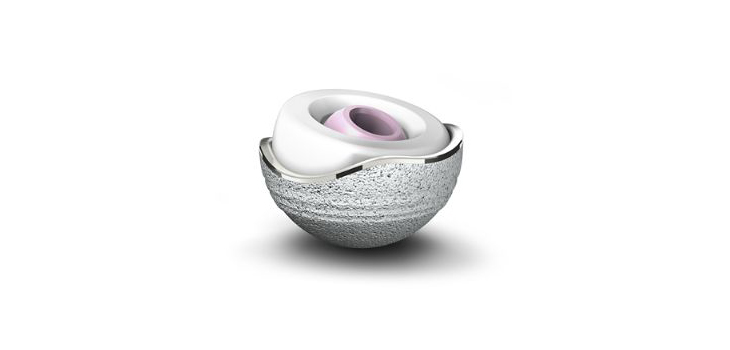
According to HSS, “Modular dual mobility implants provide an additional bearing surface compared to a traditional implant. With the dual mobility hip, a large polyethylene plastic head fits inside a polished metal hip socket component, and an additional smaller metal or ceramic head is snap-fit within the polyethylene head.”
“Currently, there are few large-scale outcome studies on the modular dual mobility device in revision hip replacement,” Dr. Westrich noted. “We set out to determine the rate of dislocation and the need for another surgery following revision hip replacement using this implant and report on the functional outcomes.”
“The study included 370 patients who underwent revision hip replacement with the dual mobility implant between April 2011 and April 2017. The average patient age at the time of surgery was 65.8 years. Clinical, radiographic and patient reported-outcome information was collected.”
“At the latest follow-up, we found that surgery with the dual mobility implant resulted in a very low rate of instability for the revision patients, namely 2.9 percent, with good functional improvement and a low rate of reoperation,” Dr. Westrich noted. “While longer-term follow-up is needed to fully assess the newer device, in our study there was clearly a benefit provided by the dual mobility implant in the first few years following revision surgery.”
Dr. Westrich told OTW, “Modular dual mobilityis being used more and more as surgeons see the benefits. In our study it markedly decreased the risk of further surgery and dislocation. We now have an implant that can make revision surgery safer with a less risk of complications.”
Author
React:
Discussion
This is a fascinating development. In my practice we've seen similar outcomes with the revised protocol. The key differentiator seems to be patient selection criteria. Has anyone else noticed the correlation with BMI thresholds?
Great point. I'd push back slightly on the conclusion, the sample size in the cited study is too small to draw population-level inferences. That said, the directional signal is compelling and worth a larger RCT.
We implemented a similar approach last year. Early results are promising but we're still gathering 12-month follow-up data. Happy to share our protocol if anyone is interested.
Join the conversation
Orthopedic professionals are discussing this. Sign in and upgrade to read every comment and add your voice.