
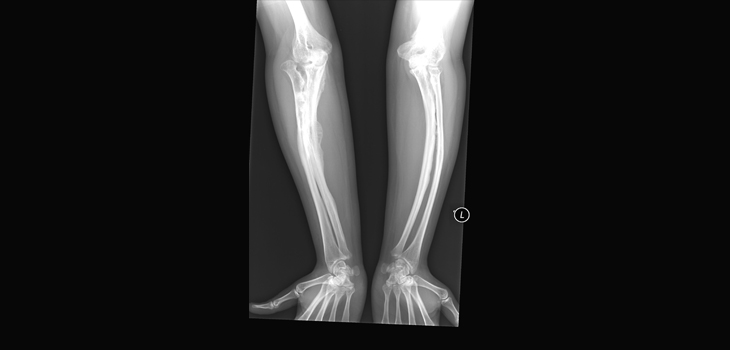
Researchers in Canada are deep diving into the biologic mechanism of a certain antibody and how it works in the devastating condition known as osteogenesis imperfecta (OI). A disease without many treatment options, OI is a genetic condition that causes fragile bones to break extremely easily.
Osteogenesis Imperfecta: Millimeters Closer to a Treatment?
1 min read Premium comments
Secondary#antitgf8#osteogenesisimperfecta
A new study, “Effect of Anti‐TGF‐βTreatment in a Mouse Model of Severe Osteogenesis Imperfecta,” appears in the October 24, 2018 edition of the Journal of Bone and Mineral Research.
Frank Rauch, M.D., professor of Pediatrics at McGill University, Shriners Hospital for Children in Montreal, Canada, and co-author on the study, told OTW, “We are treating many children with osteogenesis imperfecta using bisphosphonate drugs. However, these patients often still have fractures despite drug treatment. We therefore try to find new drugs with better effects, using mice with osteogenesis imperfecta.”
“The treatment approach that we tested in this study, using an antibody against a protein called TGF-beta, had been reported previously to have good effects in two mouse models of osteogenesis imperfecta. However, the mice that we used in our study did not respond much to the treatment. This shows that the effect of the TGF-beta antibody probably depends on the exact genetic cause of osteogenesis imperfecta.”
“For now, TGF-beta antibody treatment is limited for use in controlled studies. Those studies will have to assess for which kind of genetic causes of osteogenesis imperfecta this treatment approach is successful.”
“Many new medications are being tested for improving bone strength in osteogenesis imperfecta. However, at present, treatment with bisphosphonate drugs remains the standard of care.”
Author
React:
Discussion
This is a fascinating development. In my practice we've seen similar outcomes with the revised protocol. The key differentiator seems to be patient selection criteria. Has anyone else noticed the correlation with BMI thresholds?
Great point. I'd push back slightly on the conclusion, the sample size in the cited study is too small to draw population-level inferences. That said, the directional signal is compelling and worth a larger RCT.
We implemented a similar approach last year. Early results are promising but we're still gathering 12-month follow-up data. Happy to share our protocol if anyone is interested.
Join the conversation
Orthopedic professionals are discussing this. Sign in and upgrade to read every comment and add your voice.