
In pediatrics, smaller is usually better, especially when it comes to treating complex scoliosis cases.
FDA Clears Smaller Spinal Implants for Kids
2 min read Premium comments
#spinesurgerySecondary#scoliosis#pediatricorthopetics
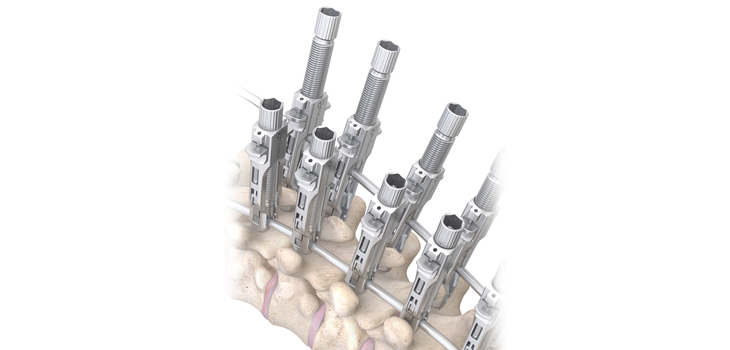
On October 19, 2018, OrthoPediatrics Corp. of Warsaw, Indiana, announced FDA clearance for the Response 4.5/5.0mm spine system for younger patients with a smaller stature. It is the company’s 26th surgical system. The FDA determined the system was substantial equivalent to the company’s previously cleared Response 5.5/6.0 system.
According to the FDA, the system is intended for “immobilization and stabilization of the posterior, non-cervical spine in skeletally mature patients as an adjunct to fusion for the following indications: degenerative disc disease (defined as back pain of discogenic origin with degeneration of the disc confirmed by history and radiographic studies), spondylolisthesis, trauma (i.e., fracture or dislocation), spinal stenosis, curvatures (i.e., scoliosis, kyphosis, or lordosis), tumor, pseudoarthrosis, and/or failed previous fusion.”
When used for posterior non-cervical pedicle screw fixation in pediatric patients, the implants are indicated as an adjunct to fusion to treat adolescent idiopathic scoliosis and intended to be used with autograft and/or allograft. Pediatric pedicle screw fixation is limited to a posterior approach.
The company says the system features advanced instrument & implant technology, including:
- innovative, low profile screw design including a proprietary set screw thread design for improved fixation and reduced potential for cross threading, and
- unique pedicle screw head accepts a 5.5mm or 6.0mm rod in both cobalt chrome and titanium.
Additionally, the system has, “versatile reduction & de-rotation capabilities with rod reducer instrument designed for easy snap on and off 2-in-1 rod reduction instrument enables each surgeon to perform reduction and de-rotation technique of choice and serves as a rod reducer and de-rotator in one.”
David Bailey, the company’s executive vice president, said the system allows physicians to better treat smaller statures and patients at a younger age. “Our engineering teams have been diligently working with a prominent group of surgeons, and we are excited to bring their innovative vision to life with another surgical solution for treating complex pediatric scoliosis.”
St. Louis’ Shriners Hospital’s Chief of Staff, Scott Luhmann, M.D., said, “This surgeon-centric system is focused on surgical efficacy and efficiency with an elegant rod reduction tool that significantly cuts down laborious task time in the effort to provide optimal patient outcome.” Luhmann is also Associate Professor in the Department of Orthopedic Surgery and Fellowship Director of Pediatric Orthopedic Surgery at Washington University School of Medicine
The system is expected to launch in the fourth quarter of 2018.
The company was founded 12 years ago in the orthopedic capital of the world, Warsaw, Indiana, and focuses solely on the pediatric orthopedic market. To date, it offers 25 surgical systems.
Author
React:
Discussion
This is a fascinating development. In my practice we've seen similar outcomes with the revised protocol. The key differentiator seems to be patient selection criteria. Has anyone else noticed the correlation with BMI thresholds?
Great point. I'd push back slightly on the conclusion, the sample size in the cited study is too small to draw population-level inferences. That said, the directional signal is compelling and worth a larger RCT.
We implemented a similar approach last year. Early results are promising but we're still gathering 12-month follow-up data. Happy to share our protocol if anyone is interested.
Join the conversation
Orthopedic professionals are discussing this. Sign in and upgrade to read every comment and add your voice.