
Innovasive, Inc., a privately held spinal device company founded in 2017 in Mission Viejo, California, has announced that the FDA has cleared the company’s DualX TLIF, LLIF and PLIF intervertebral body fusion devices.
FDA Clears Innovasive Dual Expanding Interbody Fusion Device
2 min read Premium comments
#outpatientsurgerySecondary#fusion#fdaclearance#innovasive
Indications
According to the FDA documents, DualX is “indicated for intervertebral body fusion of the lumbar spine, from L2 to S1,” and, “for use at either one or two contiguous levels for the treatment of degenerative disc disease (DDD) with up to Grade I spondylolisthesis or retrolisthesis.”
The device is intended for use with supplemental fixation and autograft and/or allogenic bone graft comprised of cancellous and/or corticocancellous bone graft and for unilateral or bilateral implantation.
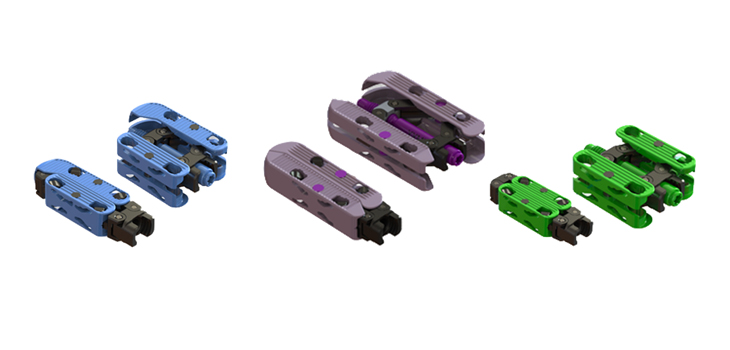
After entering the interbody space, state the FDA documents, “the implants expand laterally to maximize the contact area around the cortical rim of the vertebral bodies. The implants then expand vertically to maintain distraction of the vertebral bodies and maximize clearance for exiting nerve roots. The implants are binary, and each implant can only be locked out in the fully expanded state. Specific sizes are included in the system with various expanded heights to optimize the fit for the patient.”
The company says its technology is made up of a family of titanium expandable interbody devices designed to be used in transforaminal lumbar interbody fusion (TLIF), posterior lumbar interbody fusion (PLIF) and lateral lumbar interbody fusion (LLIF) spinal procedures. The product portfolio contains “varying footprints, heights and degrees of lordosis with post-expansion bone grafting to provide a customized anatomical fit for a clinically successful fusion environment.”
Andy Choi, the company’s CEO said on October 31, 2018, that the device is a, “unique expandable interbody that expands in two independent directions. First it expands laterally to provide a wide base for stability and spinal support. Then expands vertically with lordosis to aide in the restoration of sagittal alignment of the lumbar spine.”
Jeffrey Roh, M.D., Director of Minimally Invasive Spine Surgery at the Swedish Neuroscience Institute in Seattle, Washington, said, “The ability of DualX to provide expansion in two planes is essential for achieving a successful surgical outcome. DualX accomplishes the goals of creating a biomechanically stable environment for spinal fusion, as well as supporting normal sagittal and coronal alignment; both of which are essential factors for restoring optimal spinal balance.”
Author
React:
Discussion
This is a fascinating development. In my practice we've seen similar outcomes with the revised protocol. The key differentiator seems to be patient selection criteria. Has anyone else noticed the correlation with BMI thresholds?
Great point. I'd push back slightly on the conclusion, the sample size in the cited study is too small to draw population-level inferences. That said, the directional signal is compelling and worth a larger RCT.
We implemented a similar approach last year. Early results are promising but we're still gathering 12-month follow-up data. Happy to share our protocol if anyone is interested.
Join the conversation
Orthopedic professionals are discussing this. Sign in and upgrade to read every comment and add your voice.