
From Colombia comes word of research that umbilical cord blood can be used to repair cleft palates in babies. The new treatment has been used successfully with nine children. Researchers believe the treatment will eliminate the need for bone grafts when the children are older. A cleft palate is a situation in which the skull has a gap on the face where the nose and mouth join up. The condition affects one in about every 700 babies in the UK.
Umbilical Cord Blood Heals Clef Palates in Infants
1 min read Premium comments
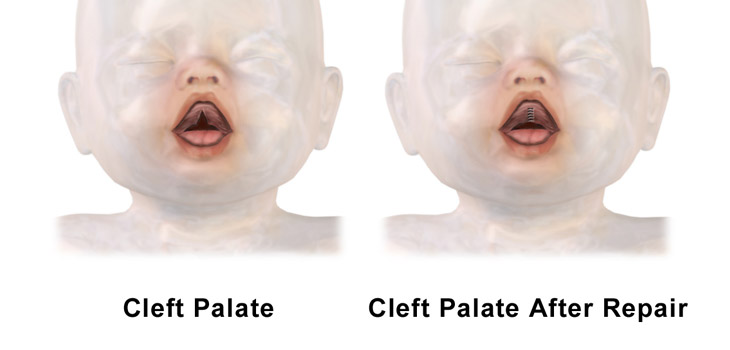
Secondary#cleftpalate#congenitalbonedeformities
Colombian researchers say they may be able to fix the deformity in a single procedure using stem cells from the baby’s own umbilical cord.
Researchers at the Hospital De San Jose in Bogota, Colombia, have experimented with the new surgery and treatment over the past 10 years. One girl, on whose case the report gives detail, managed to grow teeth normally. In another case, researchers reported that one child showed “’good thickness’ of her jaw bone “when she was followed up at the age of five after having the operation.
Doctors now believe using stem cells taken from umbilical cord blood could reduce the number of operations affected babies need.
The authors wrote in their study (“Importance of Stem Cell Transplantation in Cleft Lip and Palate Surgical Treatment Protocol”) published in The Journal of Craniofacial Surgery: “The potential regenerative power of the stem cell encouraged [us] to find new methods to be added to the classical surgical techniques and make possible better results [for] cleft patients.”
Author
React:
Discussion
This is a fascinating development. In my practice we've seen similar outcomes with the revised protocol. The key differentiator seems to be patient selection criteria. Has anyone else noticed the correlation with BMI thresholds?
Great point. I'd push back slightly on the conclusion, the sample size in the cited study is too small to draw population-level inferences. That said, the directional signal is compelling and worth a larger RCT.
We implemented a similar approach last year. Early results are promising but we're still gathering 12-month follow-up data. Happy to share our protocol if anyone is interested.
Join the conversation
Orthopedic professionals are discussing this. Sign in and upgrade to read every comment and add your voice.