
NuVasive, Inc. has announced the UK launch of MAGEC X, the newest product within the MAGEC pediatric portfolio that addresses early-onset scoliosis.
UK Launch of MAGEC X for Scoliosis
1 min read Premium comments
#nuvasiveSecondary#scoliosis#magec
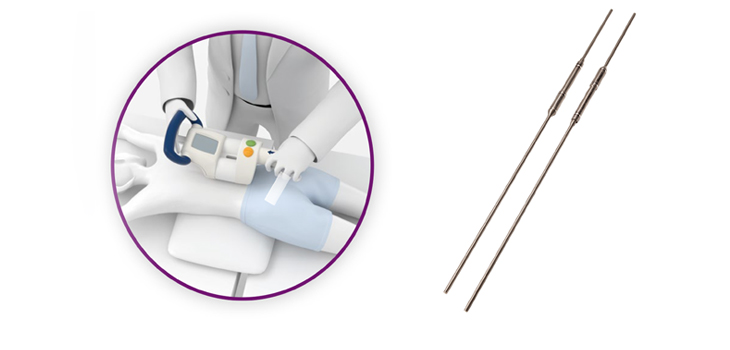
MAGEC X has 5.0mm diameter patient rods which, according to NuVasive, deliver 68% better fatigue-strength as compared to traditional 4.5mm rods. MAGEC X also uses advanced rod mechanisms, most notably a robust actuator seal which further contains and reduces titanium wear debris. The rod also has an anti-jam feature which can simplify intraoperative and postoperative rod lengthening.
Finally, NuVasive’s engineers gave MAGEC X some key aesthetic improvements like laser-marked sagittal bending lines which can enhance surgeon workflow efficiency and ease of use.
“The 5.0mm growing rod in the MAGEC X system pairs with the NuVasive Reline Small Stature fixation system, the first pediatric deformity fixation system that combines rod strength with low-profile implants. Together, the two systems help minimize revision surgeries by adding enhanced construct strength with an optimized low-profile ….”
“I am extremely impressed with the NuVasive MAGEC X 5.0mm solution and its ability to provide superior rod strength without having to sacrifice the ideal fixation size thus meeting the clinical needs of pediatric patients,” said Dr. Stewart Tucker, MBBS, FRCS, orthopedic surgeon at Great Ormond Street Hospital in London, England. “Additionally, MAGEC X substantially improves intra-op workflow with enhanced ease of use. It provides surgeons with tremendous flexibility, enabling upsizing of rods while maintaining small screw heads, giving optimal profile and soft tissue cover.”
Asked how the actuator seal helps contain and reduce the release of titanium wear debris, Dr. Tucker told OTW, “The MAGEC X rod features an actuator seal that is twice as robust as prior generations. The new design increases seal compression which allows the device to better contain metal wear debris.”
“The anti-jam feature helps increase efficiency by preventing the rod from jamming during intraoperative testing and postoperative distraction.”
Author
React:
Discussion
This is a fascinating development. In my practice we've seen similar outcomes with the revised protocol. The key differentiator seems to be patient selection criteria. Has anyone else noticed the correlation with BMI thresholds?
Great point. I'd push back slightly on the conclusion, the sample size in the cited study is too small to draw population-level inferences. That said, the directional signal is compelling and worth a larger RCT.
We implemented a similar approach last year. Early results are promising but we're still gathering 12-month follow-up data. Happy to share our protocol if anyone is interested.
Join the conversation
Orthopedic professionals are discussing this. Sign in and upgrade to read every comment and add your voice.