
Multicenter research has tried to sort out the complicated relationship between subclinical vascular disease and bone density/fractures.The work, “The associations of subclinical atherosclerotic cardiovascular disease with hip fracture risk and bone mineral density in elderly adults,” appears in the October 2018 edition of Osteoporosis International.
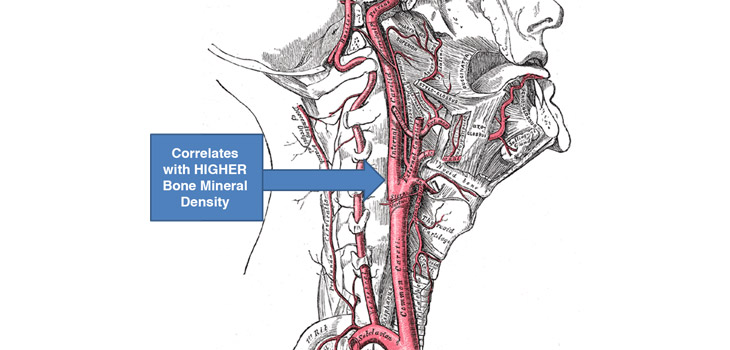
Thick Carotid Arteries=HIGHER Bone Mineral Density?
1 min read Premium comments
#hipfracture#bonemineraldensitySecondary#cardiovasculardisease
Co-author JoshuaBarzilay, M.D., with the Division of Endocrinology at Kaiser Permanente of Georgia, and the Division of Endocrinology at the Emory University School of Medicine in Duluth, toldOTW, “We know that calcified arteries are associated with low bone density (osteoporosis) and fractures. Calcified blood vessels are an advanced form of vascular disease that occurs after many years of exposure to risk factors for heart disease, like diabetes.”
“Much more common than calcified blood vessels is subclinical vascular disease—the build-up of sludge or cholesterol in the arteries/pipes of the body. This is especially so in the absence of clinical vascular disease-like strokes or heart attacks. If there is an association of subclinical vascular disease and bone density/fractures, then these two disorders of aging are associated very early on—prior to the calcification of arteries.”
“We used the cardiovascular health study, an ongoing study of people over age 65 years. Many of them had ultrasound studies of the neck (carotid arteries), belly (aorta), and measurement of the blood pressure in the legs and arms from which an ankle/brachial index [ABI] was derived.”
“What we found was that in the absence of a history of heart attacks, heart failure, stroke, etc. that the thickness of the inner lining of the carotid arteries was related to hip fracture risk despite the thickness of the inner lining of these arteries (called intimal medial thickness [IMT]) being related with a slightly HIGHER (not lower, as was expected) bone mineral density. The measures of aortic wall thickness and ABI were NOT related to hip fracture risk.”
“We concluded that bone fragility and atherosclerosis—two age-associated illnesses—are linked to one another early on. We also concluded that there is heterogeneity of association—that neck (carotid) arteries have an association but not other arteries (of the belly and legs). So there remains much more to be learned.”
Author
React:
Discussion
This is a fascinating development. In my practice we've seen similar outcomes with the revised protocol. The key differentiator seems to be patient selection criteria. Has anyone else noticed the correlation with BMI thresholds?
Great point. I'd push back slightly on the conclusion, the sample size in the cited study is too small to draw population-level inferences. That said, the directional signal is compelling and worth a larger RCT.
We implemented a similar approach last year. Early results are promising but we're still gathering 12-month follow-up data. Happy to share our protocol if anyone is interested.
Join the conversation
Orthopedic professionals are discussing this. Sign in and upgrade to read every comment and add your voice.