
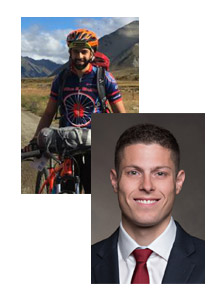
Swaroop Gonchikar, M.D. and John McMurtry, M.D. have joined the burgeoning OrthoCarolina practice.
Swaroop Gonchikar, M.D., John McMurtry, M.D. Join OrthoCarolina
1 min read Premium comments
#orthocarolina#brucecohen#johnmcmurtry#swaroopgonchikar
Swaroop Gonchikar, M.D., a musculoskeletal and interventional spine specialist who is based at the OrthoCarolina Spine Center, earned a B.S. in Biology with Distinction, and a Minor in Chemistry/Public Policy from the University of North Carolina. He was awarded his Doctor of Medicine from Albany Medical College, followed by an Internal Medicine Internship at the University of Colorado. Dr. Gonchikar attended New York University for his Physical Medicine and Rehabilitation Residency and OSS Health where he completed a Sports and Interventional Spine Fellowship.
Dr. Gonchikar commented to OTW, “My first steps as I move forward in this new role are to learn about and engage with the community I serve and gain a greater understanding of how I can be a part OrthoCarolina’s impact on it.”
John McMurtry, M.D., a hand and shoulder specialist based in Winston-Salem, earned a B.S. Biology from James Madison University, then attended the University of Virginia School of Medicine. He followed this with a residency at Virginia Commonwealth University and a fellowship at the Indiana Hand to Shoulder Center.
Dr. McMurtry told OTW, “The initial steps in this new role are primarily to get to know the community and its medical needs. I am actively seeing patients and trying to let patients know that I am willing and available to assist them with their orthopedic conditions.”
“Placing the highest-caliber medical providers in all of our offices ensures continued access to quality care and a continuum of care,” said Bruce Cohen, M.D., CEO, OrthoCarolina. “We’re excited to welcome our newest doctors to the OrthoCarolina team.”
Author
React:
Discussion
This is a fascinating development. In my practice we've seen similar outcomes with the revised protocol. The key differentiator seems to be patient selection criteria. Has anyone else noticed the correlation with BMI thresholds?
Great point. I'd push back slightly on the conclusion, the sample size in the cited study is too small to draw population-level inferences. That said, the directional signal is compelling and worth a larger RCT.
We implemented a similar approach last year. Early results are promising but we're still gathering 12-month follow-up data. Happy to share our protocol if anyone is interested.
Join the conversation
Orthopedic professionals are discussing this. Sign in and upgrade to read every comment and add your voice.