
Somerville, New Jersey-based Ethicon, LLC has just released the results of a new study which found that total knee replacement (TKR) patients and their surgeons were more satisfied with the cosmetic results and less concerned about after care and possible infections when the DERMABOND PRINEO Skin Closure System (as opposed to skin staples) was used.
Study: Glue Skin Closure in Total Knee Arthroplasty?
2 min read Premium comments
#kneesurgery#totaljointreplacementSecondary#woundclosure#hipsurgery
The DERMABOND PRINEO System, which does not create suture or staple holes in the skin and no dressing changes, was tested in a double-blinded quantitative study of 88 total knee replacement patients and 83 orthopedic surgeons.
Nefertiti Greene, president of Global Wound Closure at Ethicon, told OTW, “DERMABOND PRINEO Skin Closure System was created because there was a surgical need for consistent, reliable, and protected skin closure.”
“Consistency and reliability always matter, but especially now when patient satisfaction also carries so much weight. Orthopedic surgeons were our primary focus given their concern for protection against infections and patient satisfaction, and DERMABOND PRINEO Skin Closure System provides them that through strength, security, and infection protection.”
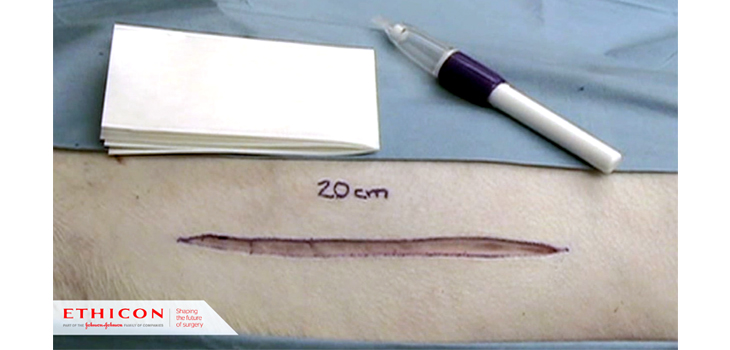
“DERMABOND PRINEO Skin Closure System (22 cm) was originally created for joints but we heard from surgeons that they would like to use it in procedures with longer incisions as well so we launched DERMABOND PRINEO Skin Closure System (42 cm) earlier this year.”
According to the company, the study “found more patients had overall greater satisfaction with the proven DERMABOND PRINEO System (88.2% vs. 81.8%) and were happier with the appearance of their skin incision (80% vs. 71%). Fewer patients were worried about post-operative care (55% vs. 63%) or concerned about complications (56% vs. 60%) when the DERMABOND PRINEO System was used.”
Greene commented to OTW, “We’ve heard from orthopedic surgeons how satisfied they are with DERMABOND PRINEO Skin Closure System, but it was very gratifying to learn how impactful it was for patients as well. Through this study, we’ve found that there is significantly higher levels of satisfaction for both surgeons and patients who use DERMABOND PRINEO Skin Closure System compared to staples. We’ve taken these insights and started a social media campaign which you can follow through #MoreThanSkinClosure.”
“DERMABOND PRINEO Skin Closure System gives you confidence and peace of mind that you’ll achieve superior patient satisfaction by providing a consistently secure and protected closure. DERMABOND PRINEO Skin Closure System is 99% effective microbial barrier protection proven through 72 hours in vitro against bacteria commonly responsible for SSIs and has statistically significant greater skin holding strength than skin staples or subcuticular suture. And of course, for your patients it may lead to better cosmesis when compared to staples, and no postsurgical dressings may mean easier self-care and greater self-confidence for patients.”
Author
React:
Discussion
This is a fascinating development. In my practice we've seen similar outcomes with the revised protocol. The key differentiator seems to be patient selection criteria. Has anyone else noticed the correlation with BMI thresholds?
Great point. I'd push back slightly on the conclusion, the sample size in the cited study is too small to draw population-level inferences. That said, the directional signal is compelling and worth a larger RCT.
We implemented a similar approach last year. Early results are promising but we're still gathering 12-month follow-up data. Happy to share our protocol if anyone is interested.
Join the conversation
Orthopedic professionals are discussing this. Sign in and upgrade to read every comment and add your voice.