
Canadian researchers have attempted to find the best way of identifying axial inflammatory arthritis in patients with psoriatic arthritis.
Psoriatic Arthritis: Rule Out Spondyloarthritis?
2 min read Premium comments
#ankylosingspondylitis#backpainSecondary#psoriaticarthritis
Their work, “Back pain in psoriatic arthritis: defining prevalence, characteristics and performance of inflammatory back pain criteria in psoriatic arthritis,” appears in the August 4, 2018 edition of Annals of the Rheumatic Diseases.
Co-author Vinod Chandran M.B.B.S., M.D., D.M., Ph.D., associate professor in the Division of Rheumatology at the University of Toronto explained the objective of his study to OTW, “Axial or back involvement is common in patients with psoriatic arthritis (PsA), a form of inflammatory arthritis that occurs in patients with psoriasis.”
“Identifying back involvement is important, since it may indicate more severe disease. The appropriate drug therapy of psoriatic arthritis may also depend on the presence (or absence) of inflammatory axial arthritis.”
“However, nonspecific back pain is rather common in the general population as well as patients with psoriasis and psoriatic arthritis since they tend to be heavier and older than patients with the classic axial inflammatory arthritis, ankylosing spondylitis. We were therefore interested in determining the best method to identify axial inflammatory arthritis in patients with psoriatic arthritis.”
The authors wrote, “171 patients (52% male, mean age 46.6 years) were identified. Ninety-six (56.13%) patients reported chronic back pain. Sixty-five (38.01%) had IBP [inflammatory back pain]. 54 (32%) patients had evidence of radiological change in the spine…”
Dr. Chandran expanded on the study results to OTW, “The criteria generally used to identify inflammatory axial disease in patients suspected of having ankylosing spondylitis did not perform well in patients with psoriatic arthritis. Moreover, a significant proportion of patients with axial involvement did not report back pain. There were otherwise no significant differences between PsA patients with back involvement with or without back pain.”
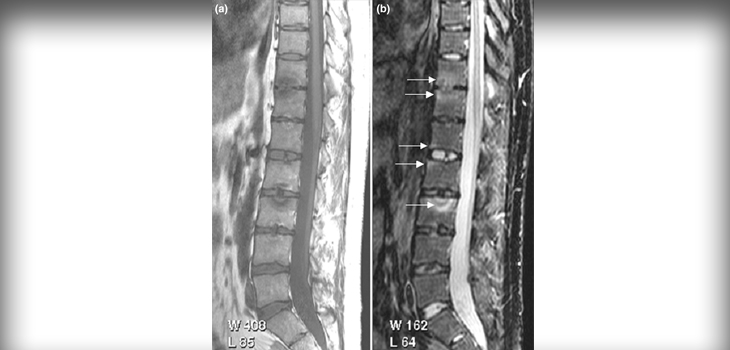
“In patients suspected or diagnosed to have psoriatic arthritis, imaging methods (X-rays, MRI as appropriate) should be used to identify axial involvement. Young patients (less than 45 years of age) presenting with chronic (>3 months) back pain especially with other diseases such as uveitis, psoriasis and inflammatory bowel disease should be referred to a rheumatologist to rule out a spondyloarthritis.”
Author
React:
Discussion
This is a fascinating development. In my practice we've seen similar outcomes with the revised protocol. The key differentiator seems to be patient selection criteria. Has anyone else noticed the correlation with BMI thresholds?
Great point. I'd push back slightly on the conclusion, the sample size in the cited study is too small to draw population-level inferences. That said, the directional signal is compelling and worth a larger RCT.
We implemented a similar approach last year. Early results are promising but we're still gathering 12-month follow-up data. Happy to share our protocol if anyone is interested.
Join the conversation
Orthopedic professionals are discussing this. Sign in and upgrade to read every comment and add your voice.