
“Return-to-throw programs are used readily to help baseball players either rehabilitate their back from an injury or to help condition players during preseason; however, little is known about what these programs are doing to the throwing arm, specifically the elbow,” Brittany Dowling, director of research and validation at Motus Global and colleagues told OTWrecently.
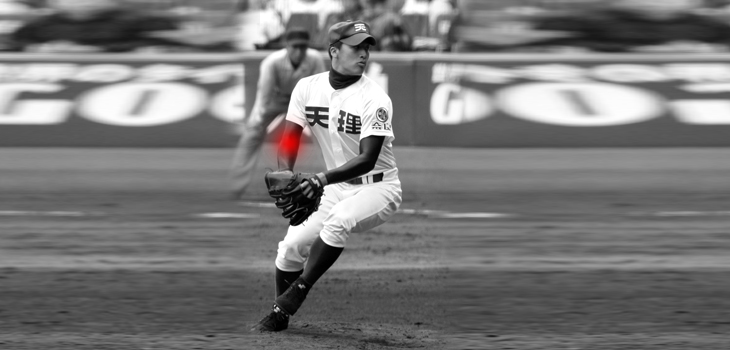
Elbow Injury: Long-Toss Distances Must Be Monitored Closely
1 min read Premium comments
Secondary#elbowinjury#longtossdistances#returntothrowprograms
“Long-toss throwing is used extensively in throwing programs and it often poses a controversial question to coaches, clinicians, and athletes: “is long-toss safe?”
Dowling, leading author of “Changes in Throwing Arm Mechanics at Increased Throwing Distances During Structured Long-Toss” published in the September issue of The American Journal of Sports Medicine, and her research colleagues found that while long-toss is safe to use in throwing programs, it should be monitored more closely.
Dowling and colleagues enrolled 95 high school baseball players into their study and asked them to perform a long-toss protocol while wearing an inertial sensor and sleeve. Each of the players were tested for 5 throws at distances of 9 m, 18 m, 27 m, 37 m, and 46 m.
According to the data, arm slot (p< .01), arm speed (p< .01), shoulder external rotation (p< .01) and elbow varus torque (p< .01) were significantly associated with long-toss throw distance. As the throw distance increased, there was an increase in arm speed and shoulder external rotation and a decrease in arm slot for each distance.
However, elbow varus torque increased with each distance up to 37 m and then remained the same at 46 m.
“This shows that players start to change their mechanics, potentially compensating, to reach longer distances, when maximum torque is reached,” Dowling said.
“Ultimately, we believe that there should be improved monitoring in throwing beyond ‘how does your arm feel?’ We think that players should continue to use long-toss throws in their throwing programs; however, clinicians and coaches should aim to better prescribe throwing programs based on measures such as elbow varus torque rather than a set distance or throw count.”
Author
React:
Discussion
This is a fascinating development. In my practice we've seen similar outcomes with the revised protocol. The key differentiator seems to be patient selection criteria. Has anyone else noticed the correlation with BMI thresholds?
Great point. I'd push back slightly on the conclusion, the sample size in the cited study is too small to draw population-level inferences. That said, the directional signal is compelling and worth a larger RCT.
We implemented a similar approach last year. Early results are promising but we're still gathering 12-month follow-up data. Happy to share our protocol if anyone is interested.
Join the conversation
Orthopedic professionals are discussing this. Sign in and upgrade to read every comment and add your voice.