
Contaminated pedicle screws are a huge problem in the United States. They cause increased surgical site infections (SSI), causing increased hospitalizations and costing hundreds of thousands of dollars every year. A multicenter group of researchers has proposed a superior standard of care and method of delivery for pedicle screws that completely eliminates this contamination.
Are Your Sterile Implants Really Sterile?
7 min read Premium comments
#surgicalsiteinfection#surgery#pediclescrews#implants#infection
12.7% Incidence Rate of Surgical Site Infection
A 2016 study published in the International Journal of Spine Surgery found that surgical site infection occurs at the rate of 12.7% following spinal fusion surgery. The average hospital bill following such infections is $63,000, with hospitalization being necessary in 5.5% of those cases.
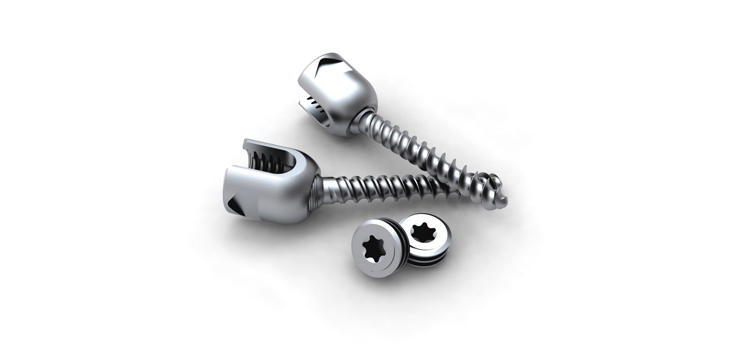
Pedicle screws are the most common implant used in spinal fusion surgery. A surgeon will typically have over a hundred screws available for use during surgery, but actually use a very small number of them.
The pedicle screws’ low usage rate leads to these screws being repeatedly reprocessed—or “automated washing with contaminated instruments from theatre and then sterilized without prior inspection by hospital staff” by the sterilization processing department (SPD).
These “sterile” implants, alarmingly, have been found to contain contaminants.
Furthermore, unused pedicle screws are subject to contamination during surgery.
Reprocessing Contamination
Reprocessed pedicle screws have been shown in recent studies to harbor contaminants, even after the automated washing and sterilization process.
One such study by Aakash Agarwal, Ph.D. and colleagues published in the Global Spine Journal, “Harboring Contaminants in Repeatedly Reprocessed Pedicle Screws,” found evidence of corrosion, saccharide, and soap residue on a random selection of pedicle screws that were supposedly sterile and consigned to be used during surgery.
In their study, the researchers selected six pedicle screws from four different trays of cleaned, wrapped, and sterilized implants. The screws were disassembled and sent for optical microscopy, scanning electron microscopy, and Fourier transform infrared spectroscopy. The researchers also reviewed the four major manufacturer’s instructions for reprocessing pedicle screws and compared the steps to the actual procedures that sterilization processing departments (SPDs) used to reprocess a pedicle screw set.
The study found three different types of contaminants on the sterilized pedicles screws: corrosion, saccharide of unknown origin, and soap residue. The study also found that manufacturer’s guidelines recommended 19 hours equivalent of reprocessing, but actual turnaround time was only 1 hour and 17 minutes.
The exact origin of these contaminants is unknown but could range from mucous-like deposits from bacteria, biofilms, fatty tissue residues from reprocessing the implants with other contaminated instruments, and insufficient rinsing after cleansing.
This could be in part due to the fact that pedicle screws are multicomponent with lumens, interfaces, and crevices that range from 0.2 to 1.5mm. These results raise important concerns regarding the practicality and safety of a repeated cleaning and sterilization process being followed in most of the hospitals in United States.
More Issues With Reprocessing Implants
Previous studies have also concluded that reprocessing in health facilities is impractical given the workload and the intricacies of the devices.
Earlier studies have shown that reprocessing led to an increase in endotoxin levels on implants and instruments. The study by Alfa et al. concluded that the final deionized (DI) water rinse was the source of the contamination, noting that there was biofilm formation in the DI tank.
Scotland has completely banned reprocessing of implants that are used in spine surgery. In Scotland, the deadline for conversion of orthopedic units to prepackaged, sterile, single-use implants was December 31, 2007. We are approaching 2019, and United States still has not mandated such changes, while other countries like the Netherlands and Japan are actively enrolling or approaching uniformity in this new practice.
The researchers concluded that repeatedly reprocessing pedicle screws could be a cause of surgical site infection and inflammatory responses post-surgery and suggested that the use of prepackaged, sterile, single-use implants as the only alternative.
Intraoperative Contamination
Reprocessing is not the only source of contamination for pedicle screws. Screws that are initially sterile are also contaminated during surgery.
In a separate study published by Agarwal and team in the Global Spine Journal, “Implant Prophylaxis: The Next Best Practice Toward Asepsis in Spine Surgery,” the researchers analyzed articles published between 2000 and 2017 that evaluated the contaminants present on spine implants and the associated processing and handling methodology suggested to avoid them.
In conducting their study, the researchers asked: “What are the sources of contaminants on an implant used for surgery?” and “What are the known practices and/or suggested implant handling techniques, both preoperative and intraoperative?” Eleven articles were found that were relevant for the analysis.
Five of the 11 articles showed that surgical gloves were a vehicle for contamination. One study showed that changing gloves just prior to handling a pedicle screw could reduce infection rate from 3.35% to 0.48%. This study concluded that avoiding the transfer of patient’s skin flora to the implant (and subsequently deep in the bone) via surgical gloves reduced infection.
Exposure was shown to cause implant contamination in 3 out of the 11 articles. In one of these studies, researchers covered implants immediately after opening and compared them to a sample of uncovered implants. Only 2.0% of the covered implants demonstrated contamination compared to a 16.7% rate of contamination for the uncovered implants. Another group of researchers who compared the differences in contamination between covered and uncovered implants found that the after 120 minutes of exposure, the covered group of implants were 18.2% contaminated, while the uncovered implants were 55% contaminated.
Based on these studies, Agarwal and colleagues concluded that the current techniques for handling and processing implants were in need of scrutiny and called for new policies and procedures for handling sterile implants.
Two-Part Solution
The problem with pedicle screw contamination is twofold—first, contamination through reprocessing and second, contamination in the operating room, i.e., inside ‘sterile’ field.
The problem of contamination through reprocessing can be solved by using single-use, pre-sterilized screws. To combat the issue of intraoperative pedicle screw contamination, Agarwal and colleagues developed the method of intraoperative implant prophylaxis (IIP) that could reduce pedicle-screw led deep-bone surgical site infection and screw loosening (due to biofilm formation between bone and screw).
The researchers published their results in a Global Spine Journal article, “Efficacy of Intraoperative Implant Prophylaxis in Reducing Intraoperative Microbial Contamination,” and numerous conference proceedings.
The participating researchers included Boren Lin, Ph.D.; Jeffrey C. Wang, M.D.; Christian Schultz, M.D.; Dean Steve R. Garfin, M.D.; Vijay K. Goel, Ph.D.; Neel Anand, M.D.; Anand K. Agarwal, M.D.; Hossein Elgafy, M.D.; Dennis McGowan, M.D.; Josue P. Gabriel, M.D.; and Chris Karas, M.D. who are associated with University of Toledo in Toledo, OH; USC Spine Center in Los Angeles, CA; Apex Spine Center in Munchen, Germany; University of California in San Diego, CA; Spine Institute of Ohio in Hilliard, OH; OhioHealth Grant Medical Center in Columbus, OH; Kearney Regional Medical Center in Kearney, NE; and Cedars Sinai Medical Center in Los Angeles, CA.
To avoid intraoperative contamination, Agarwal and colleagues implemented a method of shielding the pedicle screws intraoperatively using a guard. General surgeons and plastic surgeons already do this, using wound edge protectors and Keller funnels to provide a better barrier against contamination.
In their multicenter studies, the researchers used two groups of prepackaged, sterile, single-use pedicle screws: the first group had an intraoperative guard and the second group did not have a guard. Each group consisted of 26 samples that were distributed over 23 time points (independent spinal fusion surgeries). Each was performed in a different operating room by different surgeons and surgical staffs.
During surgery, each of the screws were loaded on insertion devices by the scrub tech and was left on the sterile table. Approximately 20 minutes later, the lead surgeon who had just finished preparing the surgical site checked the pedicle screw for alignment. Then, instead of implantation, the screws were transferred to sterile containers using fresh sterile gloves for bacterial analysis.
Spectrophotometry detected saturated levels of turbidity within 24 hours for the group of screws that did not have a guard. The standard unguarded pedicle screws presented bioburden in the range of 105 to 107 (colony forming units/implant). The strains of bacteria that were found on the unguarded screws, included Staphylococcus epidermis, Staphylococcus aureus, Micrococcus luteus, and Staphylococcus pettenkoferi. The group of screws that did have a guard showed no turbidity or bacterial growth for the entire 14-day incubation period.
Significance of the Findings
OTW spoke with Agarwal about his team’s findings. He said, “Our research signifies the utmost importance of: ‘providing sterile implant to the operating theatre, and then making sure it remains sterile.’”
Agarwal explained that, “The likelihood of post-operative infection depends on three factors:
- the dose of bacteria left from surgery;
- the virulence of bacteria; and
- the patient’s immune (natural or boosted by antibiotics) response at the surgical site.
Not all patients will have infections, but some will (the latest research shows 12.7% do; but even if 1% did we should still care).”
“A rate of 10% implies 100,000 people annually just in the U.S. alone. It is in patient’s best interest to be exposed to the least amount of bacterial dose during surgery; many of these patients are also immunocompromised and have at least one associated high-risk factor like older age, obesity, smoking, diabetes mellitus, ischemia secondary to vascular disease, irradiation, etc. that predisposes them to infection.”
Agarwal also noted, “I am interviewing but this research was fostered by Dean Steve Garfin, Profs. Jeffrey Wang, Neel Anand, Anand Agarwal, Vijay Goel, Chris Karas, Hossein Elgafy, Christian Schultz, Boren Lin, Dennis McGowan, Josue Gabriel and many more spine surgeons, scientists and hospital staffs.”
“The clinical evidences that what we have generated was a result of countess collaborations and effort over multiple institutions.”
“In addition to our extensive research work, I also recommend interested readers to other studies like Rehman et al. (2015) for glove change before handling pedicle screws, Leitner et al. (2018) for identifying the association between pedicle screw loosening and bacterial growth at the interface, Eren et al. (2018) for exemplifying reduction in deep bone SSI by disinfecting pedicle screws intraoperatively, etc.”
“We together are engaged in making the fair and evidence-based choices for patients; in absence of an appropriate regulatory or policy oversight on such matters. Hopefully that will follow soon.”
Amen!
Author
React:
Discussion
This is a fascinating development. In my practice we've seen similar outcomes with the revised protocol. The key differentiator seems to be patient selection criteria. Has anyone else noticed the correlation with BMI thresholds?
Great point. I'd push back slightly on the conclusion, the sample size in the cited study is too small to draw population-level inferences. That said, the directional signal is compelling and worth a larger RCT.
We implemented a similar approach last year. Early results are promising but we're still gathering 12-month follow-up data. Happy to share our protocol if anyone is interested.
Join the conversation
Orthopedic professionals are discussing this. Sign in and upgrade to read every comment and add your voice.