
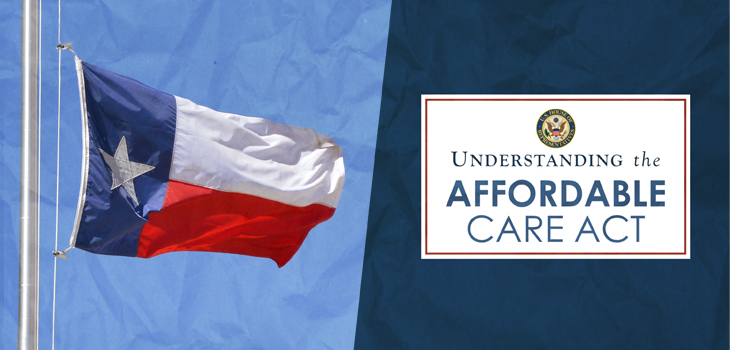
A federal judge in Texas has rejected a request to suspend the Affordable Care Act (ACA) but has questioned attorneys extensively about the provisions that should be allowed to survive following the elimination for the penalty for not having health insurance. This raises the possibility that the conservative judge overseeing the case may rule against some of the provisions of the ACA.
Texas Lawsuit Challenges ACA
7 min read Premium comments
#affordablecareact#patientprotectionandaffordablecareact#aca
ACA History
The Patient Protection and Affordable Care Act (ACA), which is commonly referred to as Obamacare, is the healthcare reform legislation that was passed by the 111th Congress and signed into law by President Barack Obama in March 2010.
The ACA included provisions that extended coverage to millions of uninsured Americans, eliminated industry practices of denying coverage due to pre-existing conditions and required all Americans to be insured. Failure to maintain minimum insurance coverage resulted in a tax penalty. The ACA’s major provisions came into effect in 2014.
Shortly after the ACA was enacted, the constitutionality of its requirement to maintain minimum health insurance was challenged in several lawsuits. The insurance mandate, Section 5000(A)(a) of the ACA, states, “An applicable individual shall for each month beginning after 2013 ensure that the individual, and any dependent of the individual who is an applicable individual, is covered under minimum essential coverage for such month.”
In National Federation of Independent Business (NFIB) v. Sebelius, the United States Supreme Court concluded that the requirement to purchase health insurance was not a valid exercise of Congress’ power under the Commerce Clause but upheld the provision under Congress’ taxation power.
The NFIB court wrote that “our Constitution protects us from federal regulation under the Commerce Clause so long as we abstain from the regulated activity.” Chief Justice John Roberts, who wrote the controlling opinion, acknowledged that Section 5000A(a) “reads more naturally as a command to buy insurance than as a tax,” but noted there is a duty to adopt a saving construction if “fairly possible.” Justice Roberts then reasoned that Section 5000A(a) was “constitutional … because it can reasonably be read as a tax.”
Tax Cuts and Jobs Act
In December 2017, the Tax Cuts and Jobs Act (TCJA) amended the ACA by eliminating the penalty associated with not maintaining minimum health insurance. The TCJA did not get rid of Section 5000(A), but it reduced the penalty associated with violating the section to $0. The states that filed a suit challenging the ACA argue that the requirement to purchase health insurance is unconstitutional under NFIB without the tax penalty.
The Complaint
Twenty states filed a suit against the United States, the Department of Health and Human Services, Secretary of Health and Human Services Alex Azar, the Internal Revenue Service, and David Kautter, Commissioner of Internal Revenue, because of recent changes to the Patient Protection and Affordable Care Act.
The parties sought declaratory and injunctive relief, arguing that the recently amended ACA forced an unconstitutional and irrational regime onto the States and their citizens. The revised ACA eliminated the penalty on Americans who do not have health insurance but preserved the requirement that all people have coverage.
The states argued that without the tax penalty, the ACA is unconstitutional. The states contend that the majority of the Supreme Court in NFIB held that Congress lacked the constitutional authority to compel citizens to purchase health insurance, but that the court only upheld the law under Congress’ taxing authority because the ACA included a tax penalty that applied to most of those who are required to buy insurance.
The states also argue that since the TCJA eliminates the revenue produced by the ACA, the individual mandate to purchase insurance is no longer constitutional. The states contend that without the individual mandate, the remainder of the ACA should also fail.
They wrote, “Absent the individual mandate, the ACA is an irrational regulatory regime governing an essential market. The ACA’s stated objectives are ‘achiev[ing] near universal [health-insurance] coverage,’ 42 U.S.C. § 18091(2)(D), ‘lower[ing] health insurance premiums,’ and ‘creating effective health insurance markets,’ But without the ‘essential’ mandate, coverage will decrease, premiums will rise, and markets will become irrational. Thus, the post-mandate ACA lacks ‘some footing’ in the ‘realities’ of the health-insurance market and has no ‘plausible policy reason’ for forcing continued compliance.”
The states that brought the suit were: Texas, Wisconsin, Alabama, Arkansas, Arizona, Florida, Georgia, Indiana, Kansas, Louisiana, Mississippi, Missouri, Nebraska, North Dakota, South Carolina, South Dakota, Tennessee, Utah, West Virginia, and the Governor of Maine.
The Response
The Justice Department filed a brief saying that it would not defend the ACA. In its brief and accompanying letter to the House and Senate leaders, the Justice Department stated its agreement with the Republican-led states that brought the lawsuit. Attorney General Jeff Sessions noted that the Justice Department’s position was taken with the approval of President Donald Trump.
A group of 16 Democratic-led states and the District of Columbia intervened in the lawsuit to defend the ACA. The intervening states include California, Connecticut, Delaware, Hawaii, Illinois, Kentucky, Massachusetts, Minnesota, North Carolina, New Jersey, New York, Oregon, Rhode Island, Virginia, Vermont, Washington, and the District of Columbia. The case is styled Texas v. Azar.
The Hearing
U.S. District Judge Reed O’Connor heard oral arguments on the case in the United States District Court in the Northern District of Texas. Los Angeles Times reporter Noam Levey attended the arguments and reported that O’Connor appeared very interested in whether some parts of the ACA should be invalidated if the insurance requirement is ruled unconstitutional because it is no longer considered a tax.
Levey wrote, “During the hearing, O’Connor returned repeatedly to arguments that architects of the healthcare law made in 2010 and afterward that requiring people to have insurance was crucial to the popular consumer protections in the law, including bans on insurance companies turning away sick customers or charging them higher premiums, practices that were commonplace before the law was enacted.”
O’Connor noted that the Supreme Court had relied on those arguments when the ACA had come before the court previously.
California Deputy Attorney General Nimrod Elias argued on behalf of California and the other states defending the ACA. Elias said, “Congress wished to leave this law in place…That should be the guidepost.” Elias quoted several Republican lawmakers who said during the debate over the law that they did not want to eliminate the patient protections.
Physician Group Interest
A coalition of physician groups filed an amici curiae brief in to support the ACA. The participating groups included the American Medical Association, the American Academy of Family Physicians, the American College of Physicians, the American Academy of Pediatrics, and the American Academy of Child and Adolescent Psychiatry.
The physician groups argued that the states lacked standing to bring the suit, that the minimum essential coverage provision remains a valid exercise of Congress’s taxation power, that the minimum coverage provision is severable from the remainder of the ACA, and that the requested remedies will wreak havoc on American health care.
The coalition argued, “Invalidating the guaranteed-issue and community rating provisions—or the entire ACA—would have a devastating impact on doctors, patients, and the American health care system as a whole. Put simply, the consequences of any form of inseverability would eliminate the ‘[h]istoric gains in health insurance coverage have been achieved since the implementation of the Affordable Care Act.’”
The coalition noted, “The ACA’s ‘nationwide protections for Americans with pre-existing health conditions’ has played a ‘key role’ in allowing 3.6 million people to obtain affordable health insurance. Severing those vital insurance reforms would leave millions without much-needed insurance. On top of that, the [Congressional Budget Office] estimated that repealing ‘major provisions’ of the ACA would cause 32 million people to become uninsured and average premiums in the nongroup market to double by 2026.”
The coalition also pointed to the nonpartisan Rand Corporation’s conclusion that the repeal of the ACA would increase the federal deficit by $33.1 billion annually.
Law Professor Interest
Five law professors also filed an amici curiae brief with the court to express their opinions on the ACA. The professors argued that the plaintiff states misunderstand the severability doctrine and disregarded the clear intent of Congress. The professors urged the court to find the mandate severable from the rest of the ACA if it is found unconstitutional. This would keep intact the guaranteed-issue and community-rating provisions. These provisions mean that insurers cannot deny insurance or raise premiums based on health status, medical claims, gender, or other factors that they used to set rates in the past.
The professors who filed the amici curiae brief are Jonathan H. Adler of Case Western Reserve University School of Law, Nicholas Bagley of University of Michigan School of Law, Abbe R. Gluck of Yale School of Law, Ilya Somin of George Mason University, and Kevin C. Walsh of University of Richmond School of law. The professors are experts in constitutional law, legislation, statutory interpretation, and administrative law.
What’s Next
Judge O’Connor has promised to issue a ruling “as quickly as I can.” No matter what the decision, it is likely that the losing side will appeal the ruling up to the U.S. Supreme Court. If Brett Kavanaugh has been confirmed, his vote will be critical in determining the fate of the ACA.
If Judge O’Connor issues his ruling prior to November, the ruling will likely also have an effect on the midterm elections. A recent YouGov/Huffington Post survey of registered voters showed that healthcare is a top priority for Americans.
Author
React:
Discussion
This is a fascinating development. In my practice we've seen similar outcomes with the revised protocol. The key differentiator seems to be patient selection criteria. Has anyone else noticed the correlation with BMI thresholds?
Great point. I'd push back slightly on the conclusion, the sample size in the cited study is too small to draw population-level inferences. That said, the directional signal is compelling and worth a larger RCT.
We implemented a similar approach last year. Early results are promising but we're still gathering 12-month follow-up data. Happy to share our protocol if anyone is interested.
Join the conversation
Orthopedic professionals are discussing this. Sign in and upgrade to read every comment and add your voice.