
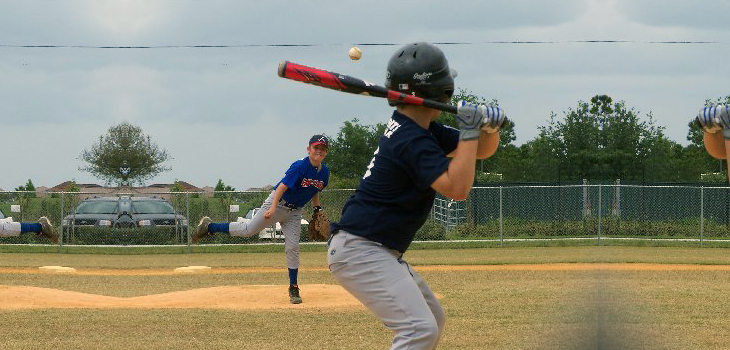
With shoulder injuries such a concern in baseball especially in young pitchers, researchers from the American Sports Medicine Institute in Birmingham, Alabama, decided to explore whether mound height or pitching distance affected a player’s risk of injury.
Pitching Distance Not Mound Height a Risk Factor?
1 min read Premium comments
Secondary
In their article, “Does Mound Height and Pitching Distance Affect Youth Baseball Pitching Biomechanics,” published on the September 12, 2018 in the American Journal of Sports Medicine, they found that while lowering or eliminating pitching mounds in youth baseball did not seem to decrease joint stress or injury risk, more attention should be paid to pitching distance.
During the study, 21 young baseball players were asked to pitch 5 full-effort fastballs each from 5 different conditions, in random order: 14.02-, 16.46-, 18.44-m distances from a 25 cm-high mound, 16.46-m distance from a 15 cm-high mound, and 16.46-m distance from flat ground.
All pitching biomechanical data and ball velocity numbers were collected and compared between the heights and distances. According to the data, no differences were observed in ball velocity, shoulder kinetics or elbow kinetics in relation to mound height. Several kinematic differences were found, but the majority were at lead foot contact before the rapid, dynamic phases of pitching.
The maximum shoulder horizontal adduction torque and maximum shoulder anterior force, however, did increase with pitching distance. Three specific kinematic parameters showed significant differences with pitching distance.
The researchers wrote that “change in pitching distance was associated with slight increase in shoulder kinetics as well as a few kinematic differences” and that “when available, transition from 14.02-m to 16.46-m to 18.44-m pitching distance may reduce stress on the young throwing shoulder.”
Author
React:
Discussion
This is a fascinating development. In my practice we've seen similar outcomes with the revised protocol. The key differentiator seems to be patient selection criteria. Has anyone else noticed the correlation with BMI thresholds?
Great point. I'd push back slightly on the conclusion, the sample size in the cited study is too small to draw population-level inferences. That said, the directional signal is compelling and worth a larger RCT.
We implemented a similar approach last year. Early results are promising but we're still gathering 12-month follow-up data. Happy to share our protocol if anyone is interested.
Join the conversation
Orthopedic professionals are discussing this. Sign in and upgrade to read every comment and add your voice.