
The FDA took just two months to clear the only percutaneous PNS (Peripheral Nerve Stimulation) system allowed for sale in the U.S., according to an August 16, 2018 press release from Cleveland, Ohio-based SPR Therapeutics, Inc.
Clearance for Only Percutaneous PNS System in U.S.
2 min read Premium comments
Secondary#fdaclearance#nervestimulationsystem#sprtherapeutics
The Sprint endura (single lead) and extensa (dual lead) Peripheral Nerve Stimulation (PNS) systems are non-opioid therapies indicated “…for up to 60 days in the back and/or extremities for: (i) Symptomatic relief of chronic, intractable pain, post-surgical and post-traumatic acute pain; (ii) Symptomatic relief of post-traumatic pain; and (iii) Symptomatic relief of post-operative pain. The system is not intended to treat pain in the craniofacial region.”
According to FDA documents, the system is comprised of a percutaneous electrode “placed via an introducer needle in proximity to a target peripheral nerve associated with a painful area and a wearable external Pulse Generator (stimulator) that delivers stimulation therapy to the percutaneous electrode.”
The system uses mild electrical pulses to stimulate nerves to provide targeted pain relief without the need for “…surgery, anesthesia or a permanent implant, as the lead is designed to be withdrawn at the end of the 60-day treatment period.”
MicroLead Flexible Coiled Lead
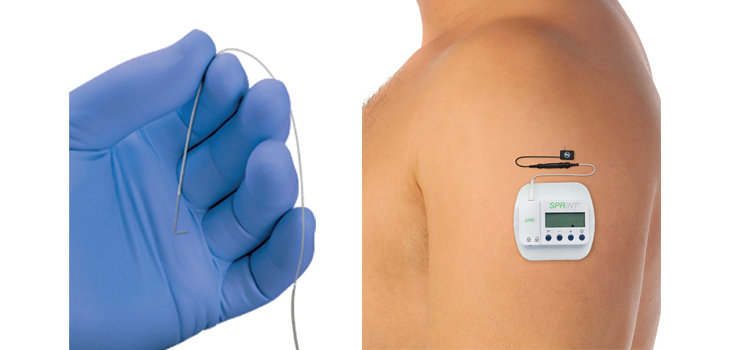
According to the company, a threadlike MicroLead is placed percutaneously using a 20-gauge introducer then connected to the small wearable Spring stimulator. The lead is withdrawn without surgery at the end of the 60-day treatment period.
The open coiled lead structure is constructed of 0.2mm diameter wire with a barbed anchor at distal end of the extensible coil structure to reduces the risk of migration. The coil flexes to accommodate movement within the periphery.
Chris Gilmore, M.D., a pain management physician, says in his experience, most patients prefer a non-permanent, non-destructive and nonsurgical option for pain management. “The minimally invasive nature of the Sprint System allows us to introduce peripheral nerve stimulation therapy early in the care continuum, including its use in well-selected patients with back pain.”
The device is about the size of an Apple Watch and enables independent and efficient programming of stimulation parameters.
The company says multiple clinical trials evaluating Sprint “have demonstrated its ability to reduce pain and improve quality of life. Preliminary results from a Federally-funded multicenter study of Sprint for the treatment of chronic post-amputation pain demonstrate that significant reductions in pain or pain interference (≥50%) were reported among two-thirds of subjects following the 8-week treatment period. Enduring and significant pain relief (≥50%) was reported by four of the five patients (80%) who have completed the entire 12-month study according to data presented recently at the Napa Pain Conference.”
The predicate device identified in the FDA documents is the company’s original Sprint system.
The company made some design modifications to the predicate system “to improve ease of use and reliability of the system.” Modifications include a new capability to deliver 2 channels of stimulation, a rechargeable battery pack that connects directly to the device, and the addition of a hand-held remote to enable the patient to operate the stimulator (via Bluetooth communication) without having to press buttons and read a display on the skin-mounted stimulator.
Author
React:
Discussion
This is a fascinating development. In my practice we've seen similar outcomes with the revised protocol. The key differentiator seems to be patient selection criteria. Has anyone else noticed the correlation with BMI thresholds?
Great point. I'd push back slightly on the conclusion, the sample size in the cited study is too small to draw population-level inferences. That said, the directional signal is compelling and worth a larger RCT.
We implemented a similar approach last year. Early results are promising but we're still gathering 12-month follow-up data. Happy to share our protocol if anyone is interested.
Join the conversation
Orthopedic professionals are discussing this. Sign in and upgrade to read every comment and add your voice.