
The FDA granted 510(k) clearance to another Baxter Healthcare Corporation bone graft substitute, Actifuse Flow, on August 17, 2018, three months after receiving the clearance request from the company.
Baxter’s Latest Bone Graft Substitute Cleared
2 min read Premium comments
Secondary#bonegraftsubstitute#fdaclearance#baxterhealthcare
Robert Norton, M.D., an orthopedic surgeon in Boca Raton, Florida, said the bone graft substitute “has been demonstrated in preclinical models to show greater new normalized bone volumes over other available bone graft substitutes.”
The Deerfield, Illinois-based company said the product is the latest addition to its osteobiologics surgery portfolio, which also includes Actifuse ABX, Actifuse Shape, Actifuse MIS and Altapore. These products are based on a proprietary silicate-substituted technology designed to accelerate bone growth.
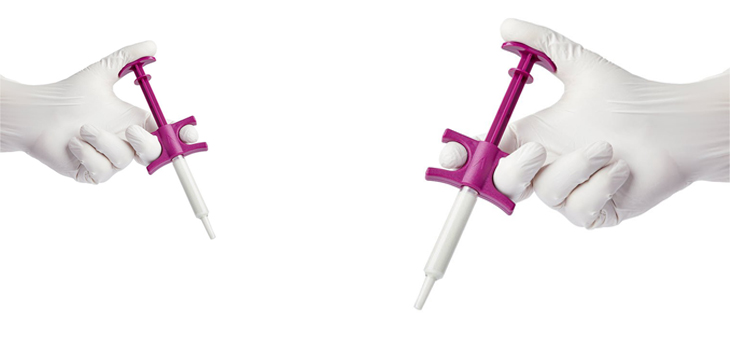
The newly cleared version of the bone graft substitute comes in an “easy-to-use, prepackaged delivery syringe for precise placement into small bony voids or gaps in the skeletal system,” according to the company.
Regulatory Record
According to FDA records, the first Actifuse clearance was granted in 2007 to Great Britain’s ApaTech Limited. Baxter acquired ApaTech for $330 million in 2010.
In a 2011 MAUDE Adverse Event Report related to a failed hip replacement, the company stated that Actifuse is a bone graft substitute that is “not intended to be used in place of cortical strut allograft bone where high tensile, torsion and/or bending strength are required. Its use is contraindicated in impaction grafting for failed total hip or knee arthroplasty and in instances in which direct loading of graft material may occur.”
A September 6, 2018 company press release states that the product utilizes the proprietary silicate-substituted technology of Baxter’s Actifuse Bone Graft Substitute, “which enhances silicon levels to accelerate bone formation.”
Actifuse Flow
“Actifuse Flow comes ready to use with no mixing or preparation involved and maintains its flowable consistency throughout surgery. The bone graft substitute, states the company, is delivered directly from a pre-loaded syringe “with the ability to start and stop delivery, making it compatible with open and less invasive surgical techniques and well-suited for filling small bone defects and complex geometries.”
Baxter expects the product to be used in a variety of orthopedic surgeries in the pelvis, extremities, and posterolateral spine and will be sold in three sizes: 5 mL, 3 mL and 1.5 mL.
Indications
As the company noted in the MAUDE Report, the product is intended “only for orthopedic applications as a filler for gaps and voids that are not intrinsic to the stability of the bone structure. Actifuse Flow is indicated to be packed gently into bony voids or gaps of the skeletal system, i.e., extremities, pelvis, and spine, including use in posterolateral spinal fusion procedures with appropriate stabilizing hardware.
“These defects may be surgically created osseous defects or osseous defects created from traumatic injury to the bone. The product provides a bone void filler that resorbs and is replaced by bone during the healing process.”
The product is not cleared for vertebroplasty.
The company added that attempts should not be made to modify the size of the granules or to change their shape. “It is important to maximize contact between existing bone and the implant to ensure proper bone regeneration.”
And, don’t mix it with substances other than sterile saline/water, autologous blood or bone marrow aspirate, because the effects of mixing are unknown.
Author
React:
Discussion
This is a fascinating development. In my practice we've seen similar outcomes with the revised protocol. The key differentiator seems to be patient selection criteria. Has anyone else noticed the correlation with BMI thresholds?
Great point. I'd push back slightly on the conclusion, the sample size in the cited study is too small to draw population-level inferences. That said, the directional signal is compelling and worth a larger RCT.
We implemented a similar approach last year. Early results are promising but we're still gathering 12-month follow-up data. Happy to share our protocol if anyone is interested.
Join the conversation
Orthopedic professionals are discussing this. Sign in and upgrade to read every comment and add your voice.