
Their work, “Two Different Knee Rotational Instabilities Occur With Anterior Cruciate Ligament and Anterolateral Ligament Injuries: A Robotic Study on Anterior Cruciate Ligament and Extra-articular Reconstructions in Restoring Rotational Stability,” appears in the September 2018 edition of Arthroscopy.
Additional Lateral Extra-Articular ACL Reconstruction Unnecessary?
2 min read Premium comments
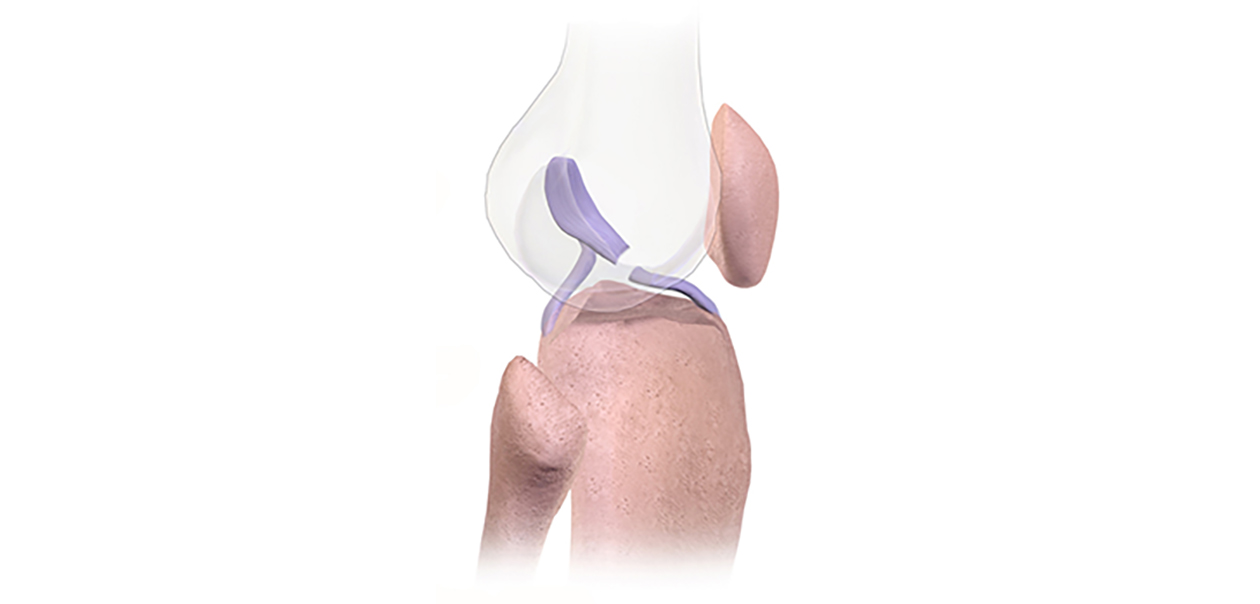
#anteriorcruciatelegamentreconstructionsurgerySecondary#aclsurgery#rotationalstability
Co-author Lauren Huser, M.Eng., with the Noyes Knee Institute in Ohio, told OTW, “Publications in the recent literature have recommended that an anterolateral reconstruction or iliotibial band tenodesis be performed for rotational instability of the knee joint.”
“It has not been clear in these recommendations whether the increase in internal rotation associated with anterolateral ligament (ALL) and iliotibial band (ITB) injury or the pivot-shift rotational instability is being highlighted.”
“This study clearly shows that there are two types of rotational instability with an anterior cruciate ligament (ACL) and combined ALL/ITB tear. One represents the small increase in internal tibial rotation at high flexion, which only amounts to 5-6 degrees. This small increase does not cause a clinical instability pattern and should not be a recommendation for added surgery. We wish to highlight that the rotational instability that represents the primary instability experienced by patients is a result of the pivot-shift rotational instability.”
The authors wrote, “A robotic simulator tested 15 cadaver knees. Group 1 (anterior cruciate ligament cut) underwent ACL bone-patellar tendon-bone reconstruction followed by sectioning the anterolateral structures and an extra-articular, manual-tension iliotibial band (ITB) tenodesis. Group 2 (ACL intact) tested the rotational stabilizing effect of a low-tension ITB tenodesis before and after sectioning the anterolateral ligament/ITB structures.”
Co-author Frank Noyes, M.D. of the Noyes Knee Institute told OTW, “A bone-patellar tendon-bone (BPTB) ACL reconstruction does restore the pivot-shift rotational instability to normal compartment translations both with and without ALL/ITB injury. Thus, an added ITB tenodesis is not required.”
“A well-placed BPTB ACL reconstruction as recommended in this study is entirely effective in obliterating the pivot-shift instability, and an added lateral extra-articular reconstruction is not necessary. This study only pertains to a BPTB reconstruction and not soft-tissue STG [semitendinosus gracilis] grafts. Further, surgeons using an extra-articular reconstruction should be aware of the over-constraint of internal tibial rotation with a too-tight extra-articular graft, as this could have long-term deleterious consequences.”
Author
React:
Discussion
This is a fascinating development. In my practice we've seen similar outcomes with the revised protocol. The key differentiator seems to be patient selection criteria. Has anyone else noticed the correlation with BMI thresholds?
Great point. I'd push back slightly on the conclusion, the sample size in the cited study is too small to draw population-level inferences. That said, the directional signal is compelling and worth a larger RCT.
We implemented a similar approach last year. Early results are promising but we're still gathering 12-month follow-up data. Happy to share our protocol if anyone is interested.
Join the conversation
Orthopedic professionals are discussing this. Sign in and upgrade to read every comment and add your voice.