
According to a new study, magnetic growing rods have higher rates of complications than conventional rods, but it may be a difference without a distinction.
Taking the Measure of Magnetic Growing Rod Complications
1 min read Premium comments
Secondary#scoliosis#magec#growingrods
This interesting study, “Systematic review of the complications associated with magnetically controlled growing rods for the treatment of early onset scoliosis,” was published in the September 2018 edition of the European Spine Journal.
The research team scoured PUBMED, Medline, Embase, Google Scholar and the Cochrane Library of all studies in English that had at least five patients and a 1-year follow-up. They evaluated coronal correction, growth progression and complications on 336 patients (15 studies).
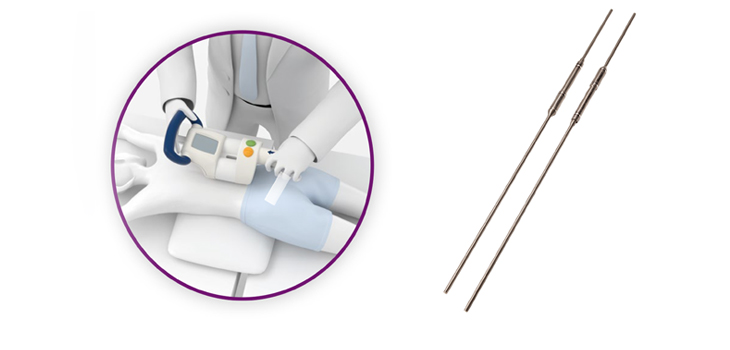
Co-author David C. Kieser, Ph.D. M.B.Ch.B., with the Department of Orthopaedic Surgery and Musculoskeletal Medicine, Canterbury District Health Board in Christchurch, New Zealand, explained the purpose of the study to OTW, “We wanted to further understand the complication profile of MAGEC [Magnetic Expansion Control Spinal Bracing System] rods to aid surgeons in decision making and patient consent. Magnetic-Controlled Growing Rods carry a high complication rate and unplanned reoperation rate…but this is a complex condition to treat and when comparing to alternatives such as traditional growing rods, these complications and reoperations may still be acceptable.”
“Magnetic-Controlled Growing Rods (MCGR) reliably improve the coronal deformity in early onset scoliosis while maintaining spinal growth. MCGRs have a 44.5% non-medical complication rate and a 33% unplanned revision rate. The most common complications are anchor pull-out, implant failure and rod breakage.”
“Surgeons should know that MCGRs have a high complication rate and revision rate, thus pre-operative education of patients and their family is imperative to set realistic expectations.”
Author
React:
Discussion
This is a fascinating development. In my practice we've seen similar outcomes with the revised protocol. The key differentiator seems to be patient selection criteria. Has anyone else noticed the correlation with BMI thresholds?
Great point. I'd push back slightly on the conclusion, the sample size in the cited study is too small to draw population-level inferences. That said, the directional signal is compelling and worth a larger RCT.
We implemented a similar approach last year. Early results are promising but we're still gathering 12-month follow-up data. Happy to share our protocol if anyone is interested.
Join the conversation
Orthopedic professionals are discussing this. Sign in and upgrade to read every comment and add your voice.