
Genetics is in the spotlight again, with new research from Stanford highlighting a genetic screening tool that could help predict someone’s risk of osteoporosis and fracture.
New Genetic Tool to Predict Osteoporosis, Fracture
2 min read Premium comments
Secondary#osteoporisis#genetics#geneticalgorithm
The novel research, “Identification of 613 new loci associated with heel bone mineral density and a polygenic risk score for bone mineral density, osteoporosis and fracture,” was published in the July 26, 2018 edition of PLoS ONE.
Stuart Kim, Ph.D. is professor of developmental biology, emeritus, at Stanford University, and was the sole author on the study. Using data from UK Biobank, he identified 1,362 independent SNPs (Single Nucleotide Polymorphism) that clustered into 899 loci of which 613 are new. These data were then used to train a genetic algorithm using 22, 886 SNPs as predictors and showing a correlation with heel bone mineral density of 0.415. And when combined with height, weight, age and sex, it led to a correlation with heel bone mineral density of 0.496.
Participants with low scores (about 2.2% of total) showed a change in bone mineral density of -1.16 T-score unites, a 17.4x increase in risk for osteoporosis and a 1.87x increase in risk for fracture.
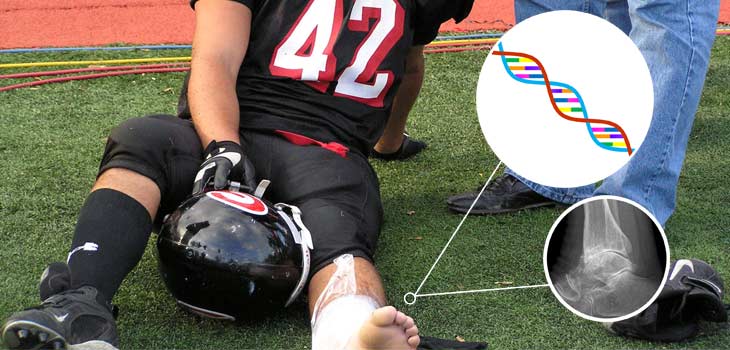
Kim told OTW, “I was interested in finding genetic markers to help athletes and military personnel avoid injuries, such as stress fracture. For athletes and military personnel, injuries affect not only their health but also their competitive success and military effectiveness. Getting a stress fracture shortly before the Olympics or the playoffs can eliminate an once-in-a-lifetime opportunity.”
He added, “Stress fractures are commonplace in athletes due to the harsh rigors of physical training and overuse. The goal is to develop a genetic test that could alert the player and his/her trainer about injury risk in the preseason, so that preventative steps could be taken to reduce the risk of injury.”
According to Kim, the genetic algorithm for bone mineral density could also be used as a predictor of osteoporosis. He explained that genetic testing is quite common and a website could be set up to calculate the bone mineral density score for people with access to their genome data through participation in direct-to-consumer testing companies such as 23andme or Ancestry.com. And then the results can be confirmed by their doctor.
He said, “Genetic testing could reveal low bone mineral density in undiagnosed patients. This might be especially beneficial for younger individuals whose bone density can be readily increased by vitamins and weight-bearing exercises.
“The key result is the development of a genetic algorithm that shows a strong correlation with bone mineral density. The algorithm developed in this paper works about ten times better than the previous algorithm developed in 2012. The algorithm is based on a large number of DNA variants. Each DNA variant contributes only a small amount of information, but the overall information from all of the variants is substantial. The polygenic DNA score for osteoporosis is comparable in strength to well-known single gene tests, such as BRCA2 for breast cancer.”
Kim said that the next step is to test the effectiveness of the genetic algorithm in clinical trials, with a future goal to include genetic testing as part of standard of care for osteoporosis or for individualized training for athletes and military personnel.
Author
React:
Discussion
This is a fascinating development. In my practice we've seen similar outcomes with the revised protocol. The key differentiator seems to be patient selection criteria. Has anyone else noticed the correlation with BMI thresholds?
Great point. I'd push back slightly on the conclusion, the sample size in the cited study is too small to draw population-level inferences. That said, the directional signal is compelling and worth a larger RCT.
We implemented a similar approach last year. Early results are promising but we're still gathering 12-month follow-up data. Happy to share our protocol if anyone is interested.
Join the conversation
Orthopedic professionals are discussing this. Sign in and upgrade to read every comment and add your voice.